






The road: US 84, I-84, then I-90
Our priced route starts on the 183A toll road and US 183 north of Austin, then follows US 84 for about 340 miles across West Texas, through Lubbock and into New Mexico. I-40 takes the truck to Albuquerque, and US 550 runs about 150 miles northwest toward the Four Corners. US 491 crosses a corner of Colorado into Utah, US 191 and US 6 lead to I-15 at Spanish Fork, and I-15 heads north through Salt Lake City. I-84 is the longest leg, roughly 490 miles from northern Utah across southern Idaho and eastern Oregon. Past the Columbia River, Washington routes 14 and 221 reach I-82, and I-90 covers the last 110 miles or so over Snoqualmie Pass into Seattle.
Three driving days and two time zones
The drive comes to about 31 hours. Federal hours-of-service rules (FMCSA) cap a driver at 11 hours behind the wheel, and only after 10 hours off duty, so the road takes three days; delivery is planned for 4 to 7 days after loading. The truck leaves Central time at the New Mexico line (49 CFR 71.7) and reaches Pacific time in eastern Oregon (49 CFR 71.9), which puts Seattle two hours behind Austin. Our Austin office keeps Central time, so its clock reads two hours later than yours once you are in Seattle.
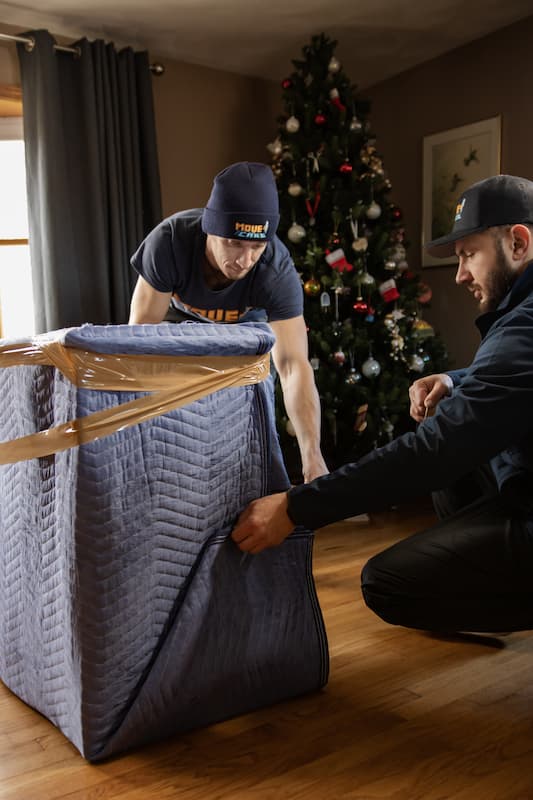
- Loading day: the Austin office sends a crew that wraps furniture in moving blankets, breaks down pieces too big for a doorway and loads from your list.
- Three days on the road, northwest through New Mexico and Utah, then west on I-84.
- Seattle: furniture set in the rooms you point to and reassembled, and anything damaged listed on a Damage Report before the crew leaves.
Soil from an Austin yard
Travis County is on the Texas Department of Agriculture's list of counties under the fire ant quarantine (TDA). The federal rules (USDA APHIS) regulate soil, used soil-moving equipment that still carries loose soil, and plants with roots and soil attached, though a plant kept indoors in a home and not for sale is exempt. Moving a regulated article out of a quarantine area takes a certificate that a state or federal inspector issues after looking at it. Before loading day, hose the dirt off the mower, the tiller, the wheelbarrow and the shovels, and empty the mower's gas tank, because gasoline never goes on our trucks. Patio pots and garden plants need a plan of their own.
Unloading in Seattle
Seattle does not let vehicles park or stop in alleys, except for commercial vehicles loading or unloading for up to 30 minutes, and its yellow commercial load zones carry the same 30-minute limit (Seattle DOT). Unloading a whole home runs longer than that, so the truck needs curb space close to your entrance. Reserving that space, the elevator and the loading dock for the delivery days is your part; where the city asks for a permit, it goes in your name, and we can help you work out what to request. Note stairs, a steep driveway or a long carry from the curb when you list your rooms, because each adds work. For a building that asks for a Certificate of Insurance, forward its wording and our certificate matches it.





