
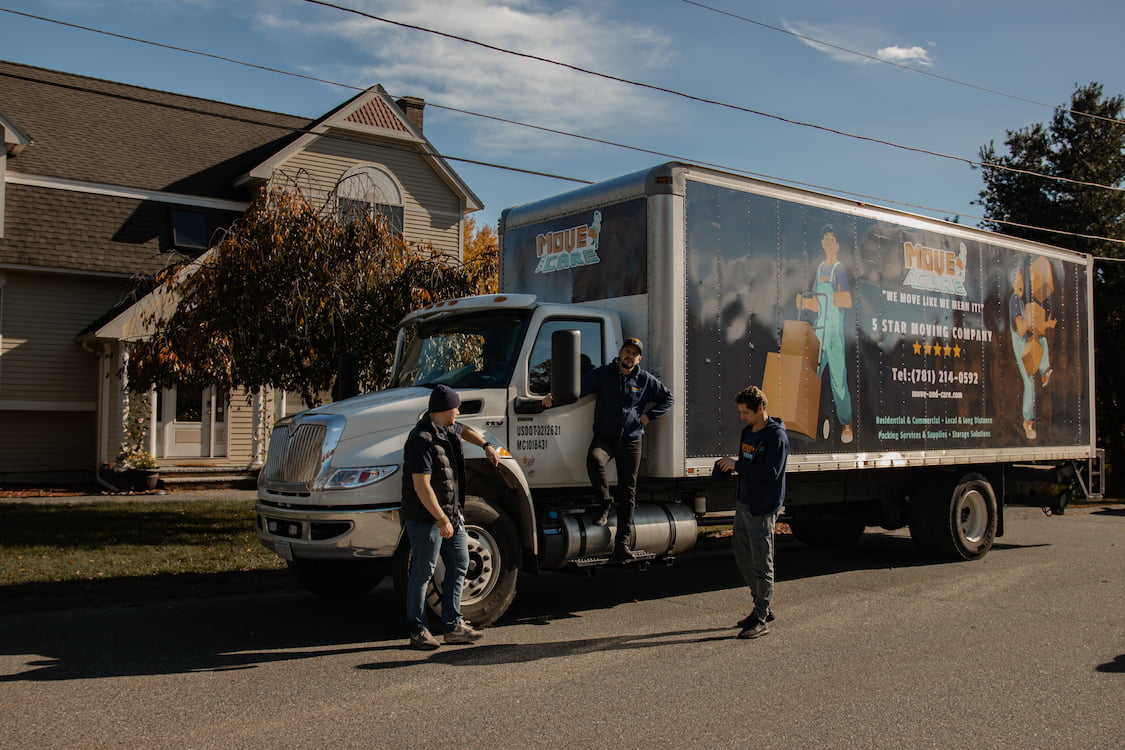
The company that customers love
Move and Care strives to satisfy our client's needs 100%. Our company is well-reviewed, so we are not shy about showing over 2500 reviews of our company in Boston, Austin, San Antonio, Charlotte and Irvine! Explore the reviews and get an idea of our company.
Read Move and Care ReviewsThe company with a reputation
Move and Care has managed to become one of the best moving companies. Our company is based in Boston, MA; Austin, TX; San Antonio, TX; Charlotte, NC and Irvine, CA. We are also very familiar with San Diego and it is part of our area of work.
Check Our Licenses and Awards


Our Chicago to San Diego Moving Services

Residential Moving
Service for smooth and easy family moves

Commercial Moving
Smooth business moving to keep the business running

Packing Services & Supplies
Complete packing help and quality materials

Storage Solutions
Safe storage spaces for your items, available anytime

Piano Moving
Skilled piano transport to maintain condition.

White Glove Moving
Moving services with extra care for valuable items

Senior Moving
Gentle and efficient relocations for seniors.
What Customers Say About Us
Influencers who move with Move & Care
Hear how creators and community leaders describe their move-day experience, from booking to the moment every box is in place.
Our Text Reviews
Know Your Moving Cost Today
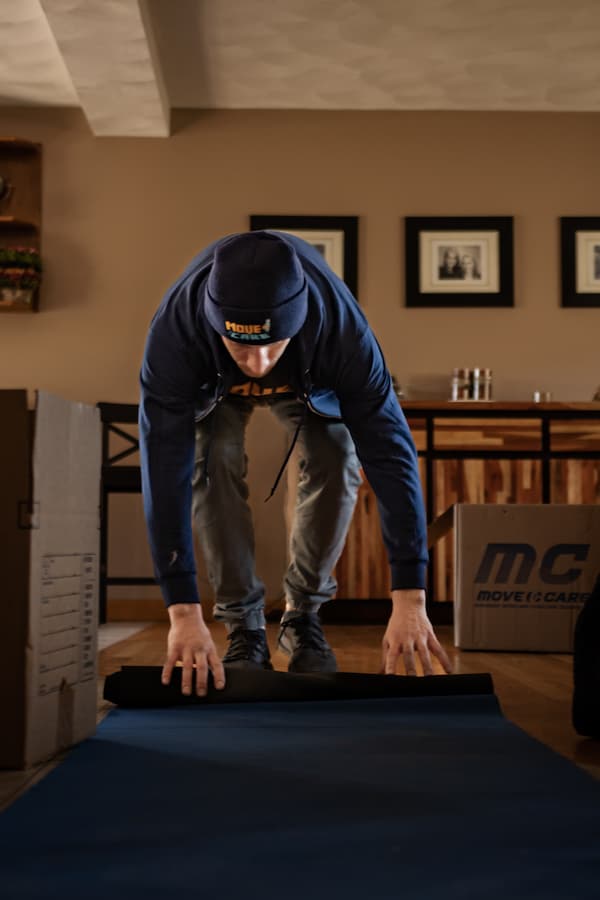
Why We're a Trusted
moving company from Chicago to
San Diego
Choosing Move and Care for your move from Chicago to
San Diego means the same crews that run our local moves in
Chicago load the truck, and the destination is handled by a coordinator who
has driven the route.
When you choose Move and Care for your move from Chicago to
San Diego, you get a moving crew that knows the ins and outs of long-distance moves — from careful packing to
on-time delivery — making the entire process smooth, quick, and safe.
More About us

Fully Licensed & Insured
We are legally authorized to handle moves of any type and distance. Licenses: USDOT #3212621; MC #1018431; NCUC #C-3067; TXDMV #009636518C.

Cost Efficiency
We offer flexible pricing options. Flat rates with a binding moving quote and tailored plans — so you know exactly what to expect with no hidden costs.

Full-Service
We manage everything: careful packing, secure loading, route planning, delivery, and even unpacking at your new house.

Safety
Our movers use professional packing techniques, every truck is GPS-tracked, and insurance coverage is included — so your belongings arrive just as they left.
What you get by moving from Chicago to San Diego with us?

Loading and Unloading
We will load into the truck and unload at a new place all of
your items.

Gas, Tolls
Our moving company rates include all the charges, no hidden
fees.

Dedicated Manager
Our dedicated manager will walk you through the whole moving
process.

Transportation
Our Company makes sure all of your belongings are safe during
delivery.

Moving Insurance
Insurance coverage helps save your items from unexpected
damages.

Assemble and Disassemble
We make sure your furniture is Assembled and Disassembled.



Our Licenses & Awards
We’ve helped over 5,000 people move safely — from single-bedroom apartments to 5-bedroom houses and full office moves. Our team has completed more than 1,200 long-distance moves across the U.S., always on time and with belongings protected. With licensed movers, GPS-tracked trucks, and full packing support, we make sure every step of your move is handled with care you can count on.
See Price Estimate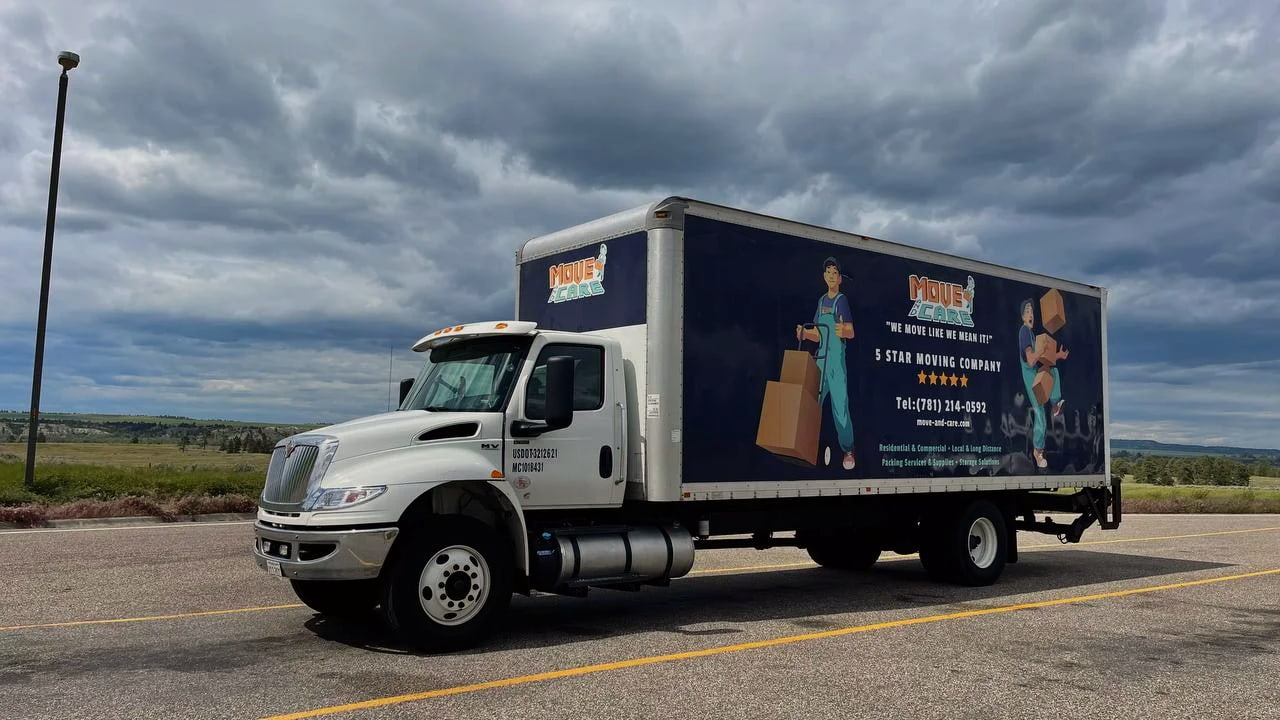

USDOT
3212621
MA DPU
31854
NCUC
C-3067
TXDMV
009636518C







Have Questions?
Ask Professional
How Much Does It Cost to Move from Chicago to San Diego?
| Size of the Move | What the Flat Rate Is Built From | Access Factors That Change It |
|---|---|---|
| Studio / Small 1 Bedroom | Inventory list, packing level, distance | Walk-up flights in a Chicago two-flat or three-flat; whether a full-size truck can legally stop at the door |
| Large 1 Bedroom / Small 2 Bedroom | Inventory volume, packing materials, protection | CDOT sign posting at the Chicago end; freight elevator reservation and COI in a downtown San Diego tower |
| Large 2 Bedroom | Volume, disassembly and reassembly, materials | Gangway or alley carry distance in Chicago; a San Diego address with no driveway and no alley behind it |
| 3 Bedroom Apartment / Townhouse | Volume, packing scope, specialty items | Bungalow basement and attic carries; a cottage court or garden court reached on foot down a shared walk |
| 4 Bedroom or Larger Home | Volume, full packing, specialty and heavy items, storage if the dates do not line up | Rear porch condition; boulevard access restrictions; hoisting; gated entry and canyon-street approach in San Diego |
One flat-rate figure covers the job. Usually that includes crew, truck, fuel, tolls, transportation and basic insurance plus the $50 equipment charge for blankets, dolly and tools. If your building requires a COI we can prepare that too.
You are quoted on the approved inventory and services. No hidden fees.
Federal rules define the options. When you are moving across state lines, the shape of the estimate is what you want to compare. An interstate mover must provide you with a written estimate under 49 CFR Part 375. FMCSA describes what each type means for the payer. With a binding estimate, “you cannot be required to pay any more than the estimated amount at delivery.” With a non-binding one, “you must be prepared to pay ten percent more than the estimated amount at the time of delivery.” If the charges run past that, the mover “must relinquish possession of the shipment at the time of delivery upon payment of 110 percent of the estimated amount, and defer billing for the remaining charges for at least 30 days.” That 110 percent clause is why a flat rate set on approved inventory matters more at 2,080 miles than at 20. Ask any mover which of the two they are handing you.
If you’re trying to figure out how much it costs to move from Chicago to San Diego, no two shipments on this route will price the same. The estimate considers volume of inventory, distance, accessibility at both locations, timing and the services you choose. Specialty prices are listed separately: upright piano $160, baby grand $240, items over 200 pounds from $60 and hoisting $40 per item per flight of stairs — a live line item when a piece won’t turn on a century-old Chicago landing. Pool tables, safes and such are priced individually. Moving pianos is quoted as a separate line item instead of hidden in a guess.
Packing will be quoted separately. The volume between a Ravenswood studio and a four-bedroom in Beverly is not comparable. Labor is hourly, materials are itemized: small box $6.50, medium $7.50, large $8.50, tape $7 per roll, shrink-wrap $10 per item, mattress cover $17, wardrobe box $28. Packing services and storage are the two add-ons that move the total the most on this route. The second is normally because a Chicago lease is ending before a San Diego closing or lease start date. Payment note: 3.5% processing fee for card payments, 5% discount may be available for cash payment.
Want exact moving prices? Request a free estimate — we’ll review your inventory, addresses and access requirements, and then provide you with a formal estimate.
Sample Chicago to San Diego Moving Timeline
This schedule is based on three things: Chicago curb window, federal driving limits, and what happens when the truck hits the California state line. Mileage is the least interesting variable.
The schedule is usually long on loading day in Chicago, and that’s because of the curb. City rules ban “the parking of any truck, van, tractor… more than 22 feet in length… on any residential street at any time,” except for “any vehicle engaged in the expeditious unloading or loading,” and no vehicle six feet or taller may stand within 20 feet of a crosswalk, alley, commercial driveway or fire lane — which is often what actually determines where a 26-foot truck can sit on your block. Towing and storage fees against a car blocking your signs (Municipal Code § 9-64-040) apply only if the posted sign “has been in place for 24 hours” – which is why sign posting is not left until the morning of the move. Routing matters too. Municipal Code § 9-72-020 makes it “unlawful to operate any vehicle upon any boulevard” while carrying commercial freight, with local deliveries allowed to enter only “at the cross street nearest the building or premises.” If you are on Logan, Humboldt, Garfield or Drexel Boulevard, that approach gets planned rather than discovered. Elsewhere, street-by-street posted truck limits are published by the City in its height and weight limits dataset.
The line haul is limited by federal law, not ambition. With the 11-hour driving limit, the 14-hour on-duty limit and the required 30-minute break, this works out to three to four days of driving before someone books a delivery at about 2,080 miles. A company promising next-day arrival on this route is describing something the hours-of-service rules do not allow.
Then there’s part of this route that almost no one talks about: the truck stops at the California state line. CDFA operates 16 of these facilities located on the major highways entering the State, where inspectors check vehicles and commodities for compliance with California and federal plant quarantine regulations and make sure they are free from invasive species that may be hitchhiking with them. In a typical year, the agency reports that more than 20 million private vehicles and 7 million commercial vehicles were inspected, with over 82,000 lots of plant material rejected for quarantine violations. Commercial vehicles make up over 25 percent of the traffic, while watercraft, self-movers, recreational vehicles and utility vehicles comprise about five percent. Depending on the approach, a Midwest-origin truck meets one of four stations from CDFA’s own station map: Mt. Pass on I-15, Needles on I-40, Blythe on I-10 or Winterhaven on I-8. The Blythe facility’s job, as Caltrans describes it, is to provide “necessary CDFA inspection operations, required quarantine enforcement, and other border safety/protection activities.” This is a normal part of the trip, not a problem — but it’s a good reason to have the plant question settled before load day rather than at a scale house in the desert.
Your move coordinator is checking when the truck is loaded, when it is on the road and when delivery is due in San Diego — and is flagging any change when it is still a scheduling question, not a crew standing on a sidewalk.
What to Know Before Moving from Chicago to San Diego
The two ends of this route are dense in opposite ways, and a plan built for one will not work at the other.
Chicago is old and crowded in little buildings. According to regional planning data from the American Community Survey, the median year built for the city is 1953, and 38.8% of housing units were built before 1940. Single-family detached accounts for only 25.6% of the stock, with 13.1% of units in two-unit buildings (and 14.4% in three- or four-unit buildings), meaning more than a quarter of Chicagoans live in a small walk-up — stairs, not an elevator. At DePaul’s Institute for Housing Studies, they are more blunt about the age. 2-to-4 unit properties make up 26% of the city’s housing and have a median age of 108 years — increasing to 70% or more of residential units in neighborhoods like South Lawndale and Brighton Park. That’s the problem of the sofa-on-a-narrow-landing, plaster-wall, banister-removal in one statistic.
The Chicago Architecture Center says there are more than 76,000 two-unit apartment buildings in the city, most built between 1900 and 1918, with “narrow gangways between the closely-spaced buildings.” The gangways determine the carry distance when the truck can’t get to a back entrance. Chicago has some 1,900 miles of public alleys, where it can, and a rear load off the alley often beats a front stoop carry — so, we ask about it before sizing the truck. In the Bungalow Belt the problem is of a different kind. More than 80,000 are still standing, and the Historic Chicago Bungalow Association describes the form as “1-½ stories above a full basement,” “narrow at the front and rear ends, longer on the sides.” That’s a basement carry, an attic level carry, and a tight front approach on the same job. The Chicago Municipal Code states that rear wooden porches must be able to withstand “a concentrated load of at least 400 pounds without danger of breaking” per stair tread, no settling greater than one inch and no rotting or loose supports. That’s the first thing a crew about to move a safe or an upright piano down century-old back stairs looks for, sometimes opting for the front stairs or a hoist instead.
Not all buildings in Chicago are walk-ups. On the Near North Side – Gold Coast, Streeterville, River North, 89.4% of housing units are in buildings with 20 or more units. On the Near West Side, including the West Loop and Fulton Market, it is 66.0%. Those moves aren’t decided at the curb, but rather by a freight elevator booking, a dock time, and a COI. Ask all 3 in 1 email from your building.
Most of the time San Diego is easier, sometimes a lot harder. The City’s Housing Element tells us that “56% of existing homes are single-family” and “47% of housing in the City is renter-occupied.” Also, “90% of the City’s housing stock was built prior to 2000” and “only 3.6 percent of the City’s housing stock was built in the past 10 years” (2019). A majority-single-family, mostly pre-2000 destination usually means a driveway, a garage and a straightforward carry. Good to know if you have anyone in your household with limited mobility – see senior moving – the same document says “homes built before 1990 are often not wheelchair accessible.”
Except there are the older beach communities, and the City documents these. The Ocean Beach Community Plan and Local Coastal Program as adopted is unusually candid: “a number of residential lots throughout the community do not have alleyway access,” “many small garages are rented out for storage uses,” “the storage use, as opposed to off-street parking use, contributes to the parking issues,” and “parking shortage is a problem in Ocean Beach, especially during summer months.” It adds that “older multi-family housing constructed in accordance with previous development regulations do not observe front yard setbacks,” and that the community “was originally developed as a resort community with summer cottages.” Put together: a converted cottage on a small lot, the building set at the front property line, no alley behind it, a garage full of somebody’s boxes, and a summer parking shortage the City acknowledges in writing. It’s a long carry with no staging area, hence the question about the alley and the garage before we quote a beach address instead of after.
The other long carry case is cottage courts and garden courts. The City’s historic preservation planning work identified the housing forms along Park Boulevard as “single-family dwellings, duplexes, bungalow and cottage courts, garden court apartments and six-pack / dingbat buildings.” Designated districts include South Park in Golden Hill, with 407 properties. In a cottage or garden court reached on foot down a shared central walk with no vehicle access to the door – a design feature rather than a parking problem, and one that has to be priced as distance carried rather than driven – the unit is behind those in front of it. While designated properties have owner obligations, the City requires owners to “maintain the property in accordance with the U.S. Secretary of the Interior’s Standards for the Treatment of Historic Properties,” and to “obtain approval for maintenance, restoration or alteration efforts prior to purchasing materials or undertaking work,” which can make a difference when you have to take a door or railing off to bring a piece inside.
Downtown towers are a booking problem, not a carrying problem. A freight elevator reservation, a loading dock with a height restriction, a move-in window set by the association, and a COI that lists the correct parties if the destination is a high-rise dictate the day. Many apartment and condo buildings may require elevator reservations, certificates of insurance or limited move-in hours. We’ll prepare the COI. The reservation and rules need to be provided by your property manager, HOA or building office, so ask them in the same call.
Seasonal Timing: Neither End Is Easy in the Same Month
This is a route where the two cities disagree about which season is the difficult one, and the plan changes at each end accordingly.
Chicago’s problem is a winter load. The NWS normals for O’Hare put the average January high at 31.6°F with 38.4 inches of snow a year, with measurable snow averaging from Nov. 18 to April 2. The City’s winter overnight parking ban is in effect “from December 1st thru April 1st, regardless of snow… from 3 am to 7 am,” on 107 miles of arterial streets, with a “minimum $150 towing fee, $60 ticket, and a storage fee of $25 per day.” A separate two-inch ban covers another 500 miles of main streets at any hour. In reality, January load is salt and slush on the threshold, floor and stair protection down before the first box moves, and a truck that can’t just sit on an arterial overnight.
People are surprised that fall deliveries are a problem in San Diego. NOAA’s 1991–2020 normals show August as the warmest month for San Diego International, with an average high of 76.4°F, with September almost tied at 75.9°F. The National Weather Service is more direct in its technical memorandum on the climate of San Diego: “most of the highest temperatures occur in the months of September and October.” The month most customers assume is the safe shoulder season is the hot one. The same memo describes Santa Ana winds as “warm, dry winds that blow from the east or northeast,” occurring “between October and February with December having the highest frequency of events,” generally “between north and east at a speed of 35 knots” with “gusts to 50 knots,” and with humidity that “often drop[s] below 20 percent.” A 50-knot gust across an open tailgate is a load-securement issue, not a weather story. Heat-sensitive items — candles, records, electronics, medication, anything with a pressure-sensitive adhesive — are loaded to come off first on an autumn delivery, and crews work under California’s outdoor-heat standard, Title 8 CCR §3395, which requires that “shade shall be present when the temperature exceeds 80 degrees Fahrenheit” and potable water at “one quart per employee per hour for drinking for the entire shift.”
One more quirk of San Diego to plan for: the coast and a few miles inland are two different days’ work. While the city’s daily temperature range is “only about 15 degrees,” NWS records that “a few miles inland these ranges increase to 30 degrees or more.” Delivering in a beach neighborhood and delivering in an inland valley on the same August afternoon are not the same job. And if you’re arriving near a campus in late August, know that San Diego State’s Fall 2026 move-in is Aug. 19–21 with arrivals thru four campus lots and “moving services will be limited after 4 p.m.,” and the University of San Diego loads new international students Tuesday, Aug. 25, new first-year students Saturday, Aug. 29, and transfer and returning students Sunday, Aug. 30.
Got something big or heavy? Let us know before move day. Piano, safe, pool table, gym equipment or anything over 200 pounds might require additional labor, hoisting or a custom handling plan. That call is much better made a week out than on the landing, between a century-old Chicago rear staircase and a San Diego cottage court reached down a shared walk. White-glove moving protects and handles fragile or high value shipments.
The Moving Process (Chicago to San Diego)
Preparation
We begin with your inventory and build a service plan from there: what’s moving, what needs packing, what’s access like at each end, and do either building need a COI or elevator reservation. If you want packing services, full or partial packing is scheduled in advance of the load date. If the Chicago lease is up before the San Diego place is ready, moving and storage is the bridge.
What to do by yourself at the Chicago end. Send us your address early enough to get the CDOT signs posted — the 1st Ward notes CDOT “requires 72 hours” and tow protection under the Municipal Code only begins after a sign has been up for 24 hours. Check to see if your block is a residential permit zone. The City Clerk says zone restrictions are “for either all times or for certain days/hours,” which is important for your own car and for anyone who is helping. If you’re planning to use a portable container, ask your ward first: the 25th Ward clearly states “moving pods / containers are not allowed on the public way, no exceptions,” and that street-cleaning signs trump moving signs. Get the freight elevator window, the dock time and the COI requirements in one email in a downtown or West Loop building – those three answers determine the crew size.
Task specific to leaving Illinois: check your outdoor equipment. This is the step most Chicagoans have never heard of, and it’s federal. Illinois is one of the states where the spongy moth “is currently found,” and APHIS says “per USDA requirements, you must inspect and remove spongy moth egg masses from household goods before moving from a location within a spongy moth quarantine area to a location outside the quarantine area.” The process is to check the quarantine map, go thru the agency’s self-inspection checklist, remove any egg masses you find, sign the checklist — it “serves as an official certificate of inspection” that APHIS or state officials may ask to see — and keep it handy during transport. APHIS also notes that you “may face penalties if you are required to inspect but fail to do so.” The federal rule describes what qualifies: 7 CFR 301.45-1 defines outdoor household articles as “articles associated with a household that have been kept outside the home such as awnings, barbecue grills, bicycles, boats, dog houses, firewood, garden tools, hauling trailers, outdoor furniture and toys, recreational vehicles and associated equipment, and tents.” So: the grill, the patio set, the bikes, the kids’ outdoor toys, the garden tools. Firewood is the only thing worth leaving behind. The Illinois Department of Agriculture is also asking residents to “check your vehicles, boat, camper, outdoor articles, etc.” for spotted lanternfly before leaving an area following the state’s first confirmed detection in September 2023. That one is good practice not a filing requirement, and the same ten minutes covers both.
Houseplants: make up your mind before load day, not at the state line. Every highway into California has a Border Protection Station on it and CDFA says an import permit, health certificate or phytosanitary certificate “may be required to legally enter into the state of California” for plants that are allowed at all. The department also publishes a houseplant guide and answers questions on its pest exclusion line at (916) 654-0312. Fix this in Chicago: a plant rejected in the desert has nowhere to go.
On the San Diego end, ask your property manager, association or HOA these four things: is there a move-in window and are weekends allowed, is there a dock or service elevator to reserve, is a COI required and who must be named on it, and is there a deposit or gate code to arrange. Check your street sweeping day before you set the delivery date. The City’s enforcement page says that when street sweeping is posted, “parking is prohibited on the designated days for the entire time posted on the sign,” and parking is prohibited “in front of a public or private driveway (even your own driveway)” and “on a sidewalk or parkway.” If a container is going into the right-of-way, that does have a permit. Under Information Bulletin 718 a Traffic Control Permit for a temporary storage container “is valid for up to 7 days,” with fees listed at $87.68 per week plus a $87.68 processing fee and $20.00 per meter per day, and “the permit holder shall post Tow-Away/No Parking signs 72 hours before placing the storage container.” Confirm current figures with Development Services. One last bit of housekeeping that catches people out: California DMV says that once you bring a vehicle into the state, “you must register it within 20 days of becoming a resident or bringing it into the state.” On a three to four day line haul your car and your furniture usually arrive on different days, and that clock starts with you, not with the truck.
The customer is responsible for parking arrangements and permits needed at both locations. Clear walkway and curb area before crew arrives. Disconnect any appliance on water or gas line. Empty desk and dresser drawers. Label sealed boxes by room of destination. Crews cannot transport items that are unsafe, unsanitary, flammable, explosive, related to firearms, filled with gasoline or filled with propane.
Your estimate clearly defines the final scope. Timing and price depend on packing level, special items and building access.
Moving Day
Furniture is padded, shrink-wrapped, and loaded, inventoried and stacked for a multi-day haul, not a cross-town hop – 2,080 miles of road vibration is a different loading problem than 15 miles of it, and anything disassembled in Chicago has to arrive in one piece three or four days later. In a pre-war Chicago building the first thing is the floor and banister protection and in winter that includes the entry and the stair runs where the salt is tracked in. You get a copy of the bill of lading at or before loading. The FMCSA calls the bill of lading the contract between you and the mover for the transportation of the shipment.
This is an interstate move, and a different rulebook applies to you. It is not a mere procedural point. Illinois Commerce Commission authority is required of Illinois household goods carriers operating within Illinois under Title 92, Part 1457 of the Illinois Administrative Code. If the move is from one California household to another California household, then you need a permit from the Bureau of Household Goods and Services — state law says the permit applies to “transportation of household goods and personal effects entirely within this state.” A move from Illinois to California is not entirely within the state, so it is FMCSA, and the authority is USDOT 3212621 and MC 1018431. Before you sign anything at all, with any company, including this one, check it out in the federal mover database.
If it is a military or government move, that is more normal than not at this destination. Naval Base San Diego alone comprises “over 1,600 land acres and 326 acres of water along the San Diego Bay,” and is the home port of “60 U.S. Navy ships and two auxiliary vessels including USNS Mercy (TAH - 19),” and hosts “more than 200 tenant commands.” Access to the base, gate procedures and report dates are provided by your command, not us; tell us the constraint and the schedule is built around it. See military and government moving.
Delivery & Unpacking
We deliver and place in San Diego, and take furniture to the rooms you select and reassemble standard items. If you booked unpacking we take away the boxes and packing material after setup. Delivery will be a single, continuous, attended unloading window, because the code exception allowing the truck to stand on a residential street includes active loading and unloading and nothing else — §86.0139 prohibits oversized vehicles from public streets “between the hours of 2:00 a.m. and 6:00 a.m.,” and §86.0118 caps any vehicle at “seventy-two (72) consecutive hours.” In a downtown tower, the window is set by the dock and the service elevator instead, which is the reason for our requesting that reservation prior to setting the delivery date. On a long carry — a beach block without an alley, or a cottage court accessed down a shared walk — the load is stacked so those pieces come off first, because they can’t be shuffled at the curb.
If something is damaged or missing, tell the crew as soon as possible and complete a Damage Report before they leave if possible. Damage found after the move must be reported within 96 hours.
It’s good to know what Basic Released Value Protection covers and it doesn’t cost you anything extra. FMCSA limits that liability to 60 cents per pound per article. Its own example: a lost or damaged 25-pound television gets $15. Under Full Value Protection, for a charge, the mover is liable for the replacement value of your shipment, at a minimum of $6.00 per pound, multiplied by the weight of your shipment. But anything over $100 a pound in value — jewelry, china, furs — has to be specifically listed on the shipping documents for that coverage to apply, a five-minute job done before the truck loads, not after. Besides our 96-hour reporting request, your claim window is protected by federal law. 49 U.S.C. § 14706 says a carrier cannot have a filing period shorter than nine months from delivery. Read our reviews and about us to see how past customers describe the process. If truck size is a question at your address, review the fleet. Or, contact us to talk thru your dates. On the moving blog, you’ll find notes on routes and planning guides.
More About PricingF.A.Q. about moving from Chicago to San Diego
Long distance moves are flat rate, so the price is set for your job, not climbing by the hour. It is based on inventory volume, distance, access at both addresses, timing and the services you choose. We check your inventory before quoting. The figure typically includes the crew, truck, gas, tolls, transportation and basic insurance plus a $50 equipment charge for blankets, dolly and tools. Specialty pricing is published: upright piano $160, baby grand $240, items over 200 pounds from $60, hoisting $40 per item per flight of stairs. Labor for packing is hourly and materials are per item. Card payments are subject to a 3.5% processing fee, and cash may receive a 5% discount.
Federal driving rules set the floor, and they cover about 2,080 miles. The FMCSA has hours-of-service limits that limit a driver to 11 hours of driving after 10 consecutive hours off duty, prohibit driving after the 14th consecutive hour on duty, and require a 30-minute break after eight cumulative hours of driving. This means the line haul is 3-4 days of driving before any delivery is scheduled. This is why you get a delivery window instead of an hour. You know that window in advance, and your coordinator confirms when loading is finished and when the truck will be in San Diego. The Chicago loading day is usually the part that runs long, and the cause is usually curb access or a building elevator window rather than mileage.
Yes, and it's the moving company that gets it. City ordinance requires commercial moving companies to obtain Residential Move permits from the Chicago Department of Transportation, the 2nd Ward office said. If a mover tells you to get it from your alderman, that is not correct. Parking for a moving van is $25.00 per vehicle per day on the CDOT fee schedule. The 1st Ward says CDOT signs are ticket-and-tow enforceable, while free ward-office signs are not, and that CDOT requires 72 hours. Towing and storage fees are not charged until the sign has been posted for 24 hours as required by Municipal Code section 9-64-040. Ward rules vary, so also check with your ward office.
No such permit exists in San Diego. The City's parking permits page only lists a Temporary Overnight Recreational Vehicle Permit and Residential Permit Parking, and temporary No Parking signage is a City power exercised by the Chief of Police under Municipal Code section 86.0109, and is not something a resident can reserve. Rather, it is the code that governs delivery. Section 86.0149 allows a heavy duty commercial vehicle to stand on a residential street while loading or unloading property, and section 86.0140(a) exempts an oversized vehicle actively engaged in loading or unloading. So the truck can work on your curb while the crew is there, but not overnight: section 86.0139 prohibits oversized vehicles from public streets between 2 and 6 a.m. and section 86.0118 limits any vehicle to 72 consecutive hours. Check your street sweeping day before fixing a date.
Yes, and it applies to your outdoor items. Illinois is in the USDA spongy moth quarantine area. Before you move from a quarantine area to a location outside the quarantine area, APHIS requires you to inspect and remove spongy moth egg masses from household goods. Review the agency's self-inspection checklist and remove anything you find. Sign the checklist and keep it handy during transport. The signed checklist is an official certificate of inspection, and officials may ask to see it. Outdoor household articles under federal regulation 7 CFR 301.45-1 include awnings, barbecue grills, bicycles, boats, dog houses, firewood, garden tools, hauling trailers, outdoor furniture and toys, recreational vehicles and tents. If you are required to inspect, but do not, APHIS notes you could be penalized.
Ask before load day, not at the state line. CDFA operates 16 Border Protection Stations on major highways into California where inspectors check vehicles and commodities for compliance with California and federal plant quarantine regulations, and a truck arriving from the Midwest passes one of Mt. Pass on I-15, Needles on I-40, Blythe on I-10 or Winterhaven on I-8. In a typical year CDFA turns away more than 82,000 lots of plant material. The department says that plants that are allowed to be imported may require an import permit, health certificate or phytosanitary certificate, and it publishes a houseplant guide and answers questions on its pest exclusion line at (916) 654-0312. Settle it in Chicago, because a plant turned away in the desert has nowhere to go.

Our Instagram Profile


Contact Us
Fast, Fair Moving Estimate
Clear pricing. Certified pros.
Careful handling.
Start your smooth move with Move and Care.




