
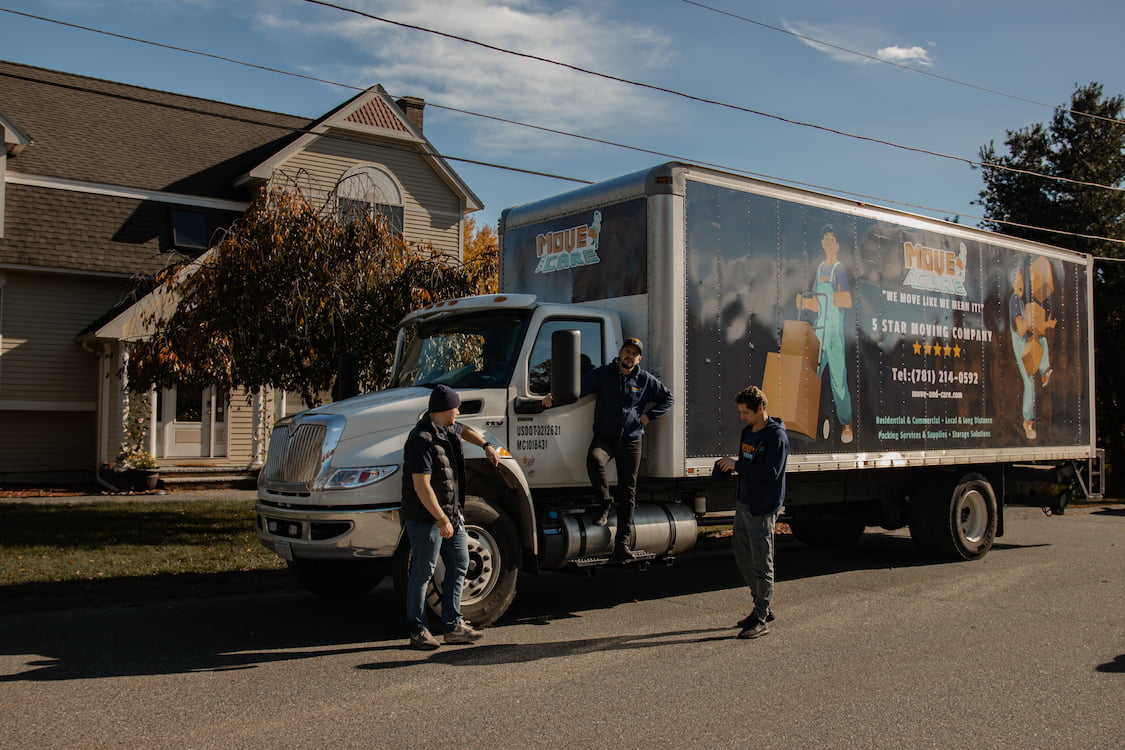
The company that customers love
Move and Care strives to satisfy our client's needs 100%. Our company is well-reviewed, so we are not shy about showing over 2500 reviews of our company in Boston, Austin, San Antonio, Charlotte and Irvine! Explore the reviews and get an idea of our company.
Read Move and Care ReviewsThe company with a reputation
Move and Care has managed to become one of the best moving companies. Our company is based in Boston, MA; Austin, TX; San Antonio, TX; Charlotte, NC and Irvine, CA. We are also very familiar with Sacramento and it is part of our area of work.
Check Our Licenses and Awards


Our San Francisco to Sacramento Moving Services

Residential Moving
Service for smooth and easy family moves

Commercial Moving
Smooth business moving to keep the business running

Packing Services & Supplies
Complete packing help and quality materials

Storage Solutions
Safe storage spaces for your items, available anytime

Piano Moving
Skilled piano transport to maintain condition.

White Glove Moving
Moving services with extra care for valuable items

Senior Moving
Gentle and efficient relocations for seniors.
What Customers Say About Us
Influencers who move with Move & Care
Hear how creators and community leaders describe their move-day experience, from booking to the moment every box is in place.
Our Text Reviews
Know Your Moving Cost Today
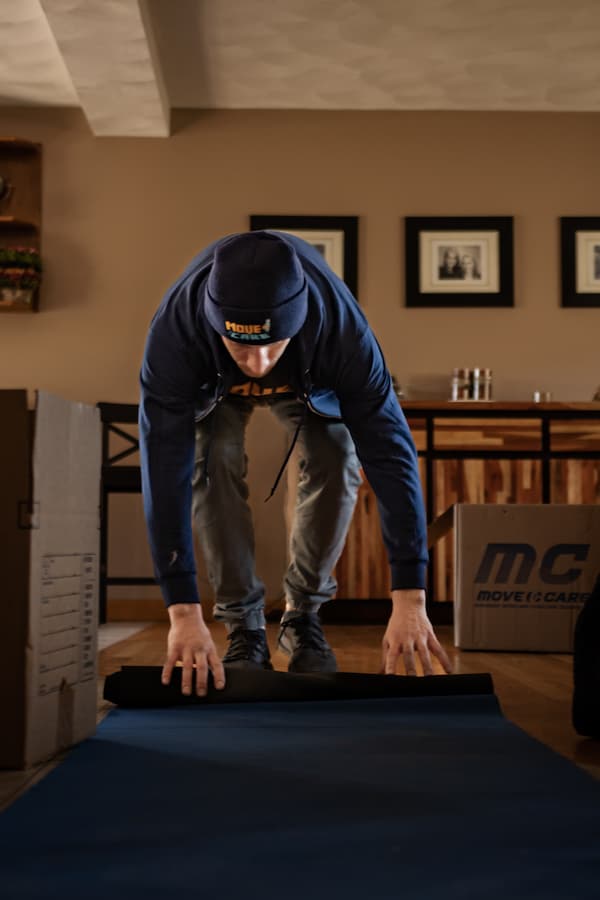
Why We're a Trusted
moving company from San Francisco to
Sacramento
Choosing Move and Care for your move from San Francisco to
Sacramento means the same crews that run our local moves in
San Francisco load the truck, and the destination is handled by a coordinator who
has driven the route.
When you choose Move and Care for your move from San Francisco to
Sacramento, you get a moving crew that knows the ins and outs of long-distance moves — from careful packing to
on-time delivery — making the entire process smooth, quick, and safe.
More About us

Fully Licensed & Insured
We are legally authorized to handle moves of any type and distance. Licenses: USDOT #3212621; MC #1018431; NCUC #C-3067; TXDMV #009636518C.

Cost Efficiency
We offer flexible pricing options. Flat rates with a binding moving quote and tailored plans — so you know exactly what to expect with no hidden costs.

Full-Service
We manage everything: careful packing, secure loading, route planning, delivery, and even unpacking at your new house.

Safety
Our movers use professional packing techniques, every truck is GPS-tracked, and insurance coverage is included — so your belongings arrive just as they left.
What you get by moving from San Francisco to Sacramento with us?

Loading and Unloading
We will load into the truck and unload at a new place all of
your items.

Gas, Tolls
Our moving company rates include all the charges, no hidden
fees.

Dedicated Manager
Our dedicated manager will walk you through the whole moving
process.

Transportation
Our Company makes sure all of your belongings are safe during
delivery.

Moving Insurance
Insurance coverage helps save your items from unexpected
damages.

Assemble and Disassemble
We make sure your furniture is Assembled and Disassembled.



Our Licenses & Awards
We’ve helped over 5,000 people move safely — from single-bedroom apartments to 5-bedroom houses and full office moves. Our team has completed more than 1,200 long-distance moves across the U.S., always on time and with belongings protected. With licensed movers, GPS-tracked trucks, and full packing support, we make sure every step of your move is handled with care you can count on.
See Price Estimate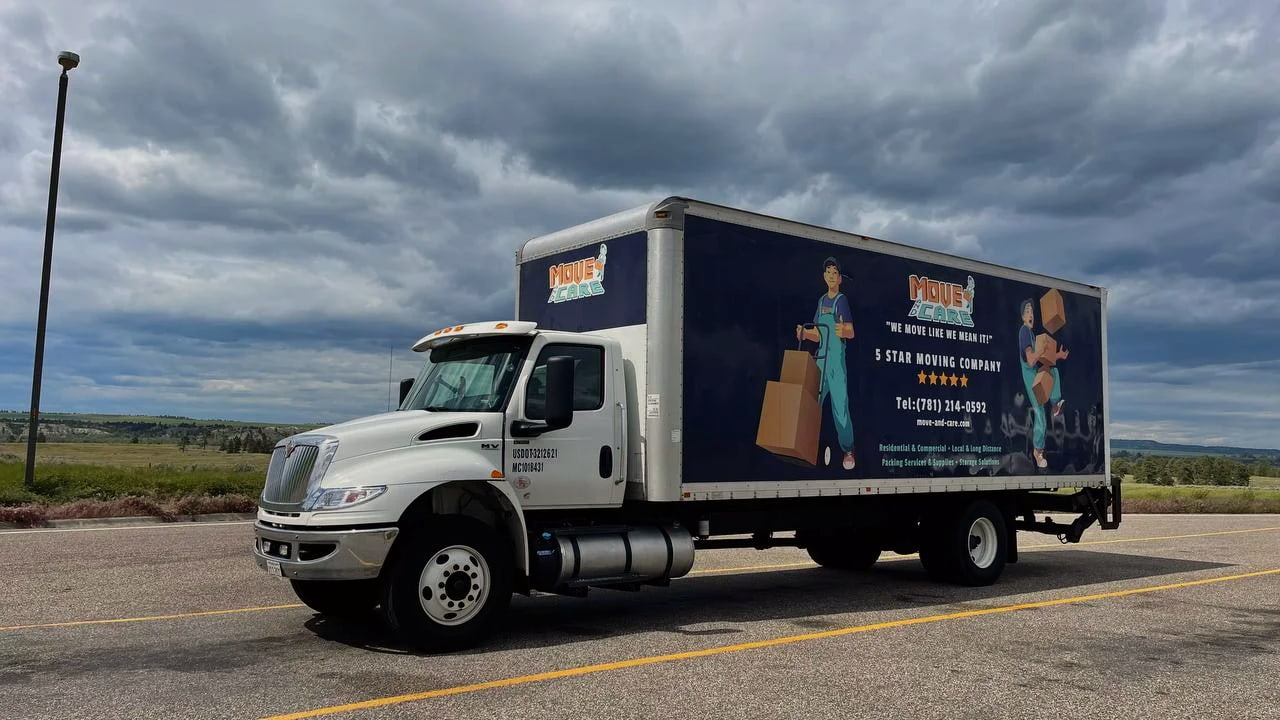

USDOT
3212621
MA DPU
31854
NCUC
C-3067
TXDMV
009636518C







Have Questions?
Ask Professional
How Much Does It Cost to Move from San Francisco to Sacramento?
| Size of the Move | What the Not to Exceed Price Is Built From | Access Factors That Change It |
|---|---|---|
| Studio / Small 1 Bedroom | Inventory list, packing level, distance | Stair flights from street level at the San Francisco end; whether the block can be legally reserved on your date |
| Large 1 Bedroom / Small 2 Bedroom | Inventory volume, packing materials, protection | COI and freight elevator reservation at either end; SFMTA sign fees and metered-space charges on your block |
| Large 2 Bedroom | Volume, disassembly and reassembly, materials | Long carry from the curb; a graded San Francisco block; a raised Sacramento porch with a stair run to the front door |
| 3 Bedroom Apartment / Townhouse | Volume, packing scope, specialty items | Half-landings a piece cannot turn; association or building move window; alley-only access at a Sacramento historic-district address |
| 4 Bedroom or Larger Home | Volume, full packing, specialty and heavy items, storage if the dates do not line up | Hoisting; permit coordination at the San Francisco end; a July or August delivery into triple-digit heat |
You get one figure for the whole job, and on a California move that figure has a legal name. This usually covers the crew, truck, fuel, tolls, transportation, basic insurance, and a $50 charge for equipment (blankets, dolly, and tools). If your building or association requires a COI, we can prepare one for you too.
Your estimate price is for the approved inventory and services. No hidden costs.
It’s worth reading that sentence’s paperwork once. A move within California is charged against the Not to Exceed Price as stated in your Agreement for Moving Services. Maximum Rate Tariff 4 states that it is “the maximum amount that may be charged for services listed,” and the only way around it is a Change Order you sign for services you requested. BHGS is equally clear about how the number has to be generated: “Verbal estimates or estimates given over the Internet are illegal and may not be enforceable,” and a firm “may provide you with an estimate in writing only after they conduct a visual inspection.” Which is the very reason we check your actual inventory before quoting rather than after, and why a phone quote from anyone, including us, isn’t the thing you should be comparing.
The 100-mile line, and why 87 miles is worth mentioning. Maximum Rate Tariff 4 draws a threshold most customers have never heard of. For “distances of 100 miles or less, the distance rates … or hourly rates … apply”; for “distances in excess of 100 miles, the distance rates … shall apply.” Distance is measured as “the shortest mileage via any public highway route.” San Francisco to Sacramento is close enough to that line that an outer-Sunset origin with a south Sacramento destination can cross it while a SoMa-to-Midtown move does not. This isn’t a detail you need to solve — your estimate confirms which structure applies to your two addresses — but it’s the honest answer to “is this a local move or a long-distance one,” and it’s the reason we won’t quote this route off a phone call.
One more thing about the hourly rate for this route, because you will see it quoted elsewhere. If a California mover charges you by the hour, the tariff says the clock runs during loading, unloading and “double the driving time from point of origin to point of destination.” That is not a mover making up a charge; that is Item 320 of the state tariff. That structure is not trivial compared to a capped price on an 87-mile run, and is worth knowing before you compare two quotes that look similar on the surface.
If you’re looking up how much movers cost from San Francisco to Sacramento, no two shipments are priced the same. The estimate is predicated upon the volume of inventory, distance, accessibility at both addresses, timing, and the services you select. Specialty items are priced individually and posted: an upright piano is $160 and a baby grand $240; items over 200 pounds may incur charges beginning at $60; hoisting is $40 per item per flight of stairs when a piece won’t fit down a stairwell — a real line item in a city where a large share of flats sit two floors above a garage. Safes, pool tables and such need confirmation of the price for the specific item. See piano moving, if that applies to you.
Packing is quoted separately as the material volume varies enormously between a studio and a four-bedroom household. Labor is per hour and materials per item — small box $6.50, medium $7.50, large $8.50, tape $7 per roll, shrink-wrap $10 per item, mattress cover $17, wardrobe box $28. Packing and storage are the two add-ons that most often change the total, especially if a San Francisco lease ends before a Sacramento lease begins. Payment note: 3.5% processing fee on card payments; cash payment may receive a 5% discount.
Want exact moving prices? Request a free estimate — we’ll review your inventory, addresses and access requirements, and then provide you with a formal estimate.
Sample San Francisco to Sacramento Moving Timeline
This is a same-day route for most families. The drive is short enough that the schedule is determined by three things that have nothing to do with mileage: when the San Francisco curb window opens, how long the carry out takes, and what the I-80 approach is doing when the truck reaches Yolo County.
Loading is the lengthy part. It begins with the curb. SFMTA’s temporary signage program requires applicants to post “No Parking” signs at least 72 hours in advance in unmetered areas and 24 hours in advance where there are meters, to “allow a minimum of 5 business days between the date of application and the date of enforcement,” and moving windows “must begin no earlier than 7am and end no later than 10pm daily.” Published FY 2026/27 fees are $355 for one to four signs and $489 for five to nine, plus $21 per meter per day where meters are taken. Absent that reservation, the block is subject to the usual rules: in a residential permit zone, a car without a permit must go “one block away or at least one-tenth (1/10) of a mile—about 500 feet” after the posted limit; driveways and curb cuts can’t be blocked; and on any grade of 3% or more, the wheels must be curbed. We size the crew and stage the carry around what the block actually allows.
The one toll on the drive isn't what people expect. There is no toll on the Bay Bridge when leaving San Francisco eastbound, because “drivers pay tolls in the westbound direction at the eastern side of the bridge.” The Carquinez Bridge at Vallejo is opposite — the Metropolitan Transportation Commission calls it “One way, eastbound in Vallejo,” and FasTrak says drivers “pay tolls in the eastbound direction, after crossing the bridge.” As of January 1, 2026, a three-axle truck pays $19.50 there and a four-axle combination $25.00, with rates going up each January through 2030. Tolls are within your price — we mention the figure because it’s the sort of line a customer is entitled to see accounted for rather than rolled into a vague “fuel and travel” charge.
The approach into Sacramento is the time variable. Caltrans says in its own words about the corridor carrying I-80 over the Yolo Causeway into Sacramento: “Recurring congestion during the AM and PM peak periods exceeds current design capacity limiting person throughput.” That’s why we schedule departures around the peaks rather than through them, and that’s why a delivery window is given as a window.
Your move coordinator will be in touch with you to keep you updated on when the truck is on the road, when the loading is complete and when the delivery is due in Sacramento.
What to Know Before Moving from San Francisco to Sacramento
San Francisco’s stock is old, and much of it is piled up over a garage. “Approximately half (47%) of San Francisco’s housing was built before 1940 compared to just 15% for the Bay Area,” with 19% of units built since 1980, according to SF Planning’s Housing Needs and Trends Report. The most obvious public example of what this means for a crew is the city’s Mandatory Soft Story Program, which covers buildings of “Wood frame construction (Type V)” permitted “prior to January 1, 1978,” with “Five or more residential units” and “Two or more stories over a basement or underfloor area,” and “currently more than 5,000 San Francisco buildings are required to participate in the program.” Living space above an open ground floor is the rule here, not the exception — a flight of stairs before the apartment stairs start, narrow Victorian and Edwardian door frames, half-landings a sofa can’t turn around, and hoisting when a piece must go around rather than through. At the opposite end of the stock, 89% of units added since the 2020 census count have been in buildings of 20 units or more, and those moves are governed by a freight elevator booking and a COI, not the curb.
Sacramento is newer on average and harder at the tail end. The City’s 2021–2029 Housing Element notes that “as of 2018, of the nearly 196,000 housing units in the City, about 72 percent were built before 1990, and about 55 percent were built before 1980,” and that “the median year a Sacramento home was built is 1975.” A median of 1975 means most destinations are a straightforward unload: driveway, single storey or a short interior stair, wide enough frontage for a truck. But that same table lists 21,489 units built in 1939 or earlier, or about 11% of the stock, and they are a different job altogether.
The Delta-style entry is the Sacramento detail worth planning for. The same thing is independently described in three different adopted City historic district plans. Alkali Flat: Delta-style with staircases to primary entrances above a high basement, on long, narrow 40' x 160' parcels with parking along alleys. Poverty Ridge: Delta-style with a high basement and raised first story, with prominent full-width or wraparound porches accessed by a staircase. Boulevard Park: the same Delta-style configuration with staircases to primary entrances above a high basement, on 12- to 16-foot-deep yards. Sacramento’s older houses sit up off the ground because of the city’s flood history, so the front door is at the top of a stair run before anything is carried inside, and the truck is often behind the house rather than in front of it. This isn’t a unique type of destination but a common one: the city’s 2040 General Plan mentions “over 800 individually landmarked historic and cultural resources … together with 30 historic districts.” Tell us the entry type when you request the estimate, and it’s in the number.
A Sacramento “house” is not necessarily one household. The City’s Missing Middle Housing ordinance broadened “the range of housing types allowed by right within the single-unit and duplex dwelling residential zones,” creating neighborhood-scale multi-unit dwellings with “no maximum density limit,” along with an estimated 75 accessory dwelling units per year through 2029, according to the Housing Element. That means a shared driveway, a back unit reached down a side yard, and a gate that needs to be unlocked before the crew arrives.
Then there's the tree canopy, which sounds pretty and isn't. Sacramento has nearly 107,000 City-maintained trees at a citywide canopy of about 19%. The historic district plans place mature sycamores, palms and walnuts in the parking strip along precisely the 40-foot-frontage streets where a 26-foot truck must stop. You’ll often see low-hanging branches over the curb lane, so you’ll want to verify truck placement before move day rather than on arrival.
Need to move something big or tough? Let us know before moving day. If you have a piano, safe, pool table, gym equipment or anything over 200 pounds, you may need extra labor, hoisting or a custom handling plan — and between a pre-1978 San Francisco staircase and a raised Sacramento porch, that call is better made a week out than on the landing.
The Heat Is the Real Difference Between the Two Ends
This is a short route and a big climate change, and the numbers are worth seeing rather than describing. NOAA’s 1991–2020 Climate Normals show an average July high temperature of 92.1°F at Sacramento Executive Airport, with an average of 11.4 days a year at or above 100°F. Downtown San Francisco: average July high 66.5°F, and 0.0 days a year at or above 100°F. You will load in fog and unload about 26 degrees warmer on the same afternoon. The upper end is not theoretical: NOAA’s daily records list 116°F in downtown Sacramento on September 6, 2022.
That changes the plan more than just the comfort level. Heat-sensitive items — candles, vinyl records, electronics, artwork, cosmetics, and anything with a pressure-sensitive adhesive — are loaded to come off first, not last. Start times get earlier in July and August. California’s outdoor heat standard, Title 8 CCR §3395, dictates that “shade shall be present when the temperature exceeds 80 degrees Fahrenheit,” that employees be “allowed and encouraged to take a preventative cool-down rest in the shade,” and that potable water be provided at “one quart per employee per hour for drinking for the entire shift.” So a crew working a Sacramento August afternoon is taking scheduled breaks, and a schedule that pretends otherwise is a schedule that slips.
Winter's the other way around. The National Weather Service calls tule fog “radiation fog in the Central Valley of California” which “forms during night and morning hours in late fall and winter months following the first significant rainfall,” and says it is “exceptionally thick fog on many nights from late October through February.” NWS Sacramento says “under stagnant atmospheric conditions, winter fog can become very persistent and may continue for several days,” noting a record run of 17 consecutive days of dense fog in December 1985. A Dense Fog Advisory is issued when “visibilities frequently drop to one-quarter of a mile or less.” For a December or January move that means a later departure rather than a heroic one, and a delivery window given in good faith.
If you are moving in late summer, a timing note. Sacramento State Fall 2026 move-in is Wednesday, August 26 and Thursday, August 27. UC Davis residence halls load September 15–17, 2026, with apartment move-ins on September 1 and 11. Those two don't coincide, but if you're going to be near either campus, those days jam up local traffic and parking.
The Moving Process (San Francisco to Sacramento)
Preparation
We begin with a visual inspection of your inventory. This is a California requirement before we can provide you with a written estimate. Based on that, we develop the service plan: what is moving, what needs packing, what the access looks like on both ends, and if either building needs a COI or an elevator reservation. If you want packing services, full or partial packing is scheduled prior to move day. If your Sacramento place isn’t ready when the San Francisco lease is up, moving and storage will fill the void.
What to arrange yourself, on this route in particular. Start with the San Francisco curb, since it has the longest lead time. Apply through SFMTA’s temporary signage program at least five business days out, and don’t forget the signs have to be up 72 hours ahead in an unmetered area (24 hours where there are meters), with the reserved window falling between 7am and 10pm. If you plan to place containers or debris boxes on the roadway or sidewalk, you will need a separate San Francisco Public Works Temporary Occupancy permit, which is billed per block face per day and can take up to five business days to process.
The Sacramento end is different, and it surprises people. Sacramento has no written curb permit for residential moving trucks. What does exist is the Meter & Space Reservation. The City explicitly scopes it to “support construction projects and special events,” requires that another City department approve the underlying project first, and states that requests “must be received a minimum of 10 business days prior to the start date” — with a $175 expedite fee below that and no guarantee of availability either way. Signs must be posted “a minimum of 72 hours prior” to the start date, and the City is blunt about what happens if they aren't: “failure to comply with these requirements will result in the temporary no parking zone being unenforceable,” and “Parking Services does not tow vehicles” — a car sitting in your reserved spot gets a citation, not a tow truck, and you call 311.
So the Sacramento delivery is usually set on the code as opposed to a permit. Sacramento City Code §10.36.120 prohibits parking “any commercial vehicle having a manufacturer’s gross vehicle weight rating of ten thousand (10,000) pounds or more on any street within a residential district,” unless the commercial vehicle is engaged in pickups and deliveries. In layman’s terms: the truck may be on your street while the crew is working, but it cannot be staged on the street the night before or left there afterward. A separate provision, §10.36.080, allows the removal of any vehicle “parked or left standing on a street or highway for seventy-two (72) or more consecutive hours” and limits an unattached trailer to less than four hours in any 24-hour period. If your street is in a residential permit district, note that a permit “shall not guarantee or reserve to the holder an on-street parking space” under §10.48.120 — but residents can sign up for free 24-hour temporary permits via the City’s Resident Guide to Parking Services. At both addresses, parking and any necessary permits are the customer’s responsibility. Check with Sacramento Parking Services or 311 to confirm your particular block.
Call your Sacramento property manager, association or HOA and ask four questions: is there a move-in time window, is there a dock or elevator to reserve, is a COI required and what does it need to say, and is there a deposit or gate code to sort out. Clear the walkway and curb area before the crew arrives at either end, disconnect any appliance that has a water or gas line, empty desk and dresser drawers, and label sealed boxes by destination room. Crews are not allowed to load flammable, explosive, firearm-related, gasoline-filled or propane-filled items. One route-specific addition: if you’re moving in July or August, set aside the heat-sensitive box — candles, records, medication, anything that softens — and tell the crew, so it rides where it can come off first.
Your estimate will clearly demonstrate the final scope. Timing and price may be affected by packing level, special items, and building access.
Moving Day
Furniture is padded and shrink-wrapped, and the load is inventoried and stacked so the Sacramento unload comes off in the order the destination needs. That’s why the access on the far end must be known before the truck is packed: a piece meant for the top of a raised Delta-style porch, or for a rear ADU down a side yard, is loaded to be reached first. This move stays inside California, so the paperwork is state paperwork. If you hired a mover three or more days in advance, BHGS requires that you be given “a copy of their moving services agreement, and also an Important Notice About Your Move document, and the Important Information For Persons Moving Household Goods (within California) booklet.” If you haven’t been given those, that’s a question worth asking before anything gets loaded.
Verification is easy on this route and worth the effort. The Bureau of Household Goods and Services licenses companies that move within California and has a license search on its consumer page. California law requires a permit issued by the bureau for any household move within the state. Move & Care’s federal credentials for interstate work are USDOT 3212621 and MC 1018431, verifiable in FMCSA’s SAFER system — those apply to our cross-state routes rather than to this one, and we’d rather say so than have a federal number stand in for a state answer.
Delivery & Unpacking
In Sacramento we unload, put furniture in the designated rooms and reassemble standard items. If unpacking was booked, after the setup we take away boxes and packing material. The delivery needs to be a single, continuous, attended unloading window, as the code exception that allows the truck to park on a residential street is only for active loading and unloading and nothing else.
If anything is broken or missing, please advise the crew immediately and, if possible, complete a Damage Report before they leave. Any damage found after the move should be reported within 96 hours.
Included at no extra cost is Basic Released Value Protection, and it’s helpful to know what it covers. In California, the Maximum Rate Tariff 4 says that, unless you declare a higher value in writing, the default is 60 cents per pound per article. On a 25-pound television, that's $15, not the cost of a television. You can select Full Value Protection at an additional cost. This is a good option when you are shipping items that have a high value but a low weight. Other than our 96-hour reporting request, BHGS states “loss or damage claims must be filed in writing within nine months after your goods have been delivered.” Read our reviews and about us to see how previous customers describe the process, or contact us to discuss your dates.
More About PricingF.A.Q. about moving from San Francisco to Sacramento
California mandates a written Not to Exceed price for all household moves, so you receive a capped number prior to loading rather than an open meter. BHGS calls it the most you can be charged unless you ask for more services. The number can only be issued after a visual inspection of your inventory. The estimate is based on volume, scope of packing, access at both addresses, timing and the services you choose. In most cases it covers crew, truck, gas, tolls, transportation and basic insurance, plus a $50 equipment charge for blankets, dolly and tools. Specialty pricing is as follows: upright piano $160, baby grand $240, items over 200 pounds starting at $60, hoisting $40 per item per flight of stairs. There is a 3.5% processing fee for card payments; cash may receive a 5% discount.
It's right on the line California uses to tell them apart. Moves of 100 miles or less may be priced on an hourly basis or by the mile under Maximum Rate Tariff 4, but moves over 100 miles must be priced on a per-mile basis. Mileage is based on the shortest public highway route. San Francisco to Sacramento is about 87 miles, so starting in the outer neighborhoods and ending in south or east Sacramento can cross the threshold when a downtown-to-Midtown move does not. Your written estimate shows which structure applies to your two particular addresses. That's also why we will not quote this route over the phone.
No, Sacramento does not issue a curb permit written for residential moving trucks. There is the City's Meter and Space Reservation, but that is available to construction projects and special events only, and it must be approved by another City department first. It requires a minimum of 10 business days' notice and there is no guarantee of availability. The city code usually governs the move, with section 10.36.120 barring commercial vehicles rated at 10,000 pounds or more on residential streets unless they are actively loading or unloading, which is what a crew is doing. The truck can be on your street while work is being done, but cannot be there the night before or after. Please confirm your block with Sacramento Parking Services or 311, and confirm gate and alley access with your property manager.
Yes, if you want to reserve the space. The No Parking signs used for moves are issued through SFMTA's temporary signage program. Signs must be posted at least 72 hours before enforcement in unmetered areas and 24 hours in metered areas, and you should allow at least five business days between application and enforcement. Moving windows must begin no earlier than 7am and end no later than 10pm. Published FY 2026/27 fees are $355 for one to four signs and $489 for five to nine, plus $21 per meter per day. Parking arrangements and permits are the responsibility of the customer, so apply early and confirm details with SFMTA or 311.
This route does not cross state lines, so the relevant license is a California license. Companies doing moves within California are regulated by the Bureau of Household Goods and Services, which has a consumer page that features a license search. You can verify any mover yourself in less than a minute. It's a step worth taking here, too: BHGS did a two-day sweep of eight counties, including San Francisco and Sacramento, visiting 40 moving companies to check licensing and workers' compensation insurance, and it recommends consumers do so before hiring. Move & Care is licensed and insured, with USDOT 3212621 and MC 1018431 for interstate work. Those federal numbers are for cross-state routes, not this one.
More than you'd think on an 87-mile trip. According to NOAA's 1991 to 2020 climate normals, Sacramento averages a July high of 92.1 degrees and 11.4 days a year at or above 100 degrees, while downtown San Francisco averages 66.5 degrees in July and zero days at or above 100. You load in fog and unload in real heat the same afternoon. In practice, we move start times earlier in July and August, load heat-sensitive items to come off first, and plan around California's outdoor heat standard, which requires shade over 80 degrees and preventative cool-down rests. Flag candles, records, electronics, medication and artwork when you book, so they are packed and staged accordingly.

Our Instagram Profile


Contact Us
Fast, Fair Moving Estimate
Clear pricing. Certified pros.
Careful handling.
Start your smooth move with Move and Care.




