
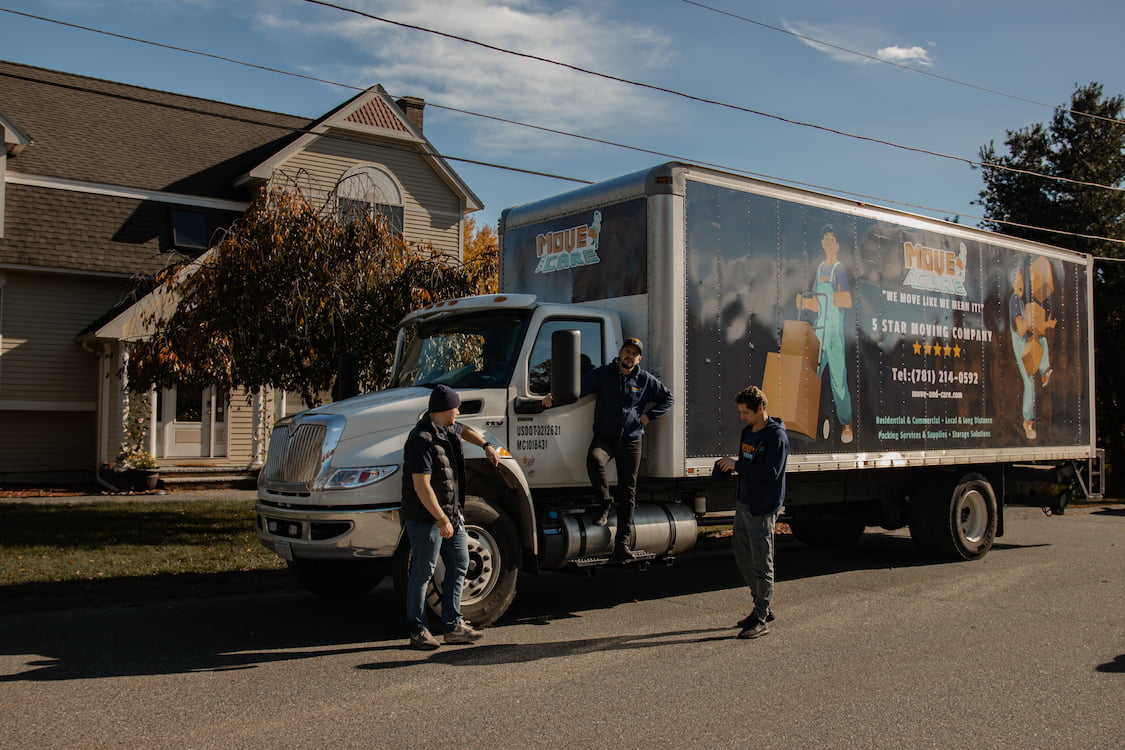
The company that customers love
Move and Care strives to satisfy our client's needs 100%. Our company is well-reviewed, so we are not shy about showing over 2500 reviews of our company in Boston, Austin, San Antonio, Charlotte and Irvine! Explore the reviews and get an idea of our company.
Read Move and Care ReviewsThe company with a reputation
Move and Care has managed to become one of the best moving companies. Our company is based in Boston, MA; Austin, TX; San Antonio, TX; Charlotte, NC and Irvine, CA. We are also very familiar with San Diego and it is part of our area of work.
Check Our Licenses and Awards


Our San Francisco to San Diego Moving Services

Residential Moving
Service for smooth and easy family moves

Commercial Moving
Smooth business moving to keep the business running

Packing Services & Supplies
Complete packing help and quality materials

Storage Solutions
Safe storage spaces for your items, available anytime

Piano Moving
Skilled piano transport to maintain condition.

White Glove Moving
Moving services with extra care for valuable items

Senior Moving
Gentle and efficient relocations for seniors.
What Customers Say About Us
Influencers who move with Move & Care
Hear how creators and community leaders describe their move-day experience, from booking to the moment every box is in place.
Our Text Reviews
Know Your Moving Cost Today
Why We're a Trusted
moving company from San Francisco to
San Diego
Choosing Move and Care for your move from San Francisco to
San Diego means the same crews that run our local moves in
San Francisco load the truck, and the destination is handled by a coordinator who
has driven the route.
When you choose Move and Care for your move from San Francisco to
San Diego, you get a moving crew that knows the ins and outs of long-distance moves — from careful packing to
on-time delivery — making the entire process smooth, quick, and safe.
More About us

Fully Licensed & Insured
We are legally authorized to handle moves of any type and distance. Licenses: USDOT #3212621; MC #1018431; NCUC #C-3067; TXDMV #009636518C.

Cost Efficiency
We offer flexible pricing options. Flat rates with a binding moving quote and tailored plans — so you know exactly what to expect with no hidden costs.

Full-Service
We manage everything: careful packing, secure loading, route planning, delivery, and even unpacking at your new house.

Safety
Our movers use professional packing techniques, every truck is GPS-tracked, and insurance coverage is included — so your belongings arrive just as they left.
What you get by moving from San Francisco to San Diego with us?

Loading and Unloading
We will load into the truck and unload at a new place all of
your items.

Gas, Tolls
Our moving company rates include all the charges, no hidden
fees.

Dedicated Manager
Our dedicated manager will walk you through the whole moving
process.

Transportation
Our Company makes sure all of your belongings are safe during
delivery.

Moving Insurance
Insurance coverage helps save your items from unexpected
damages.

Assemble and Disassemble
We make sure your furniture is Assembled and Disassembled.




Our Licenses & Awards
We’ve helped over 5,000 people move safely — from single-bedroom apartments to 5-bedroom houses and full office moves. Our team has completed more than 1,200 long-distance moves across the U.S., always on time and with belongings protected. With licensed movers, GPS-tracked trucks, and full packing support, we make sure every step of your move is handled with care you can count on.
See Price Estimate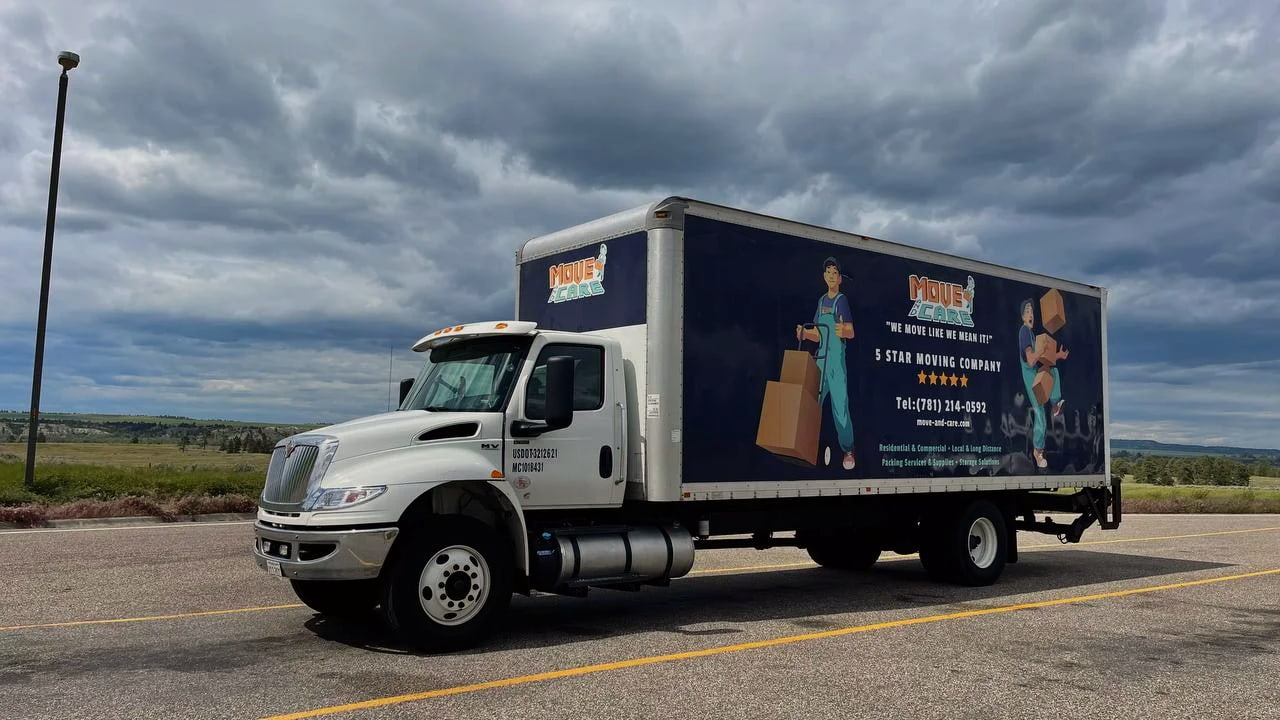

USDOT
3212621
MA DPU
31854
NCUC
C-3067
TXDMV
009636518C







Have Questions?
Ask Professional
How Much Does It Cost to Move from San Francisco to San Diego?
| Size of the Move | What the Not to Exceed Price Is Built From | Access Factors That Change It |
|---|---|---|
| Studio / Small 1 Bedroom | Inventory list, packing level, distance | Stair flights from street level at the San Francisco end; whether the block can be legally reserved on your date |
| Large 1 Bedroom / Small 2 Bedroom | Inventory volume, packing materials, protection | COI and freight elevator reservation at either end; SFMTA sign fees and metered-space charges on your block |
| Large 2 Bedroom | Volume, disassembly and reassembly, materials | Long carry from the curb; a graded San Francisco block; a San Diego address with no driveway and no alley behind it |
| 3 Bedroom Apartment / Townhouse | Volume, packing scope, specialty items | Half-landings a piece cannot turn; association or building move window; a cottage court or garden court reached on foot down a shared walk |
| 4 Bedroom or Larger Home | Volume, full packing, specialty and heavy items, storage if the dates do not line up | Hoisting; permit coordination at the San Francisco end; a winter delivery window sized around Tejon Pass |
You get one figure for the whole job, and on a California move that figure has a legal name. Most of the time it includes the crew, truck, fuel, tolls, transport and basic insurance, plus the $50 equipment charge for blankets, dolly and tools. We can also prepare a COI if your building or association needs one.
Your estimate price is based on the approved inventory and services. There are no hidden fees.
The 100-mile line is the most useful thing on this page, so it goes first. California publishes a tariff most customers have never heard of, and it settles the pricing question on this route outright. Maximum Rate Tariff 4, Item 16 says: "For transportation of shipments for distances of 100 miles or less, the distance rates … or hourly rates … apply"; and "For the transportation of shipments for distances in excess of 100 miles, the distance rates … shall apply." Distance is measured as "the shortest mileage via any public highway route." SF-SD is about 500 miles on any routing, so there's no address pair in either city that meets the threshold. This is a distance-based pricing requirement. If you are quoted an hourly rate for this move, it’s worth asking a question before you sign.
The corollary is also important because it’s the trap on shorter California routes. When a mover does bill hourly, Item 320 of the same tariff puts "double the driving time from point of origin to point of destination" on the clock. That clause would be disastrous on a 500 mile run and that is why hourly billing is not available at this distance under the tariff. What you should be comparing between companies is the Not to Exceed Price written into your Agreement for Moving Services — the tariff defines it as "the maximum amount that may be charged for services listed," and the only way past it is a Change Order you sign for services you asked for.
Which is also why nobody should be quoting this route over the phone, including us. BHGS is direct about it: "Verbal estimates or estimates given over the Internet are illegal and may not be enforceable," and a firm "may provide you with an estimate in writing only after they conduct a visual inspection." So we review your actual inventory and access before quoting rather than after.
If you are searching how much do movers cost in San Diego, no two shipments price the same. The quote is based on the inventory volume, distance, access at both addresses, the time and the services you select. Specialty items are priced separately and published: an upright piano is $160 and a baby grand $240, charges for items over 200 pounds may start at $60, and hoisting is $40 per item per flight of stairs when a piece won’t clear a stairwell — a real line item in a city where a large share of flats sit two floors above a garage. Safes, pool tables, etc., need pricing confirmed on the particular piece. If you are doing that, see piano moving.
Packing is quoted separately as the amount of material varies hugely between a studio and a four-bedroom household. Labor hourly and materials per item — small box $6.50, medium $7.50, large $8.50, tape $7 per roll, shrink-wrap $10 per item, mattress cover $17, wardrobe box $28. The two most common add-ons that affect the total are packing services and storage, especially if a San Francisco lease ends before a San Diego lease starts or an escrow closes. Payment note: card payments incur a 3.5% processing fee, cash payment may receive a 5% discount.
Need precise moving pricing? Request a free estimate — we’ll look over your inventory, addresses, and access requirements and then send you a formal estimate.
Sample San Francisco to San Diego Moving Timeline
This is a multi-day route and the schedule is driven by three things: when the San Francisco curb window opens, what Tejon Pass is doing and how the I-5 approach into San Diego County behaves on the morning of delivery. Mileage is the one variable no one has to worry about.
Loading is the long part, and it starts with the curb. Thru SFMTA's temporary signage program, "No Parking" signs must be posted at least 72 hours in advance in an unmetered area and 24 hours where there are meters, applicants are asked to "allow a minimum of 5 business days between the date of application and the date of enforcement," and moving windows "must begin no earlier than 7am and end no later than 10pm daily." Published FY 2026/27 fees run $355 for one to four signs and $489 for five to nine, plus $21 per meter per day where meters are taken. Without that reservation the block follows normal rules: in a residential permit area a vehicle without a permit must move "one block away or at least one-tenth (1/10) of a mile—about 500 feet" after the posted limit, driveways and curb cuts can't be blocked, and on any grade of 3% or more the wheels must be curbed. We size the crew and stage the carry around what the block actually allows.
The drive has one real choke point, and it isn’t in either city. I-5 crosses Tejon Pass — the Grapevine — and Caltrans calls it "a major transportation corridor" connecting "Southern California to the Central Valley, with average daily traffic of 83,000 vehicles," with a summit elevation of 4,144 feet. Caltrans activates Operation Snowflake when heavy snow is forecast to fall to 4,500 feet or lower, "an alert system that calls for maintenance crews to work around-the-clock to keep the highway open." When the pass does close, Caltrans blocks northbound I-5 at Lake Hughes Road and southbound I-5 at Grapevine Road in Kern County. The single largest schedule risk on the job is a December, January or February move. It is checkable in advance: Caltrans QuickMap shows live chain controls and closures and the Caltrans Highway Information Network answers at (800) 427-7623. It is also the honest reason a long-distance delivery is quoted as a window rather than an hour.
The approach into San Diego County is the last variable. Caltrans District 11 records that the I-5 North Coast Corridor — roughly 30 miles from Oceanside south into San Diego — accommodated "over 1.4 million daily vehicle trips just on I-5" in 2010, and that I-5 carries "more than 700,000 vehicle trips on an average weekday." We schedule the final leg around the peaks rather than through them.
The move coordinator will keep in touch with you so you know when the truck is on the road, when the loading is done, and when the delivery is due in San Diego.
What to Know Before Moving from San Francisco to San Diego
San Francisco's stock is old, and much of it is stacked over a garage. SF Planning's Housing Needs and Trends Report found that "approximately half (47%) of San Francisco's housing was built before 1940 compared to just 15% for the Bay Area," with only 19% of units built since 1980. The city's Mandatory Soft Story Program is the most visible public manifestation of what that means for a crew: it covers buildings of "Wood frame construction (Type V)" permitted "prior to January 1, 1978," with "Five or more residential units" and "Two or more stories over a basement or underfloor area," and "currently more than 5,000 San Francisco buildings are required to participate in the program." Living space above an open ground floor is the norm here, not the exception — a flight of stairs before the apartment stairs begin, narrow Victorian and Edwardian door frames, half-landings a sofa cannot turn, and hoisting when a piece has to go around rather than thru. At the other end of the stock, 89% of units added since the 2020 census count have been in buildings of 20 units or more, and those moves are governed by a freight elevator booking and a COI rather than by the curb.
San Diego is mostly easier, and then occasionally much harder. The City's Housing Element reports that as of 2016 "56% of existing homes are single-family" and "47% of housing in the City is renter-occupied," that "90% of the City's housing stock was built prior to 2000," and that as of 2019 "only 3.6 percent of the City's housing stock was built in the past 10 years." A majority-single-family, mostly pre-2000 destination usually means a driveway, a garage and a straightforward carry. The same document also notes that “homes built before 1990 are often not wheelchair accessible,” something to bear in mind if the move involves anyone with limited mobility — see senior moving.
Except for the beach communities, and the City explains why. The adopted Ocean Beach Community Plan and Local Coastal Program is unusually candid about access. It says that “a number of residential lots throughout the community do not have alleyway access,” that “many small garages are rented out for storage uses,” that “the storage use, as opposed to off-street parking use, contributes to the parking issues,” and that “parking shortage is a problem in Ocean Beach, especially during summer months.” It also points out that “older multi-family housing constructed in accordance with previous development regulations do not observe front yard setbacks,” and that the community “was originally developed as a resort community with summer cottages.” Read together, that is a converted cottage on a small lot with the building set at the front property line, no alley behind it, a garage full of somebody’s boxes, and a summer parking shortage the City acknowledges in writing. It is a long carry, and a place to stage is not available. That is why we ask about the alley and the garage before quoting a beach address, rather than after. The older beach neighborhoods tend to fit this pattern; the plan above covers Ocean Beach specifically.
The other long-carry case is cottage courts and garden courts. The City's historic preservation planning work describes the housing forms along Park Boulevard as "single-family dwellings, duplexes, bungalow and cottage courts, garden court apartments, and six-pack / dingbat buildings," and lists designated districts including South Park in Golden Hill, with 407 properties. In a cottage or garden court, the unit is behind those in front of it, reached on foot down a shared central walk with no vehicle access to the door – a design feature, not a parking issue, and one that has to be priced as distance carried, not driven. Designated properties also come with owner obligations: the City requires owners to "maintain the property in accordance with the U.S. Secretary of the Interior's Standards for the Treatment of Historic Properties" and to "obtain approval for maintenance, restoration or alteration efforts prior to purchasing materials or undertaking work," which matters from time to time when a doorway or railing would have to come off to get a piece inside.
Downtown and the condo towers are a booking problem, not a carrying problem. When the destination is a high-rise, the day is dictated by a freight elevator reservation, a loading dock or bay with a height limit, a move-in time window set by the association, and a COI naming the right parties. Many apartment and condo buildings may require elevator reservations, COIs or move-in time windows. We will draft the COI, but the reservation and the rules have to come from your property manager, association or HOA. Ask them in the same call.
Got something big or difficult to move? Let us know before moving day. A piano, a safe, a pool table, gym equipment, or anything over 200 pounds may need extra labor, hoisting, or a custom handling plan — and between a pre-1978 San Francisco staircase and a San Diego cottage court reached down a shared walk, that call is better made a week out than on the landing. White glove moving adds protection and handling for high-value or fragile shipments.
Seasonal Timing: The Rain Is at the Origin and the Heat Arrives in Autumn
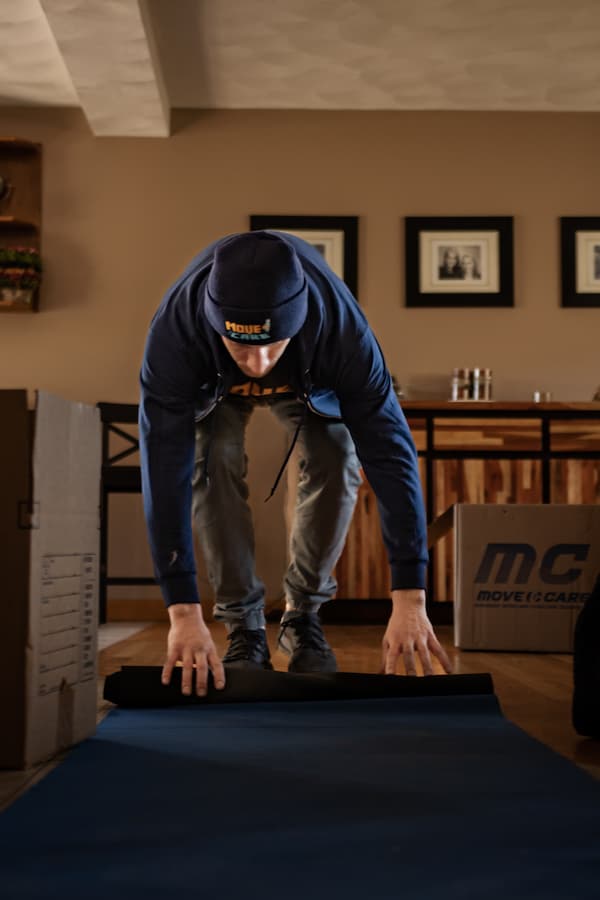
The ends of this route are both mild, so temperature is not the useful comparison. It's water. Downtown San Francisco averages 23.65 inches of precipitation a year over 45.9 days with 0.10 inch or more, versus San Diego International Airport's 10.34 inches over 21.7 such days, according to NOAA's 1991–2020 Climate Normals. The origin is more than twice as wet as the destination and has more than twice as many wet days. The vast majority of the rain risk in a winter move is on the San Francisco loading end – where floor runners go down, door frames get protected and upholstery gets wrapped inside the building instead of at the tailgate.
San Diego’s heat runs late, which surprises people. Same NOAA normals put San Diego’s warmest month at August, with an average high of 76.4°F, and September nearly ties it at 75.9°F. The National Weather Service is more direct in its technical memorandum on the climate of San Diego: "most of the highest temperatures occur in the months of September and October." So the month that a customer assumes is the safe shoulder season is in fact the hot one, and heat-sensitive items — candles, vinyl, electronics, artwork, medication, anything with a pressure-sensitive adhesive — are loaded to come off first on an autumn delivery. California’s outdoor heat standard, Title 8 CCR §3395, requires that “shade shall be present when the temperature exceeds 80 degrees Fahrenheit,” that employees be “allowed and encouraged to take a preventative cool-down rest in the shade,” and that potable water be provided at “one quart per employee per hour for drinking for the entire shift.”
Autumn also brings the wind. The same NWS memorandum describes Santa Ana winds as “warm, dry winds that blow from the east or northeast (offshore),” occurring “between October and February with December having the highest frequency of events,” typically “between north and east at a speed of 35 knots” with “gusts to 50 knots,” and producing “very low relative humidities, which often drop below 20 percent.” A 50-knot gust across an open tailgate is a load-securement and wrapping question, not a weather anecdote. And dry offshore wind is also the condition under which regional air quality can go south quickly; Cal/OSHA’s wildfire smoke standard, Title 8 CCR §5141.1, sets employer requirements once “the current Air Quality Index (current AQI) for PM2.5 is 151 or greater,” and we will tell you if a crew’s schedule has to shift for it.
One more San Diego quirk worth planning around: the coast and a few miles inland are two different days’ work. NWS records that where the city’s daily temperature range is “only about 15 degrees,” “a few miles inland these ranges increase to 30 degrees or more,” and that “in nearby valleys the daytimes are much warmer in the summer.” A delivery in Ocean Beach and a delivery in an inland valley on the same August afternoon are not the same job, and the crew plan reflects which one you have. The opposite happens late spring and early summer, when the marine layer is "nighttime and early morning cloudiness" that "usually dissipate[s] during the morning," except on eddy days, when "the low clouds … can remain over the area throughout the day."
Timing note if you are moving in late August. San Diego State's Fall 2026 move-in runs Wednesday, Aug. 19 to Friday, Aug. 21, with staggered check-in times, arrivals routed thru four campus lots and "moving services will be limited after 4 p.m." The University of San Diego loads new international students on Tuesday, August 25, new first-year students on Saturday, August 29, and new transfer and returning students on Sunday, August 30. UC San Diego doesn't give a firm date — its housing contract just says move in "by first day of classes," with assignment details out "mid-to-late August." If you're heading to a spot near any of those campuses, those days clog local traffic and parking, and they happen during San Diego’s hottest month.
The Moving Process (San Francisco to San Diego)
Preparation
We begin with a visual survey of your inventory, because California requires one before issuing a written estimate, and build the service plan from it: what is moving, what needs packing, what the access looks like at both ends, and whether either building requires a COI or an elevator reservation. We arrange full or partial packing of your items before move day if you require packing services. If your San Diego home won’t be ready when the San Francisco lease is up, moving and storage will be the bridge to cross — a frequent need on a 500-mile route where delivery is in a window, not at a specific hour.
What to handle yourself, especially on this route. Begin at the San Francisco curb, as this is where you'll have the longest lead time. Apply thru SFMTA’s temporary signage program at least five business days in advance, and remember that the signs need to be posted 72 hours in advance in an unmetered area (24 hours in a metered area) and the reserved window must be between 7 a.m. and 10 p.m. If a container or debris box will be placed on the roadway or sidewalk in San Francisco that is a different San Francisco Public Works Temporary Occupancy permit charged per block face per day that takes up to five business days to process.
The San Diego end is different and surprises people. San Diego doesn’t have a curb permit for a moving truck. The City's parking permits page lists exactly two: a Temporary Overnight Recreational Vehicle Permit, "required to park an RV on a City street between 2 and 6 a.m.," and Residential Permit Parking, "intended for residential areas that are severely impacted by all-day commuter parking." Temporary "No Parking" signage is a City power rather than a customer service — San Diego Municipal Code §86.0109 authorises "the Chief of Police … to erect or place temporary 'No Parking' signs," with signs posted "at least 24 hours prior to the removal of any vehicles."
So the San Diego delivery is planned around the code rather than a permit. Section 86.0149 makes it unlawful "to park any heavy duty commercial vehicle on a street in any residence district except: (a) while loading or unloading property," or in aid of a service to a property on that block. Section 86.0140(a) similarly exempts "any oversized vehicle on a public street while actively engaged in loading or unloading goods, wares, or merchandise from or to any building or structure." Read plainly: the truck can stand on your street while the crew is working, and cannot be staged there before or left afterwards — §86.0139 bars oversized vehicles from public streets "between the hours of 2:00 a.m. and 6:00 a.m.," and §86.0118 caps any vehicle at "seventy-two (72) consecutive hours." The City's enforcement page adds the everyday rules that catch people out on move day: parking is prohibited "in front of a public or private driveway (even your own driveway)" and "on a sidewalk or parkway," and where street sweeping is posted, "parking is prohibited on the designated days for the entire time posted on the sign." Check your street sweeping day before you pick a move date.
If a portable container is part of the plan, San Diego does permit that, and the numbers are published. Under Information Bulletin 718, "a Traffic Control Permit for a temporary storage container or dumpster is required for containers that encroach into the public right of way, including the sidewalk area." The permit "is valid for up to 7 days," fees are listed at $87.68 per week for a storage container plus an $87.68 processing fee and $20.00 per meter per day where metered spaces are taken, and "the permit holder shall post Tow-Away/No Parking signs 72 hours before placing the storage container or dumpster," with at least three working days' notice before placement. Fees are as listed in the bulletin, please confirm current figures with Development Services. Parking arrangements and any permits required are the customer’s responsibility at both addresses.
Then call your San Diego property manager, association or HOA and ask four questions: is there a move-in time window, is there a dock or elevator to reserve, is a COI required and what should it say, and is there a deposit or gate code to sort out. Clear walkway and curb area at each end before the crew arrives. Disconnect any appliance with a water or gas line. Empty desk and dresser drawers. Label sealed boxes with the destination room. Crews cannot load items that are flammable, explosive, firearm related, gasoline or propane filled. Two tips specific to your route: if you’re moving in September or October, save the heat-sensitive box — candles, records, medication, anything that softens — and tell the crew so it gets put where it can come off first; and if you’re moving between December and February, check Caltrans QuickMap or call (800) 427-7623 the day before, because a Tejon Pass closure shifts a delivery window in a way no crew can plan for.
The final scope will be clearly indicated on your estimate. Packing level, special items, and building access can affect timing and price.
Moving Day
Furniture is padded and shrink-wrapped, the load is inventoried and stacked so the San Diego unload comes off in the order the destination needs. That’s more important on a long route than a short one: a piece for a cottage court reached down a shared walk, or for the far end of a beach block with no alley, is loaded to be reached first, as it cannot be shuffled at the curb. Because this move stays inside California, it's state paperwork. When you hire a mover three or more days ahead, BHGS requires that you get "a copy of their moving services agreement, and also an Important Notice About Your Move document, and the Important Information For Persons Moving Household Goods (within California) booklet." If you have not been given those, that is a question worth asking before anything is loaded.
Verification is easy on this route, and worth doing. The Bureau of Household Goods and Services licenses companies that move within California and has a license search on its consumer page. California law requires a permit issued by the bureau for any household move within the state. On the federal level, Move & Care’s interstate credentials are USDOT 3212621 and MC 1018431, and you can verify those at FMCSA’s SAFER system — those are for cross-state moves, not this one, and we’d rather say so than allow a federal number to stand in for a state answer.
If this is a military or government move, that’s more common than unusual in the San Diego market. Naval Base San Diego alone has "over 1,600 land acres and 326 acres of water along the San Diego Bay," is homeport to "60 U.S. Navy ships and two auxiliary vessels including USNS Mercy (TAH - 19)," and has "more than 200 tenant commands." Base access, gate procedures and report dates are dictated by your command, not us; tell us the constraint and the schedule is built to it. See military and government moving.
Delivery & Unpacking
We deliver and set up furniture in the rooms designated and reassemble standard items in San Diego. If you booked unpacking, we take the boxes and packing materials with us after the setup. Delivery is planned as one continuous, attended unloading window, because the code exception that allows the truck to sit on a residential street only covers active loading and unloading and nothing else.
Notify the crew immediately if anything is damaged or missing and complete a Damage Report before they leave where possible. Any damage found after the move needs to be reported within 96 hours.
Basic Released Value Protection is included at no extra cost and it is good to know what it covers. California's Maximum Rate Tariff 4 sets the default rate at 60 cents per pound per article, unless you declare a higher value in writing — which on a 25-pound television is $15, not the price of a television. Full Value Protection is an extra and the right choice when the shipment contains items whose weight has nothing to do with their value, which is more often the case on a 500-mile move than a cross-town one. Separate from our 96-hour reporting request, BHGS states that "loss or damage claims must be filed in writing within nine months after your goods have been delivered." See our reviews and about us for how past customers describe the process, look over the fleet if truck size matters at your address, or contact us to talk thru your dates. Planning notes and route guides are on the moving blog.
More About PricingF.A.Q. about moving from San Francisco to San Diego
For a move out of San Francisco, a Not to Exceed amount is written prior to loading and set as a price. California requires it. The Bureau of Household Goods and Services says it's the most you can be charged unless you request additional services. The number can be issued only after a visual inspection of your inventory. It is contingent upon the volume, packing scope, access at both addresses, timing and the services you choose. It usually covers the crew, truck, gas, tolls, transportation and basic insurance, plus a $50 equipment charge for blankets, dolly and tools. Specialty pricing is as follows: upright piano $160, baby grand $240, items over 200 pounds starting at $60, hoisting $40 per item per flight of stairs. Card payments incur a 3.5% processing fee; cash purchases may qualify for a 5% discount.
No. That is state law, not company policy. California's Maximum Rate Tariff 4 divides intrastate moves at 100 miles. At or below that distance a mover may use hourly rates or distance rates. Above that distance the tariff provides distance rates shall apply, with mileage measured as the shortest public highway route. San Francisco to San Diego is roughly 500 miles by any route, so no address pair in either city is under the threshold. If a company gives you an hourly rate for this route, ask what tariff item they are charging under before you sign. The price written on the quote as a Not to Exceed is the price to compare between movers.
There is no such permit in San Diego. The City's parking permits page mentions only a Temporary Overnight Recreational Vehicle Permit and Residential Permit Parking, and the temporary No Parking signage is a City power exercised by the Chief of Police pursuant to Municipal Code section 86.0109 and not something a resident can book. The code itself controls a move: 86.0149 prohibits a heavy duty commercial vehicle from a residential street except when it is loading or unloading property, and 86.0140(a) exempts an oversized vehicle that is loading or unloading. So the truck can be on your street while the crew is working, just not overnight, and section 86.0139 prohibits oversized vehicles on public streets from 2 to 6 a.m. Verify your street sweeping day. Confirm access to gates or alleys with your property manager.
Expect a multi-day window for delivery, not a specific hour, and the reason is a mountain pass, not either city. I-5 crosses the Grapevine, Tejon Pass, at 4,144 feet summit elevation, and Caltrans has an alert program called Operation Snowflake when heavy snow is forecast down to 4,500 feet. Caltrans closes northbound I-5 at Lake Hughes Road and southbound I-5 at Grapevine Road when the pass closes. That is the biggest schedule variable on the job between December and February, and it can be checked the day before on Caltrans QuickMap or by calling the Caltrans Highway Information Network at (800) 427-7623. The second variable is the last leg, in which Caltrans District 11 has I-5 in the North Coast Corridor with more than 700,000 vehicle trips on an average weekday.
Because this route is in the state, the applicable license is a California license, not a federal license. The Bureau of Household Goods and Services regulates companies doing household moves within California, and posts a license search on its consumer page, so you can check any mover yourself in under a minute. It is a step worth taking. BHGS conducted a two-day operation in eight counties, visiting 40 moving companies to check their licensing and workers' compensation insurance. It recommends that consumers check both before hiring. Move & Care is licensed and insured with USDOT 3212621 and MC 1018431 for interstate work, but those are federal numbers for cross-state routes, not this one.
Then it's a long-carry job and should be priced as such before move day, not found out upon arrival. The City's adopted Ocean Beach Community Plan makes clear that a number of residential lots in the community lack alleyway access, that many small garages are used as storage rather than parking, and that parking is tight there, especially during summer months. That's the pattern of older beach neighborhoods, and of cottage courts and garden court apartments elsewhere in the city, where the unit is behind the building in front of it, accessed on foot down a shared walk. When you ask for the estimate tell us about the alley, the garage and the walk distance and the labor is in the number.

Our Instagram Profile


Contact Us
Fast, Fair Moving Estimate
Clear pricing. Certified pros.
Careful handling.
Start your smooth move with Move and Care.




