
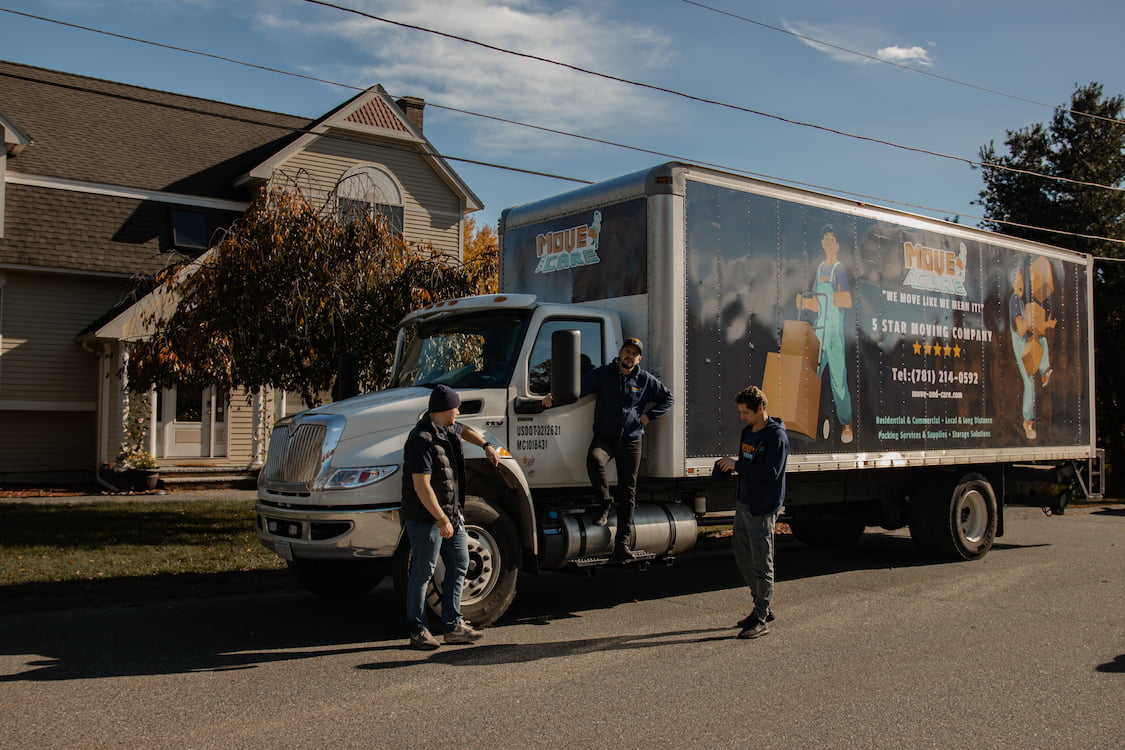
The company that customers love
Move and Care strives to satisfy our client's needs 100%. Our company is well-reviewed, so we are not shy about showing over 2500 reviews of our company in Boston, Austin, San Antonio, Charlotte and Irvine! Explore the reviews and get an idea of our company.
Read Move and Care ReviewsThe company with a reputation
Move and Care has managed to become one of the best moving companies. Our company is based in Boston, MA; Austin, TX; San Antonio, TX; Charlotte, NC and Irvine, CA. We are also very familiar with Seattle and it is part of our area of work.
Check Our Licenses and Awards


Our San Francisco to Seattle Moving Services

Residential Moving
Service for smooth and easy family moves

Commercial Moving
Smooth business moving to keep the business running

Packing Services & Supplies
Complete packing help and quality materials

Storage Solutions
Safe storage spaces for your items, available anytime

Piano Moving
Skilled piano transport to maintain condition.

White Glove Moving
Moving services with extra care for valuable items

Senior Moving
Gentle and efficient relocations for seniors.
What Customers Say About Us
Influencers who move with Move & Care
Hear how creators and community leaders describe their move-day experience, from booking to the moment every box is in place.
Our Text Reviews
Know Your Moving Cost Today
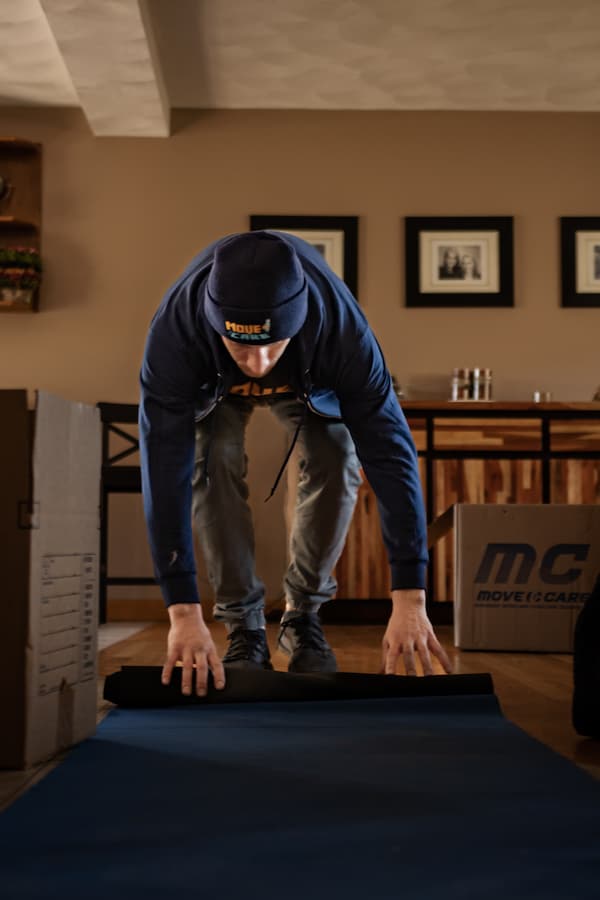
Why We're a Trusted
moving company from San Francisco to
Seattle
Choosing Move and Care for your move from San Francisco to
Seattle means the same crews that run our local moves in
San Francisco load the truck, and the destination is handled by a coordinator who
has driven the route.
When you choose Move and Care for your move from San Francisco to
Seattle, you get a moving crew that knows the ins and outs of long-distance moves — from careful packing to
on-time delivery — making the entire process smooth, quick, and safe.
More About us

Fully Licensed & Insured
We are legally authorized to handle moves of any type and distance. Licenses: USDOT #3212621; MC #1018431; NCUC #C-3067; TXDMV #009636518C.

Cost Efficiency
We offer flexible pricing options. Flat rates with a binding moving quote and tailored plans — so you know exactly what to expect with no hidden costs.

Full-Service
We manage everything: careful packing, secure loading, route planning, delivery, and even unpacking at your new house.

Safety
Our movers use professional packing techniques, every truck is GPS-tracked, and insurance coverage is included — so your belongings arrive just as they left.
What you get by moving from San Francisco to Seattle with us?

Loading and Unloading
We will load into the truck and unload at a new place all of
your items.

Gas, Tolls
Our moving company rates include all the charges, no hidden
fees.

Dedicated Manager
Our dedicated manager will walk you through the whole moving
process.

Transportation
Our Company makes sure all of your belongings are safe during
delivery.

Moving Insurance
Insurance coverage helps save your items from unexpected
damages.

Assemble and Disassemble
We make sure your furniture is Assembled and Disassembled.




Our Licenses & Awards
We’ve helped over 5,000 people move safely — from single-bedroom apartments to 5-bedroom houses and full office moves. Our team has completed more than 1,200 long-distance moves across the U.S., always on time and with belongings protected. With licensed movers, GPS-tracked trucks, and full packing support, we make sure every step of your move is handled with care you can count on.
See Price Estimate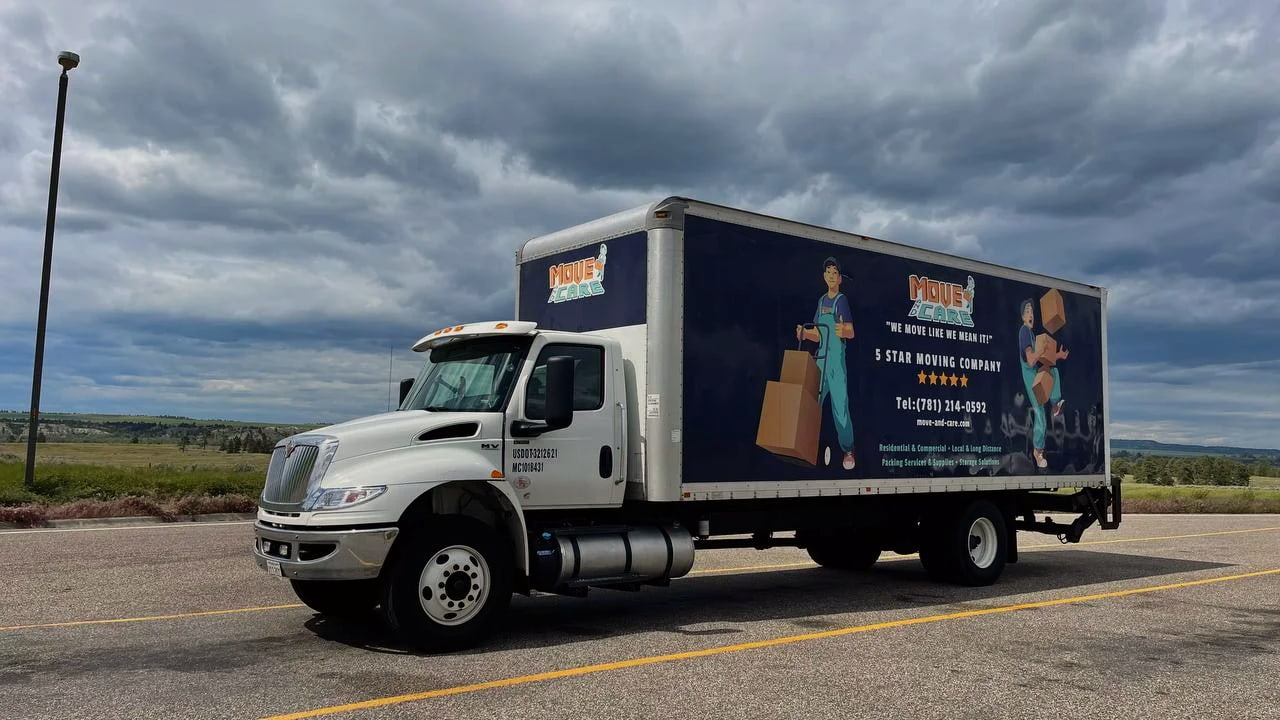

USDOT
3212621
MA DPU
31854
NCUC
C-3067
TXDMV
009636518C






Have Questions?
Ask Professional
How Much Does It Cost to Move from San Francisco to Seattle?
| Size of the Move | What the Flat Rate Is Built From | Access Factors That Change It |
|---|---|---|
| Studio / Small 1 Bedroom | Inventory list, packing level, distance | Stair flights from street level at the San Francisco end; whether the Seattle curb can be legally reserved on your date |
| Large 1 Bedroom / Small 2 Bedroom | Inventory volume, packing materials, protection | COI and freight elevator reservation at either end; SFMTA sign fees and metered-space charges on your block |
| Large 2 Bedroom | Volume, disassembly and reassembly, materials | Long carry from the curb; a graded San Francisco block; a Seattle porch stair run and basement placement |
| 3 Bedroom Apartment / Townhouse | Volume, packing scope, specialty items | Half-story upper rooms reached by a narrow stair; association or building move window; loading dock booking |
| 4 Bedroom or Larger Home | Volume, full packing, specialty and heavy items, storage if the dates do not line up | Hoisting; two-address permit coordination; November–April mountain pass conditions on the line haul |
You get one flat-rate figure for the whole job. It typically includes the crew, truck, fuel, tolls, transportation and basic insurance, plus a $50 equipment charge for blankets, dolly and tools. If your building or association requires a COI, we can prepare one for you too!
Your estimate price is for the approved inventory and services. No extra charges.
Here flat-rate is not a marketing word; it is the way federal rules define a binding estimate. Under 49 CFR Part 375 an interstate mover must do a physical survey of the goods and provide you with a written estimate, and a binding estimate "guarantees the total cost of the move based upon the quantities and services shown." That is the paperwork behind the number, and why we review your inventory before quoting rather than after.
If you're wondering how much movers cost from San Francisco to Seattle, no two shipments on this route will cost the same. The estimate is based on the volume of inventory, distance, access to both addresses, timing and services you select. Specialty items are priced separately and published: an upright piano is $160 and a baby grand $240; items over 200 pounds may involve charges starting at $60; and hoisting is $40 per item per flight of stairs when a piece will not clear a stairwell—a real line item in a city where a large share of flats sit two floors above a garage. Safes, pool tables etc. price to be confirmed for the individual item.
The cost of packing is quoted separately as the amount of material varies enormously between a studio and a four-bedroom household. Labor is hourly, materials are per item, small box 6.50, medium box 7.50, large box 8.50, tape 7.00 per roll, shrink wrap 10.00 per item, mattress cover 17.00, wardrobe box 28.00. The two add-ons that most often move the total on this route are packing services and storage, especially when a San Francisco lease ends days before a Seattle lease starts and the shipment is already on a multi-day haul. Payment note: Processing fee of 3.5% for card payments. 5% discount for cash payment.
Want exact moving prices? Request a free estimate — we'll review your inventory, addresses and access requirements, and then provide you with a formal estimate.
Sample San Francisco to Seattle Moving Timeline
The line haul of 810 miles is regulated with a floor. A property-carrying driver, after 10 consecutive hours off duty, can only drive for 11 hours, may not drive after the 14th consecutive hour on duty, and must take a 30-minute break after eight cumulative hours of driving. That means at least two days of driving before any delivery scheduling, and any company that says it can deliver a full load of a household to Seattle the next morning is talking about something different.
What most quotes miss is the pass. South of Ashland, I-5 crosses the Siskiyou Pass, and Oregon's chain law leaves a loaded moving truck no option: "You must use chains if your vehicle is towing or is rated more than 10,000 pounds gross vehicle weight while traction tires may be used in place of chains on vehicles rated at 10,000 pounds gross vehicle weight or less." ODOT's own example of a typical conditional closure comes from this very stretch – "Chains required on all vehicles excluding four wheel drive vehicles unless towing" on I-5 through Siskiyou Pass. WSDOT requires all vehicles over 10,000 pounds to carry at least two additional tire chains from Nov. 1 through April 1 on the Washington side, regardless of whether chain-up is posted. We schedule with that in mind between November and April and tell you what the pass is doing rather than quote a delivery hour we cannot control.
Loading day in San Francisco is usually determined curbside. There is a way to reserve space, and it is neither instant nor free: SFMTA's temporary signage program requires that "No Parking" signs be posted at least 72 hours in advance in unmetered areas and 24 hours ahead for metered spaces, applicants must "allow a minimum of 5 business days between the date of application and the date of enforcement," and moving windows "must begin no earlier than 7am and end no later than 10pm daily." Published FY 2026/27 fees are $355 for one to four signs and $489 for five to nine, plus $21 per meter per day where meters are taken. Absent that exemption, the block is subject to the normal rules: in a residential permit area a vehicle without a permit must move "one block away or at least one-tenth (1/10) of a mile—about 500 feet" after the posted limit, driveways and curb cuts cannot be blocked, and on any grade of 3% or more the wheels must be curbed. We size the crew and stage the carry around what the block will actually allow.
The Seattle end runs on a shorter, but more restrictive clock. Temporary No Parking applications must be submitted at least 24 hours in advance. Any valid on-street space (paid or unpaid) may be considered. Permit holders are required to observe all peak hour restrictions as otherwise posted. Permits are only issued for trucks and commercial-plated vans. SDOT's client assistance memo requires No Parking easels to be posted "72 hours in advance (though Parking Enforcement only requires a 24-hour notice to be able to enforce)," with the confirming public notice on at least two signs per block. It lists daily fees in the region of $17–27 plus a $18.50 per space deployment charge. But a commercial load zone is not parking: under SMC 11.74.030 a vehicle may occupy one only "for the expeditious unloading and delivery or pickup and loading of property" and stopping shall not "exceed thirty (30) minutes."
The move coordinator will stay in touch so you know when the truck is on its way, when loading is complete and when delivery is expected into Seattle.
What to Know Before Moving from San Francisco to Seattle
Both cities are mostly renters and about the same size by the number of households — the Census Bureau estimates San Francisco at 38.2 percent owner-occupied across 363,970 households and Seattle at 43.7 percent across 363,466 households. Beyond that the symmetry ends. These two ends of this route are physically different jobs and the plan has to be constructed twice.
Much of San Francisco's stock is aging, and much of it is piled on top of a garage. SF Planning's Housing Needs and Trends Report found "approximately half (47%) of San Francisco's housing was built before 1940 compared to just 15% for the Bay Area," with only 19% of units built since 1980. The 2022 Housing Inventory identifies 413,265 dwelling units categorized as "single family units (30%), moderate density buildings (two to nine units – 30%), and higher density structures (10 or more units – 40%)." The city's Mandatory Soft Story Program is the most conspicuous public indication of what that middle band looks like from a crew's perspective: it applies to buildings of "Wood frame construction (Type V)" permitted "prior to January 1, 1978," with "Five or more residential units" and "Two or more stories over a basement or underfloor area," and "currently more than 5,000 San Francisco buildings are required to participate in the program." Living space above an open ground floor is the standard condition here, not the exception. In practice this means a flight of stairs before the apartment stairs begin, narrow Victorian and Edwardian door frames, half-landings that a sofa cannot turn, and hoisting when a piece has to go round rather than through. At the other end of the stock, 89% of units added since the 2020 census count have been in buildings of 20 units or more — those moves are dictated by a freight elevator booking and a COI rather than by the curb.
Seattle has two kinds of arrivals, and they require opposite plans. The first is the apartment in the tower. In 2023, 68 percent of renter households live in multifamily structures of five or more units compared to 59 percent in 2010, with single-family renting declining to 21 percent, HUD's 2025 market analysis shows. Downtown has the most units under construction at 3,125, which includes two Denny Triangle developments of over 1,000 units each. The Lake Union submarket has a 4.9 percent vacancy rate with an average rent of $2,822. Delivery to downtown, the Denny Triangle or Lake Union Area is a dock and freight elevator load with a booked window and certificate of insurance. The second type is the old home. The bungalow is the signature early-20th-century Seattle form — the Washington State Department of Archaeology & Historic Preservation describes it as a "one- or one-and-a-half story" porch-fronted house, documenting Seattle examples built chiefly between 1907 and 1925. Nothing comes in at grade: there is a porch stair run at the door, the half-story means an upper bedroom accessed by a narrow, often steep staircase, and a basement adds a second stair run down. In San Francisco, the truck is loaded differently depending on which of the two you're moving into, as the unload order is decided before departure.
Building rules are determined by the building, not the city. Neither Seattle nor San Francisco has a citywide rule for move-in windows, elevator reservations, COI wording or move-in deposits — your property manager, condominium association or HOA is the only authority on those, and they are worth asking about the week you sign, not the week you move.
Timing. University of Washington 9-month housing move-in runs September 22–25, 2026, during individually assigned appointment times, with two designated check-in areas and a requirement for vehicles to move to self-serve parking once unloaded. And the route itself is the variable from November to April for the chain-law reasons above. The other silent cost on the Seattle end is rain — cardboard and upholstery and raw wood, all take a hit in a wet unload, which is why floor runners, shrink-wrap and covered staging are part of the plan here, not an upsell.
Have a big or hard-to-move item? Let us know before move day. Anything over 200 lbs., a piano, pool table, safe, gym equipment, may require additional labor, hoisting or a special handling plan. Better to determine that a week out than on the landing between a San Francisco staircase built before 1978 and a Seattle porch stair run.
The Moving Process (San Francisco to Seattle)
Preparation
We begin with your inventory and develop an appropriate service plan: what is moving, what needs to be packed, what is the access at either end and whether or not either building requires a COI or an elevator reservation. If you require packing services, complete or partial packing is scheduled before move day.
What to sort out yourself, on this route specifically. Start with the curb, because that takes the longest. In San Francisco, you need to apply through SFMTA's temporary signage program at least five business days in advance. Remember that the signs need to be up 72 hours ahead in an unmetered area (24 hours where there are meters) and the reserved window must be between 7am and 10pm. If a container or debris box will be placed on the roadway or sidewalk, a separate San Francisco Public Works Temporary Occupancy permit is required, billed per block face per day and taking up to five business days to process. In Seattle, apply for a Temporary No Parking zone at least 24 hours in advance (more if your date is a Saturday, Sunday or Monday, because sign installations and removals don't happen on weekends or holidays). See if your street has peak-hour restrictions posted, because they still apply. Parking arrangements and any permits required are the customer's responsibility at both locations. Then call your Seattle property manager, association or HOA and ask four questions: is there a time window for moving in, is there a dock or freight elevator to reserve, is a COI required and what should it say, and is there a deposit or fob code to sort out. Please clear the sidewalk and curb area before the crew arrives at either end. Disconnect any appliance with a water or gas line. Empty desk and dresser drawers. Label packed boxes by destination room. Crews are not permitted to load flammable, explosive, firearm related, gasoline filled or propane filled items.
We will show the final scope clearly on your estimate. Timing and price can be affected by packing level, special items and building access.
Moving Day
Furniture is padded and shrink-wrapped and the load is inventoried and stacked for a multi-day haul with mountain grades instead of a cross-town hop. This is why the access at the Seattle end has to be known before the truck is packed: a piece for a half-story bedroom or a high-floor apartment is loaded to come off in the right order. FMCSA calls the bill of lading the contract between you and the mover to transport the shipment. You receive a copy of the bill of lading before or at the time of loading.
This crosses a state line and is therefore federally regulated. Both states draw the same boundary. California's Bureau of Household Goods and Services regulates "residential moving companies that perform moves within California" and requires that they hold a license before they can operate. Washington's Utilities and Transportation Commission licenses household goods movers for moves within Washington and makes clear that for moves across state lines, consumers should check out a company through the Federal Motor Carrier Safety Administration instead. If you're moving from San Francisco to Seattle, the authority you'll need to look for is USDOT 3212621 and MC 1018431, and you can search for us in the federal mover database before you sign anything.
Delivery & Unpacking
In Seattle we unpack, assemble typical items in the rooms and move furniture to rooms you designate. After the setup, if unpacking was ordered, we remove boxes and packing material. We schedule the delivery as one long attended unloading window against whatever curb access you have secured, because options are limited: a commercial load zone tops out at thirty minutes, and a Temporary No Parking zone only exists if the easels went out in time.
If anything is broken or missing tell the crew immediately and complete a Damage Report before they depart if possible. Any damages noted after the move shall be reported within 96 hours.
Basic Released Value Protection is included free of charge and it is worth knowing what it actually covers. The FMCSA limits that liability to 60 cents per pound per article and gives its own example: a 25-pound television that is lost or damaged results in $15. Full Value Protection is available for an extra fee, and makes the mover responsible for the replacement value of the shipment. FMCSA's Rights and Responsibilities handbook says that "the minimum level for determining the Full Value Protection of your shipment is $6.00 per pound times the weight of your shipment." Anything valued over $100 per pound – jewelry, china, furs – has to be specifically listed on the shipping documents for that coverage to apply, which is a five-minute task that is well worth doing before loading. Independent of our request for reporting within 96 hours, federal law protects your right to file a claim. Under 49 U.S.C. §14706, a carrier may not offer a filing period less than nine months from delivery. Check out our reviews and about us to see how past customers describe the process or get in touch to talk through your dates.
More About PricingF.A.Q. about moving from San Francisco to Seattle
They are flat-rate, so for long-distance moves, the price is set for your job, instead of climbing by the hour. That number is based on the volume of inventory, the distance, the access at both addresses, timing and the services you select. That's why we review your inventory before we quote. In most cases, the rate includes the crew, truck, gas, tolls, transportation and basic insurance, along with a $50 fee for equipment such as blankets, a dolly and tools. Specialty pricing is posted. An upright piano is $160, a baby grand $240, items over 200 pounds may start at $60, and hoisting is $40 per item per flight of stairs. Labor is charged by the hour and materials by the item. Card payments have a 3.5% processing fee. Cash gets a 5% discount.
The drive is roughly 810 miles on I-5 and federal law sets the floor. FMCSA hours-of-service regulations require that a driver can log no more than 11 driving hours after 10 straight hours off duty, can't drive beyond the 14th straight hour on duty and must take a 30-minute break after eight cumulative driving hours, making the line haul a minimum of two driving days. Winter has a second variable. ODOT issues a typical conditional closure on I-5 through Siskiyou Pass that says "chains required on all vehicles except four wheel drive vehicles unless towing." A loaded truck can't substitute traction tires. You will be given a delivery window in advance and your coordinator will confirm when the loading is completed and when the truck is due in Seattle.
Yes, if you want the space reserved for you. SFMTA's temporary signage program is responsible for issuing the "No Parking" signs used for moves, and the rules are particular: signs must be posted at least 72 hours before the start time of the enforcement in unmetered areas and 24 hours where there are meters, and you should leave a minimum of five business days between application and enforcement. Moving windows cannot commence before 7am or end after 10pm. FY 2026/27 fees released: $355 for one to four signs and $489 for five to nine signs, plus $21 per meter per day. The customer is responsible for parking arrangements and permits. Apply early and confirm details with SFMTA or 311.
Through SDOT's Temporary No Parking zone, which the city says is used for things such as construction activity, moving vans or making a street clear for an event. Applications must be made at least 24 hours in advance. Any valid on-street space, paid or unpaid, will be considered. Permit holders must still observe posted peak hour restrictions. SDOT requires No Parking easels to be posted 72 hours in advance, with a confirming public notice on at least two signs per block, and lists daily fees of around $17 to $27 and a $18.50 per space deployment fee. One thing to work around: no sign installs or removals on weekends or holidays. Check with SDOT traffic permit office for current fees and timing.
Since this is an interstate move, federal authority is what governs. Move & Care has a USDOT number of 3212621 and an MC number of 1018431. Both can be looked up on the FMCSA site's SAFER system or its registered mover search prior to booking. The Washington Utilities and Transportation Commission licenses movers working within Washington and tells consumers to check with the FMCSA for moves crossing state lines. California's Bureau of Household Goods and Services licenses companies that move within California. Verification is of importance on this corridor: BHGS conducted a two-day sweep in eight California counties including San Francisco, where it visited 40 household movers to verify licensing and workers' compensation insurance and recommends consumers verify a mover's license and insurance first.
It is planned and costs before move day, not improvised on the landing. Living space above an open ground floor is actually the standard condition, not the exception, as the San Francisco Mandatory Soft Story Program alone accounts for over 5,000 wood frame structures built before 1978 with five or more units and two or more stories over a basement or underfloor area. We check the number of stairs, landing width, door frames and whether a piece can turn the half-landing and size the crew and protection accordingly. $40 per item per flight of stairs for hoisting and items over 200 pounds may be subject to charges beginning at $60. When asking for the estimate, tell us the floor and stair type so the number is the actual carry.

Our Instagram Profile


Contact Us
Fast, Fair Moving Estimate
Clear pricing. Certified pros.
Careful handling.
Start your smooth move with Move and Care.




