
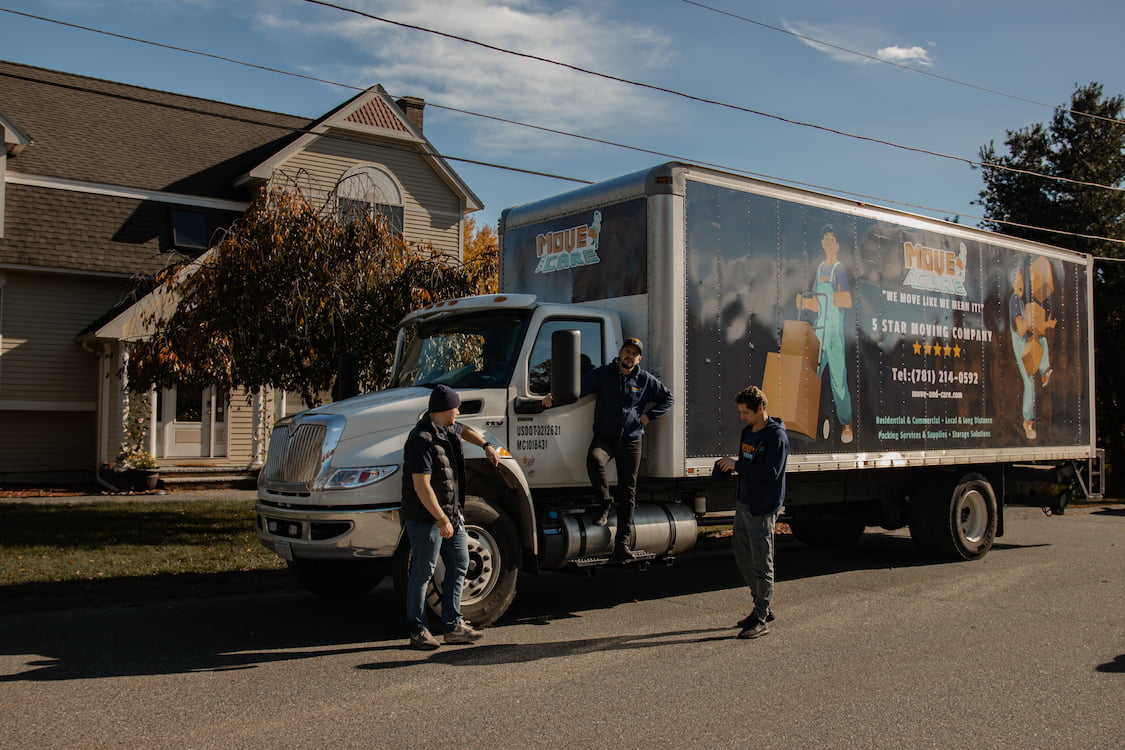
The company that customers love
Move and Care strives to satisfy our client's needs 100%. Our company is well-reviewed, so we are not shy about showing over 2500 reviews of our company in Boston, Austin, San Antonio, Charlotte and Irvine! Explore the reviews and get an idea of our company.
Read Move and Care ReviewsThe company with a reputation
Move and Care has managed to become one of the best moving companies. Our company is based in Boston, MA; Austin, TX; San Antonio, TX; Charlotte, NC and Irvine, CA. We are also very familiar with San Francisco, CA and it is part of our area of work.
Check Our Licenses and Awards


Our Chicago to San Francisco, CA Moving Services

Residential Moving
Service for smooth and easy family moves

Commercial Moving
Smooth business moving to keep the business running

Packing Services & Supplies
Complete packing help and quality materials

Storage Solutions
Safe storage spaces for your items, available anytime

Piano Moving
Skilled piano transport to maintain condition.

White Glove Moving
Moving services with extra care for valuable items

Senior Moving
Gentle and efficient relocations for seniors.
What Customers Say About Us
Influencers who move with Move & Care
Hear how creators and community leaders describe their move-day experience, from booking to the moment every box is in place.
Our Text Reviews
Know Your Moving Cost Today

Why We're a Trusted
moving company from Chicago to
San Francisco, CA
Choosing Move and Care for your move from Chicago to
San Francisco, CA means the same crews that run our local moves in
Chicago load the truck, and the destination is handled by a coordinator who
has driven the route.
When you choose Move and Care for your move from Chicago to
San Francisco, CA, you get a moving crew that knows the ins and outs of long-distance moves — from careful packing to
on-time delivery — making the entire process smooth, quick, and safe.
More About us

Fully Licensed & Insured
We are legally authorized to handle moves of any type and distance. Licenses: USDOT #3212621; MC #1018431; NCUC #C-3067; TXDMV #009636518C.

Cost Efficiency
We offer flexible pricing options. Flat rates with a binding moving quote and tailored plans — so you know exactly what to expect with no hidden costs.

Full-Service
We manage everything: careful packing, secure loading, route planning, delivery, and even unpacking at your new house.

Safety
Our movers use professional packing techniques, every truck is GPS-tracked, and insurance coverage is included — so your belongings arrive just as they left.
What you get by moving from Chicago to San Francisco, CA with us?

Loading and Unloading
We will load into the truck and unload at a new place all of
your items.

Gas, Tolls
Our moving company rates include all the charges, no hidden
fees.

Dedicated Manager
Our dedicated manager will walk you through the whole moving
process.

Transportation
Our Company makes sure all of your belongings are safe during
delivery.

Moving Insurance
Insurance coverage helps save your items from unexpected
damages.

Assemble and Disassemble
We make sure your furniture is Assembled and Disassembled.




Our Licenses & Awards
We’ve helped over 5,000 people move safely — from single-bedroom apartments to 5-bedroom houses and full office moves. Our team has completed more than 1,200 long-distance moves across the U.S., always on time and with belongings protected. With licensed movers, GPS-tracked trucks, and full packing support, we make sure every step of your move is handled with care you can count on.
See Price Estimate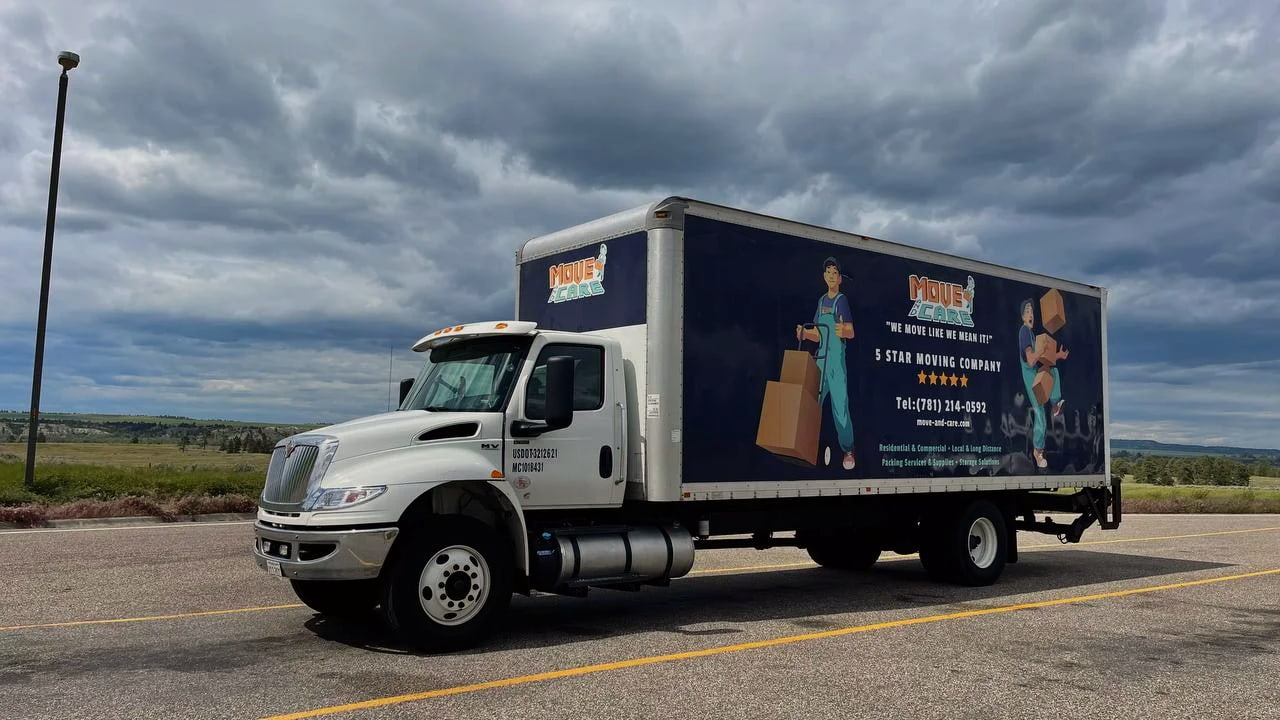

USDOT
3212621
MA DPU
31854
NCUC
C-3067
TXDMV
009636518C







Have Questions?
Ask Professional
Your moving options: full-service, container, and DIY
Before you start comparing prices, figure out how you actually want to move. At 2,130 miles, the three common paths trade money for control and effort in very different ways.
Full-service movers
A full-service move includes packing, loading, transportation, delivery, and unpacking by the crew. You're paying more than a DIY option, but you're not driving a rented truck across the Rockies or carrying boxes down a flight of stairs yourself. For a long cross-country distance, this is usually the option that keeps the move manageable — one crew loads it, one company is responsible for it in transit, and it arrives without you behind the wheel.
Move and Care is a full-service carrier with its own trucks and trained crews for this kind of long-distance move.
Moving containers (and why they're hard to use in Chicago)
With a container or pod, a company drops off a unit, you load it, and they transport it. It sits between full-service and DIY on cost and effort. The catch for Chicago residents is a legal one: containers can't be placed on the public way — streets, sidewalks, or alleys. That makes them impractical for most city dwellers who don't have private space to put one. We cover this rule in full detail in the Chicago move-out section below.
Move and Care does not provide container or pod rental; this is here as a general option to weigh.
DIY rental truck
Renting a truck and driving it yourself is the lowest-cost path on paper. You manage everything — packing, loading, a multi-day drive, fuel, and unloading. It can work for budget-focused movers with time, energy, and help. But on a 2,130-mile route, be honest about the driving days, the physical strain, and what your time is worth.
If a full-service move sounds like the right fit for your situation, you can request an estimate to see what it looks like for your home size.
How much does it cost to move from Chicago to San Francisco?
A low starting number is not a meaningful estimate if it overlooks what actually changes the work. Stairs, elevator access, a long carry from the truck, packing, and specialty items all affect the price — and an estimate that leaves those unnamed tends to grow later.
For this route, a realistic full-service range runs roughly $2,200 to $6,800 or more, depending on your home size, shipment weight, the season, and the services you add.
What drives the price
- Shipment weight and home size — more belongings means more weight and more truck space.
- Distance — a fixed ~2,130-mile factor, and the reason long-distance costs more than a local move.
- Season — summer and end-of-month windows are busier.
- Packing — full packing adds labor and materials.
- Specialty items — pianos, safes, oversized or fragile pieces need extra handling.
- Access — stairs, elevator reservations, and long carries all add time and cost.
Estimated cost ranges by home size
| Home size | Estimated full-service range | Estimated flat-rate cost* |
|---|---|---|
| Studio / 1 bedroom | Lower end of the range | $2,500 – $4,800 |
| 2–3 bedroom | Middle of the range | $4,800 – $8,500 |
| 4–5 bedroom | Upper end of the range and above | $8,500+ |
*Final pricing is a custom flat-rate quote based on inventory, access, timing, and selected services.
Move and Care prices long-distance moves as a one-time flat rate confirmed from your job details — not by the hour — with a $50 equipment charge. The idea behind a flat rate is that the price shouldn't change just because the move runs long.
The most accurate way to know your number is to have the job reviewed. Request a free estimate and send your inventory, addresses, and access details so the price reflects the real work.
Distance and transit time
The driving distance from Chicago to San Francisco is approximately 2,130 miles. On a route that long, transit typically takes a 7 to 14 day window.
Interstate moves usually run on delivery windows rather than a single guaranteed date. A carrier typically consolidates shipments and routes trucks efficiently, so the honest way to plan is around a window, not a promised day. If a company provides you with a firm delivery date with no strings attached, ask how they can be so confident.
Moving out of Chicago: parking permits and local rules
This is what most moving pages skip — and where Chicago moves go wrong. An elevator rule or a parking restriction isn't a problem on its own. Finding out about it when the crew is already downstairs is the problem. Here's what to line up before move day.
CDOT permits vs Ward courtesy signs
A CDOT Temporary No Parking permit is the only enforceable way to reserve curb space for a moving truck in Chicago. It's issued by the Chicago Department of Transportation, and because it's enforceable, an unauthorized vehicle parked in your reserved zone can actually be ticketed or towed.
Free Ward courtesy signs are a different thing. They ask neighbors not to park, but they are not legally enforceable — you can't use them to tow a car that ignores them. If you rely only on a courtesy sign, you may show up on move day to a spot that's already taken with no legal way to clear it.
A permit fee applies; check the CDOT portal for current rates, since city fees can change.
Moving pods are banned on the public way
Moving pods and containers are banned on Chicago's public way — that means streets, sidewalks, and alleys. They can only be placed on private property, such as a private driveway. For most city residents without private space, that makes a container move impractical. Suburban movers with a driveway have an easier time here, which is one reason loading out of Chicagoland suburbs is often simpler than out of a dense city block.
High-rise and downtown building requirements
If you're in a high-rise or a dense downtown building — think River North, Gold Coast, the Loop, or the busy wards around Lincoln Park and Lakeview — the building itself often sets rules. Many require a Certificate of Insurance (COI) from your mover and a reserved elevator window before the crew can start. Miss either and you can lose your move slot.
Move and Care can provide a COI when a building requires one, as long as you send the exact building requirements early. On the parking side, Move and Care can advise on access, parking, and elevator logistics — but securing the CDOT permit or Ward sign is the customer's responsibility, not something the crew obtains for you.
If your building has an elevator reservation, a loading dock rule, or a COI requirement, put it in your estimate request so it's planned before move day rather than discovered on it.
How to choose a licensed interstate mover
The real risk on a long-distance move isn't stairs or parking — it's handing your belongings to a company that isn't who it claims to be. Coverage shouldn't become clear only after something breaks, and you shouldn't learn your "mover" is actually a broker after the truck is loaded. Here's how to check before you commit.
Interstate moves are federally regulated. Any company moving you across state lines must be registered with the Federal Motor Carrier Safety Administration and carry a valid USDOT number. You can look up a mover's USDOT number to confirm it's active.
A few things to require before you sign:
- A written estimate. Get the price and scope in writing, not over the phone.
- The Bill of Lading. This is the contract between you and the mover. Read it and keep your copy.
- Clear coverage terms. Basic released-value protection covers a set amount per pound; full-value protection is a separate, higher level of coverage. Know which one you have before move day.
- Broker vs carrier. A broker sells your move and hands it off to another company to actually perform it. A carrier moves you with its own trucks and crews. On a 2,130-mile move, knowing which one you hired matters for accountability.
Move and Care is a carrier — its own trucks and trained crews, not a broker. Its credentials are USDOT #3212621 and MC #1018431, which you can look up yourself on the FMCSA site. Basic released-value protection (up to 60 cents per pound per article) is included at no extra cost, and Full Value Protection is available for an added charge.
Before you book any mover, look up their USDOT number and ask for the estimate in writing.
Chicago vs San Francisco: cost of living and lifestyle
The move-out is one cost. Arriving is another. San Francisco's housing and rent run dramatically higher than Chicago's — often several times more by recent estimates — so it's worth budgeting for that shift before you land.
A few practical contrasts to plan around:
- Housing and rent are the biggest jump; the same budget buys far less space in San Francisco than in Chicago.
- Climate flips from Chicago's cold winters to San Francisco's mild, Mediterranean-style weather year-round.
- Job market in the Bay Area skews heavily toward tech, which shapes both salaries and the cost baseline.
Frame all of these as estimates when you budget, since housing and salary figures move over time.
More About PricingF.A.Q. about moving from Chicago to San Francisco, CA
A realistic full-service range is roughly $2,500 to $8,500 or more, depending on your home size, shipment weight, the season, and the services you choose. Move and Care prices long-distance moves as a flat rate confirmed from your job details rather than by the hour, so the most accurate number comes from a personalized estimate.
The route is approximately 2,130 miles. Transit typically runs a 7 to 14 day window. Interstate moves use delivery windows rather than a fixed date unless a dedicated truck is specifically arranged.
A CDOT Temporary No Parking permit is the only enforceable way to reserve curb space for the moving truck. Free Ward courtesy signs are not enforceable and can't be used to tow a car parked in your spot. Securing the permit is your responsibility; Move and Care can advise on access but does not obtain permits for you.
Pods and containers are banned on the public way — streets, sidewalks, and alleys — and can only be placed on private property. For most city residents without private space, that makes a container move impractical.
Look up the mover's USDOT number on the FMCSA site to confirm it's active, get a written estimate, and read the Bill of Lading before you sign. As an example, you can look up Move and Care's USDOT #3212621.
Yes. Housing and rent in San Francisco run significantly higher than in Chicago — often several times more by recent estimates. Treat any specific figures as estimates, since they shift over time.

Our Instagram Profile


Contact Us
Fast, Fair Moving Estimate
Clear pricing. Certified pros.
Careful handling.
Start your smooth move with Move and Care.




