
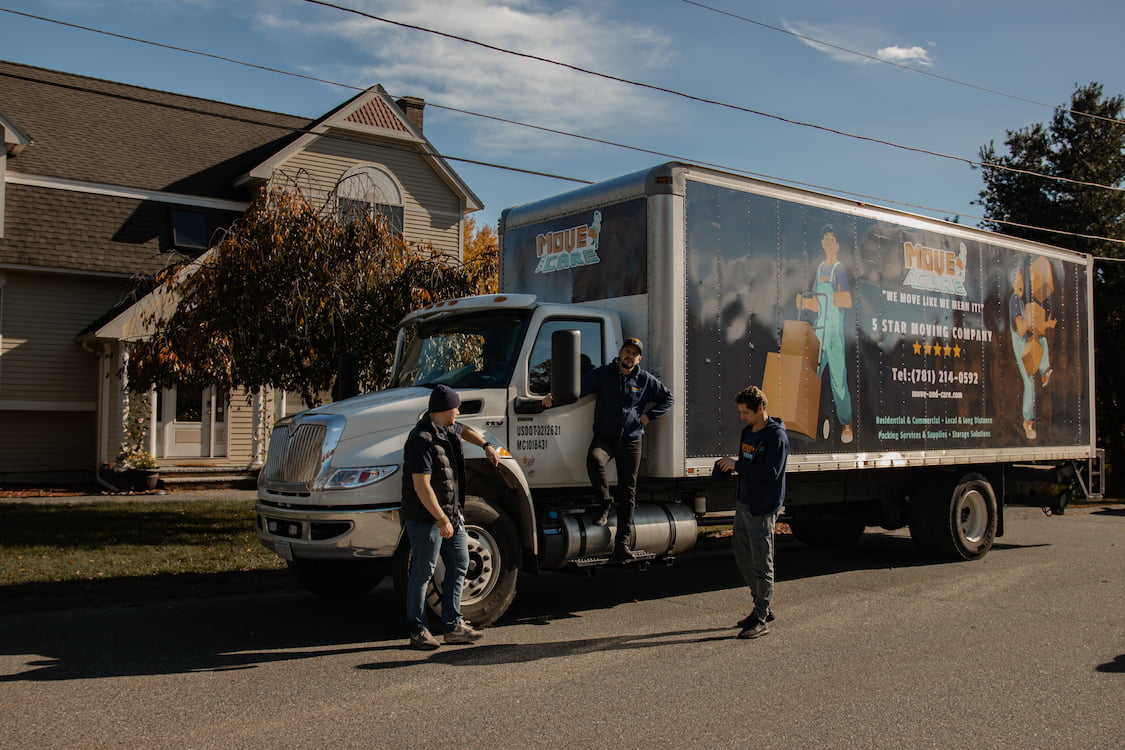
The company that customers love
Move and Care strives to satisfy our client's needs 100%. Our company is well-reviewed, so we are not shy about showing over 2500 reviews of our company in Boston, Austin, San Antonio, Charlotte and Irvine! Explore the reviews and get an idea of our company.
Read Move and Care ReviewsThe company with a reputation
Move and Care has managed to become one of the best moving companies. Our company is based in Boston, MA; Austin, TX; San Antonio, TX; Charlotte, NC and Irvine, CA. We are also very familiar with Austin, TX and it is part of our area of work.
Check Our Licenses and Awards


Our San Francisco to Austin, TX Moving Services

Residential Moving
Service for smooth and easy family moves

Commercial Moving
Smooth business moving to keep the business running

Packing Services & Supplies
Complete packing help and quality materials

Storage Solutions
Safe storage spaces for your items, available anytime

Piano Moving
Skilled piano transport to maintain condition.

White Glove Moving
Moving services with extra care for valuable items

Senior Moving
Gentle and efficient relocations for seniors.
What Customers Say About Us
Influencers who move with Move & Care
Hear how creators and community leaders describe their move-day experience, from booking to the moment every box is in place.
Our Text Reviews
Know Your Moving Cost Today

Why We're a Trusted
moving company from San Francisco to
Austin, TX
Choosing Move and Care for your move from San Francisco to
Austin, TX means the same crews that run our local moves in
San Francisco load the truck, and the destination is handled by a coordinator who
has driven the route.
When you choose Move and Care for your move from San Francisco to
Austin, TX, you get a moving crew that knows the ins and outs of long-distance moves — from careful packing to
on-time delivery — making the entire process smooth, quick, and safe.
More About us

Fully Licensed & Insured
We are legally authorized to handle moves of any type and distance. Licenses: USDOT #3212621; MC #1018431; NCUC #C-3067; TXDMV #009636518C.

Cost Efficiency
We offer flexible pricing options. Flat rates with a binding moving quote and tailored plans — so you know exactly what to expect with no hidden costs.

Full-Service
We manage everything: careful packing, secure loading, route planning, delivery, and even unpacking at your new house.

Safety
Our movers use professional packing techniques, every truck is GPS-tracked, and insurance coverage is included — so your belongings arrive just as they left.
What you get by moving from San Francisco to Austin, TX with us?

Loading and Unloading
We will load into the truck and unload at a new place all of
your items.

Gas, Tolls
Our moving company rates include all the charges, no hidden
fees.

Dedicated Manager
Our dedicated manager will walk you through the whole moving
process.

Transportation
Our Company makes sure all of your belongings are safe during
delivery.

Moving Insurance
Insurance coverage helps save your items from unexpected
damages.

Assemble and Disassemble
We make sure your furniture is Assembled and Disassembled.




Our Licenses & Awards
We’ve helped over 5,000 people move safely — from single-bedroom apartments to 5-bedroom houses and full office moves. Our team has completed more than 1,200 long-distance moves across the U.S., always on time and with belongings protected. With licensed movers, GPS-tracked trucks, and full packing support, we make sure every step of your move is handled with care you can count on.
See Price Estimate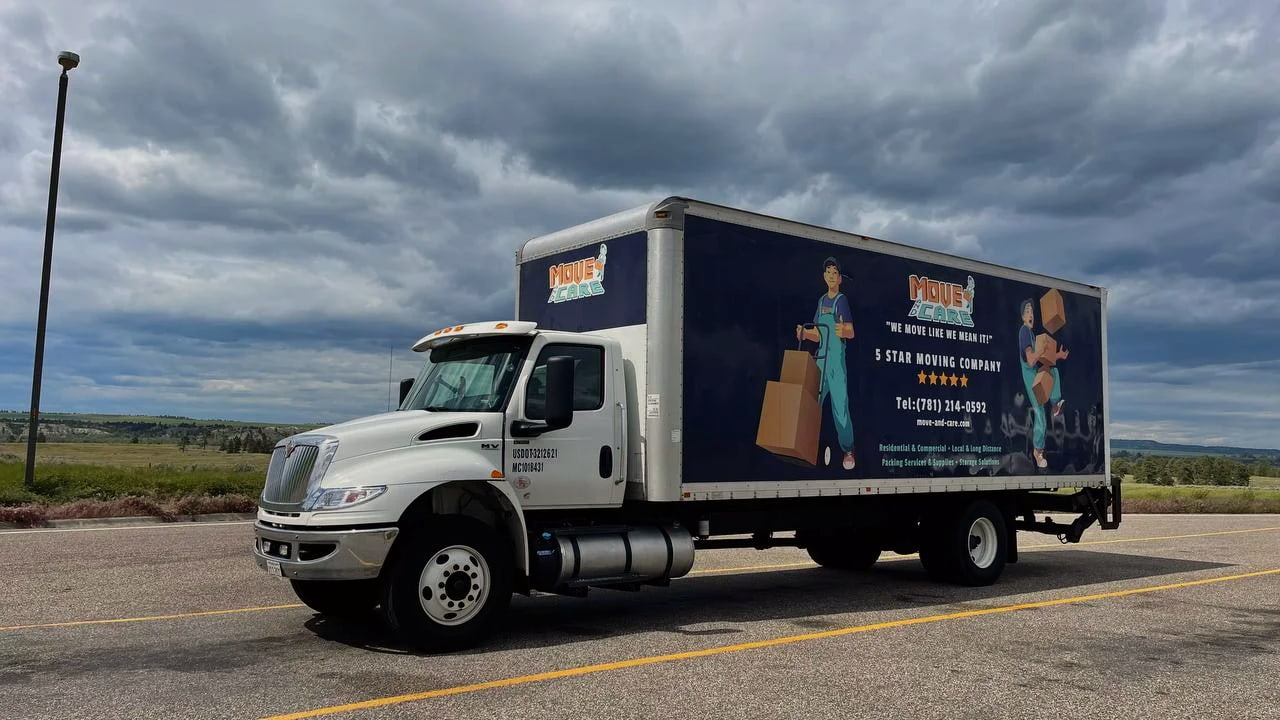

USDOT
3212621
MA DPU
31854
NCUC
C-3067
TXDMV
009636518C







Have Questions?
Ask Professional
San Francisco to Austin Movers: What to Verify Before You Book
The Bay Area-to-Texas migration trend has grown steadily in recent years, and the San Francisco-to-Austin corridor has become one of the more active long-distance routes out of California. Relocations come from across the region — the city itself, plus Oakland, Berkeley, San Mateo, and surrounding Bay Area communities.
That volume also means more movers are advertising capability on this route than can actually deliver on it. Questions worth asking before you commit to anyone: Does the company use its own trucks, or does your move get brokered out to a carrier you never agreed to? Is there a route coordinator tracking your shipment, or are you calling a general service line every time something is unclear? Does the mover have people on the Austin end, or does the destination side take care of itself?
Move and Care is a licensed and insured interstate mover — USDOT #3212621, MC #1018431 — that uses its own trained crews and trucks on this route rather than subcontracting your belongings to third-party carriers. The company maintains a local team in Austin, so someone familiar with the destination is coordinating the receiving end of your move, not just the loading end.
Trucks are equipped with GPS tracking sensors, so your shipment's location is visible during the transit window between California and Texas — not something you have to call in to find out.
This route is covered as part of Move and Care's long-distance moving services in the Bay Area. There's no Move and Care branch in San Francisco itself, but pickup is available from SF and neighboring cities including Oakland, Berkeley, and San Mateo. If professional packing services or secure storage options are part of your plan, both can be built into the estimate once confirmed.
Get Your Free, No-Obligation SF-to-Austin Moving Estimate
Before requesting an estimate, have your inventory list, building access details — stairs, elevator, parking situation — and your target move date ready. The more complete the picture, the more accurate the number.
How Much Does It Cost to Move from San Francisco to Austin?
A number given before the details are confirmed isn't an estimate — it's a placeholder. The estimate that matters is the one built around what actually shapes the work: how much you're moving, what service level you need, what building access looks like on both ends, and when you plan to move.
For a long-distance interstate move from San Francisco to Austin, Move and Care prices jobs as a one-time flat rate based on confirmed move details. Once inventory, services, access conditions, and date are set, the written estimate reflects what you'll pay. The variables that can shift the cost need to be identified before the crew arrives, not surfaced on move day.
The ranges below are planning estimates based on typical home sizes on this route. They are not guaranteed prices. Final estimates require a confirmed inventory and service selection.
| Home Size | Estimated Cost Range | What Typically Affects It |
|---|---|---|
| Studio / 1-Bedroom | $[PLACEHOLDER] – $[PLACEHOLDER] | Shipment weight, packing scope, building access |
| 2–3 Bedroom Home | $[PLACEHOLDER] – $[PLACEHOLDER] | Total weight, service level, origin and destination access |
| 4+ Bedroom Home | $[PLACEHOLDER] – $[PLACEHOLDER] | Larger jobs require confirmed inventory before any estimate |
What can change your estimate:
Volume and weight
Long-distance pricing on this route is based primarily on the confirmed weight of your shipment. More belongings — particularly furniture, appliances, and dense items — means a higher rate.
Packing services
Full-home, partial, or room-specific packing can be added to the plan. Packing materials are purchased separately and aren't automatically included in the move rate unless confirmed in the estimate.
Time of year
Summer months — roughly May through August — represent the peak of long-distance moving demand. Fall, winter, and early spring moves typically run at lower rates. If your move date is flexible, that flexibility has a dollar value.
Access conditions
Stairs, a long carry from the truck to the building entrance, elevator coordination, or parking constraints on either end affect both time and crew requirements. A steep block and a fourth-floor walk-up aren't minor details when they're discovered on move day.
Storage
If there's a gap between your San Francisco departure and your Austin move-in, short- or long-term storage can be arranged when confirmed in the plan.
A low estimate that ignores the details of how the work actually gets done won't hold. Before committing to any number, ask what can change it. Understanding the moving cost factors that shape a flat-rate estimate is the best protection against move-day surprises.
Request a Transparent Estimate for Your Home Size
Send your inventory details, building access notes — floor, stairs or elevator, parking — and your planned move dates. A written, flat-rate estimate built around your specific move follows from there.
Navigating San Francisco's Logistical Challenges
Moving out of San Francisco involves challenges that most general moving guides skip over, and that some movers discover for the first time on your move day. The city's terrain, building stock, and municipal parking regulations create conditions that need to be planned for in advance, not improvised.
SFMTA Parking Permits & TNP Requirements
In most San Francisco neighborhoods, a full-size moving truck can't legally park in front of a residence without a Temporary No Parking (TNP) permit. Parking enforcement in the city is active, and a truck parked without a permit is subject to significant fines and towing — delays that aren't budgeted for and can't be recovered quickly on move day.
The San Francisco Municipal Transportation Agency requires a minimum of 5 business days' advance notice to process a TNP permit application.
That timeline isn't flexible. If your move is within two weeks and you haven't applied yet, the window may already be tight. The permit must be posted on the affected street section prior to the reservation date, and it covers specific parking spaces for a specific time period — not the block in general.
Securing the TNP permit is the customer's responsibility. The Move and Care team can advise on what the application typically requires — the move date, street address, number of spaces needed, and approximate truck size — but the SFMTA Temporary No Parking permits application is submitted by the building resident or their designated representative.
If your building requires a Certificate of Insurance (COI) from the moving company, share that detail early in the estimate process. Move and Care can supply a COI when building requirements are provided in advance.
Handling Steep Hills & Walk-Up Apartments
San Francisco's geography creates loading conditions that flat-city moving logistics don't account for. Neighborhoods like Russian Hill, Nob Hill, the Castro, North Beach, and the Mission District combine steep grades, narrow residential streets, and multi-story walk-up buildings with no elevator — in many cases, all three at once.
A crew encountering these conditions for the first time on your move day will take longer. On a long-distance move where labor is part of what determines cost and timeline, longer is a cost.
Experienced crews identify the physical variables before loading begins: how many flights of stairs are involved, the width of the staircase, which items need to be disassembled to fit through a tight hallway, and whether specialty equipment is needed for heavy or oversized pieces. The carry distance from the truck to the building entrance isn't a small detail when it involves a steep incline.
If your apartment is in a walk-up building, include the floor, staircase details, and any hallway or doorway dimensions in your estimate request. The sooner those specifics are part of the plan, the fewer surprises affect your loading window.
Protecting Your Move: Federal Regulations & Insurance
Not every company willing to take payment for a move from California to Texas is authorized to do so. Federal law requires any mover crossing state lines to be registered with the Federal Motor Carrier Safety Administration (FMCSA) and hold an active USDOT number. A mover that isn't properly registered has no obligation to compensate you for damages, meet a delivery window, or respond to a complaint through any official federal channel.
USDOT Licensing & FMCSA Consumer Protections
Before hiring any interstate mover, verify their USDOT number through the FMCSA's public carrier lookup. A valid, active number confirms the company is registered, carries the required liability coverage, and operates under FMCSA interstate moving regulations — including the requirement to provide a written estimate and a copy of the FMCSA's consumer rights booklet.
Move and Care's registrations:
- USDOT #3212621
- MC #1018431
- NCUC #C-3067
- TXDMV #009636518C
- MA DPU 31854
These are publicly verifiable through federal and state carrier databases.
Under FMCSA rules, a registered interstate mover is required to give you a written estimate before your move, provide documentation of your rights and responsibilities, and allow you to be present when your shipment is weighed at the destination. You're also entitled to a copy of your bill of lading — the contract for the move — before the truck departs.
Warning signs worth taking seriously: a mover with no USDOT number, or one that fails verification; a demand for a large cash deposit before pickup; an estimate given over the phone without questions about inventory or building access; or a price that changes substantially between the estimate and the final bill without a clear explanation tied to a scope change.
Choosing the Right Valuation Coverage
Valuation coverage on a long-distance move isn't the same as moving insurance, and that distinction matters when something is damaged. Federal law requires all interstate movers to offer two valuation options. Understanding the difference before pickup protects you from learning it after.
Released Value Protection is included at no additional charge. Under this option, the mover's maximum liability is $0.60 per pound per article. A 50-pound piece of furniture damaged in transit would be compensated at $30.00 — regardless of its actual replacement value. This is the default if no other selection is made.
Full Value Protection is a paid upgrade. Under this option, the mover is liable for repair, replacement, or cash settlement at the item's current market value if it's lost or damaged. The cost of this upgrade is based on the declared value of your shipment.
If your shipment includes electronics, artwork, furniture with significant value, or specialty items, ask about Full Value Protection when you request your estimate. Coverage terms should be clear before the truck is loaded, not after something arrives broken.
Neither valuation option replaces a homeowners or renters insurance policy that may cover goods in transit. Review your existing policy before selecting a valuation option.
San Francisco vs. Austin: Living Cost & Tax Realities
The financial case for relocating from San Francisco to Austin is often presented simply: Texas has no state income tax, and housing is significantly less expensive. The accurate picture is a bit more specific — and worth understanding before you calculate what you'll actually save.
The Tax Equation: State Income Tax vs. High Property Taxes
California imposes a graduated state income tax with rates that reach among the highest in the country — up to 13.3% for the highest earners. Texas imposes no state income tax at all.
That difference is real and, for high earners, significant. But the full tax picture requires one more data point.
Texas funds its public services primarily through property taxes, and effective Texas property tax rates are among the highest in the United States. Homeowners in the Austin area typically face effective property tax rates that run meaningfully higher than comparable California homeowners pay — particularly given the sharp rise in Austin assessed property values in recent years.
For renters, the property tax burden is less direct — it may be partially reflected in rent, depending on the market. For homebuyers, it's a clear annual line item that can partially or fully offset the income tax savings, depending on the value of the home purchased and the local tax jurisdiction.
The net tax benefit of leaving San Francisco for Austin depends on your income level, your housing situation, and the value of the property you plan to purchase. A straightforward swap of income tax savings is the starting point, not the final answer.
Housing and Overall Affordability
On housing and overall cost of living, Austin offers a meaningful reduction compared to San Francisco. Recent cost of living indices estimate that Austin is roughly 40% more affordable than San Francisco overall, with housing costs running approximately 60% lower.
Those figures shift depending on where in Austin you're looking. Neighborhoods near the technology corridor and downtown Austin have seen substantial price appreciation. Outer suburbs — Round Rock, Cedar Park, Pflugerville, Dripping Springs — tend to offer more space at lower per-square-foot costs.
On everyday expenses like groceries, healthcare, and entertainment, Austin generally runs lower than San Francisco. One cost that surprises many Bay Area transplants: summer utility bills. Austin's heat is sustained and intense, and air conditioning costs during summer months can run significantly higher than anything typical in San Francisco's climate.
Austin is also substantially more car-dependent than San Francisco. Public transit options are limited, and most daily errands, commutes, and practical travel require a vehicle. If you currently live without a car in the city, budget for both the cost of the vehicle and the change in daily logistics.
The 1,750-Mile Journey: Timeline & Route Expectations
San Francisco to Austin covers approximately 1,750 miles by road. The most direct route runs south and east, primarily via I-10 through Southern California, across the desert Southwest, and into Texas.
Transit time for a long-distance move on this route typically falls between 4 and 8 days from pickup to delivery. That range reflects real operating constraints that apply to every licensed interstate carrier.
FMCSA Hours-of-Service regulations limit how many consecutive hours a commercial truck driver can operate per day. These rules exist to prevent driver fatigue and reduce accidents on long-haul routes, and they can't be bypassed to meet a preferred delivery date. A fully loaded moving truck covering 1,750 miles requires multiple days of driving with required rest periods built in — regardless of how tight your move-in window is.
Additional factors that affect the transit window:
-
A dedicated truck carries your belongings directly to Austin without stops. A consolidated shipment shares truck space with other customers' goods and may involve additional pickup or delivery stops that extend the overall timeline. Which applies to your move should be confirmed in the estimate.
-
Desert heat, mountain passes, and seasonal weather events along the I-10 corridor can affect driving pace and safety stops.
-
Federal regulations mandate off-duty time that's non-negotiable, regardless of delivery pressure.
Expect a delivery window, not a single delivery date. If a mover offers a guaranteed exact arrival date without acknowledging these variables, that's worth examining carefully.
Move and Care's trucks are equipped with GPS tracking sensors, so the location of your shipment isn't a matter of guesswork during transit — you can follow the progress of your belongings across the route.
If your Austin move-in date is fixed — a lease start date, a building elevator reservation, or a similar constraint — communicate that clearly when you request your estimate. The earlier that information is part of the plan, the more the schedule can account for it.
More About PricingF.A.Q. about moving from San Francisco to Austin, TX
A 1-bedroom apartment move from San Francisco to Austin typically falls in the range of $[PLACEHOLDER] to $[PLACEHOLDER] for loading, transport, and unloading.
That range moves based on the total weight of your shipment, whether packing services are included, the access conditions at both ends — stairs, elevator, parking — and the time of year. Summer moves cost more than off-season moves on every major long-distance route.
Long-distance moves are priced as a flat rate built from confirmed details: your inventory, the services selected, your building access information, and your move date. That combination is what turns a planning range into a written number. The most direct way to get an accurate estimate for your specific move is to send a complete inventory with building details and your target dates.
That range moves based on the total weight of your shipment, whether packing services are included, the access conditions at both ends — stairs, elevator, parking — and the time of year. Summer moves cost more than off-season moves on every major long-distance route.
Long-distance moves are priced as a flat rate built from confirmed details: your inventory, the services selected, your building access information, and your move date. That combination is what turns a planning range into a written number. The most direct way to get an accurate estimate for your specific move is to send a complete inventory with building details and your target dates.
Pros
- Lower overall cost of living. Recent estimates put Austin roughly 40% more affordable than San Francisco across housing, everyday expenses, and general cost of living.
- No state income tax. Texas doesn't tax earned income at the state level — a meaningful difference for residents paying California's rates.
- Active technology and professional job market. Austin's technology sector has expanded significantly, with major companies establishing or growing a presence in the area.
- Suburban space and value. Communities like Round Rock, Dripping Springs, Cedar Park, and Pflugerville offer larger homes and more space at significantly lower price points, with well-regarded school districts.
Cons
- High property taxes. Texas offsets the absence of a state income tax with some of the highest effective property tax rates in the country. For homebuyers, this is a meaningful annual cost that needs to be weighed against income tax savings.
- Extreme summer heat. Austin summers are long, consistently hot, and frequently exceed 100°F for extended stretches. This is a significant lifestyle adjustment for residents accustomed to San Francisco's mild climate, and it affects utility costs directly.
- Car dependency. Austin's public transit infrastructure is limited. A vehicle is a practical necessity for most residents, not an option.
- Lower walkability. If daily life in San Francisco involves walking to groceries, transit, and neighborhood businesses, Austin requires a significant adjustment. Most errands require a car, and the city's layout is oriented around roads rather than walkable blocks.

Our Instagram Profile


Contact Us
Fast, Fair Moving Estimate
Clear pricing. Certified pros.
Careful handling.
Start your smooth move with Move and Care.




