
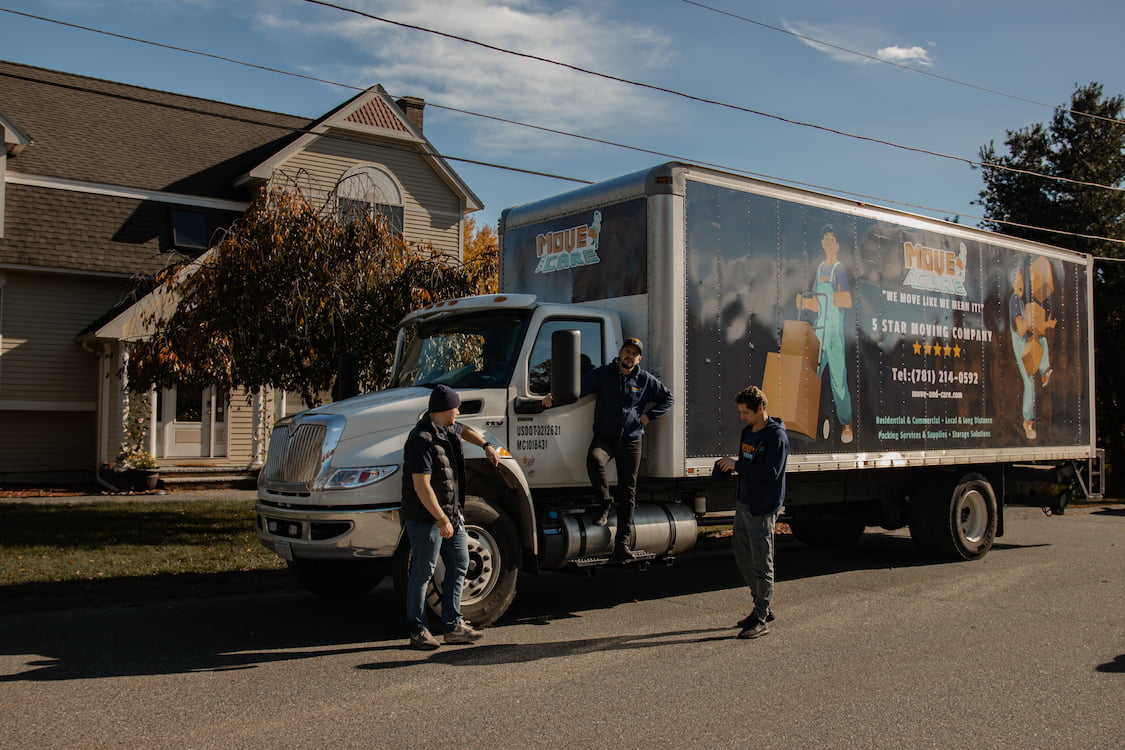
The company that customers love
Move and Care strives to satisfy our client's needs 100%. Our company is well-reviewed, so we are not shy about showing over 2500 reviews of our company in Boston, Austin, San Antonio, Charlotte and Irvine! Explore the reviews and get an idea of our company.
Read Move and Care ReviewsThe company with a reputation
Move and Care has managed to become one of the best moving companies. Our company is based in Boston, MA; Austin, TX; San Antonio, TX; Charlotte, NC and Irvine, CA. We are also very familiar with Houston, TX and it is part of our area of work.
Check Our Licenses and Awards


Our NYC to Houston, TX Moving Services

Residential Moving
Service for smooth and easy family moves

Commercial Moving
Smooth business moving to keep the business running

Packing Services & Supplies
Complete packing help and quality materials

Storage Solutions
Safe storage spaces for your items, available anytime

Piano Moving
Skilled piano transport to maintain condition.

White Glove Moving
Moving services with extra care for valuable items

Senior Moving
Gentle and efficient relocations for seniors.
What Customers Say About Us
Influencers who move with Move & Care
Hear how creators and community leaders describe their move-day experience, from booking to the moment every box is in place.
Our Text Reviews
Know Your Moving Cost Today

Why We're a Trusted
moving company from NYC to
Houston, TX
Choosing Move and Care for your move from NYC to
Houston, TX means the same crews that run our local moves in
NYC load the truck, and the destination is handled by a coordinator who
has driven the route.
When you choose Move and Care for your move from NYC to
Houston, TX, you get a moving crew that knows the ins and outs of long-distance moves — from careful packing to
on-time delivery — making the entire process smooth, quick, and safe.
More About us

Fully Licensed & Insured
We are legally authorized to handle moves of any type and distance. Licenses: USDOT #3212621; MC #1018431; NCUC #C-3067; TXDMV #009636518C.

Cost Efficiency
We offer flexible pricing options. Flat rates with a binding moving quote and tailored plans — so you know exactly what to expect with no hidden costs.

Full-Service
We manage everything: careful packing, secure loading, route planning, delivery, and even unpacking at your new house.

Safety
Our movers use professional packing techniques, every truck is GPS-tracked, and insurance coverage is included — so your belongings arrive just as they left.
What you get by moving from NYC to Houston, TX with us?

Loading and Unloading
We will load into the truck and unload at a new place all of
your items.

Gas, Tolls
Our moving company rates include all the charges, no hidden
fees.

Dedicated Manager
Our dedicated manager will walk you through the whole moving
process.

Transportation
Our Company makes sure all of your belongings are safe during
delivery.

Moving Insurance
Insurance coverage helps save your items from unexpected
damages.

Assemble and Disassemble
We make sure your furniture is Assembled and Disassembled.




Our Licenses & Awards
We’ve helped over 5,000 people move safely — from single-bedroom apartments to 5-bedroom houses and full office moves. Our team has completed more than 1,200 long-distance moves across the U.S., always on time and with belongings protected. With licensed movers, GPS-tracked trucks, and full packing support, we make sure every step of your move is handled with care you can count on.
See Price Estimate

USDOT
3212621
MA DPU
31854
NCUC
C-3067
TXDMV
009636518C







Have Questions?
Ask Professional
How Much Does It Cost to Move from NYC to Houston?
| Size of the Move | What the Flat Rate Is Built From | Access Factors That Change It |
|---|---|---|
| Studio / Small 1 Bedroom | Inventory list, packing level, distance | Walk-up flights at the New York end; whether a full-size truck can legally reach the door |
| Large 1 Bedroom / Small 2 Bedroom | Inventory volume, packing materials, protection | COI and freight elevator reservation at either end; posted street-cleaning hours |
| Large 2 Bedroom | Volume, disassembly and reassembly, materials | Long carry from the curb; Houston’s two-hour limit on large-vehicle street parking |
| 3 Bedroom Apartment / Townhouse | Volume, packing scope, specialty items | Three-story Houston townhome stairs; gated entry; HOA or building move window |
| 4 Bedroom or Larger Home | Volume, full packing, specialty and heavy items, storage if dates do not line up | Driveway and street access; hoisting; booked loading dock |
One flat-rate figure for the whole job. Most of the time it includes the crew, truck, fuel, tolls, transportation and basic insurance, plus the $50 equipment charge for blankets, dolly and tools. We can also prepare a COI if your building requires it.
You are price quoted for the approved inventory and services. No surprise fees.
Flat rate isn’t a marketing word here – it’s how a binding estimate is defined under federal rules. Under 49 CFR Part 375, an interstate mover must physically survey the goods and provide you with a written estimate, and a binding estimate “guarantees the total cost of the move based upon the quantities and services shown.” That is the paperwork behind the number, and it is why we look at your inventory before quoting rather than after.
If you are trying to find out what is the cost of movers from NYC to Houston, the truth is that no two shipments on this route cost the same. The estimate is based on volume of inventory, distance, access at both addresses, timing, and the services you choose. Specialty items are priced separately and published. An upright piano is $160, a baby grand $240, items over 200 pounds may incur charges starting at $60, and hoisting is $40 per item per flight of stairs when a piece will not clear a New York stairwell. Prices must be confirmed on individual items such as safes, pool tables etc.
Packing is quoted separately because the amount of stuff can vary so much from a Manhattan studio to a four-bedroom household. Labor is per hour, materials are per item: small box $6.50, medium $7.50, large $8.50, tape $7 per roll, shrink-wrap $10 per item, mattress cover $17, wardrobe box $28. The two add-ons that most often change the total on this route are packing services and storage, especially if a New York lease ends prior to a Houston closing date. Payment Note: Card Payments will incur a 3.5% processing fee. Cash Payment will receive a 5% discount.
Want exact moving prices? Request a free estimate — we’ll review your inventory, addresses and access requirements, and then provide you with a formal estimate.
Sample NYC to Houston Moving Timeline
The reason this route can’t be condensed to one day isn’t logistical, but regulatory. A property-carrying driver may drive a maximum of 11 hours following 10 consecutive hours off duty, may not drive beyond the 14th consecutive hour on duty, and must take a 30-minute break after eight cumulative hours of driving. The line haul is about 1,600 miles, which is three or more driving days prior to any consolidation or delivery scheduling.
There is a reason for street rules. Loading day in New York, the part that most often runs long. Commercial vehicles may remain in one block for up to three hours. Both sides of the street are considered the same block. Double parking next to a parked vehicle is limited to 20 minutes, only when actively loading, only where standing is not already prohibited, and only when there is no open space or loading zone on the same side of the block, and never blocking the only travel lane. Alternate Side Parking hours and suspensions impact which curb is actually available that morning. We plan the crew size and staging around those constraints instead of learning them at 8 a.m.
And New York end truck sizing is important too. On city truck routes a single-unit box truck is limited to a length of 35 feet and a height of 13’6”. Trucks are not authorized on most NYC parkways, including the Belt, F.D.R. Drive, Henry Hudson north of 59th Street, Cross Island and Jackie Robinson. The designated truck route network, not the shortest line on a map, is the way to get out of the city. Then the route goes off the metro onto the I-78 and I-81 corridor and heads toward Houston on the I-30 and I-69 / US 59 corridor.
The move coordinator will contact you to let you know when the truck is on the road, when loading is complete and when the delivery is due in Houston.
What to Know Before Moving from NYC to Houston
The two ends of this route present near-opposite problems, and a plan built for one will not work at the other.
New York has vertical, old housing stock. The Census Bureau’s 2023 NYC Housing and Vacancy Survey found that 54% of the city’s units are in buildings built before 1947, only 46% are in buildings with an elevator, and 873,600 units — or 24% of the stock — require one or more flight of stairs just to get to the door. This isn’t a result of neglect: NYC Building Code §3002.4 mandates elevators only in new buildings of five stories or higher, so legal four-story walk-ups are prevalent. It means narrow stairwells. Tight door frames. Plaster walls that scuff easily. Hoisting when a sofa or armoire won’t make the turn on the landing. On the other end of the scale, 22% of NYC units are in buildings of 100 or more units, where the move is regulated by a freight elevator booking and a COI, not by the curb. Brooklyn Heights, one of 47 designated historic districts in Brooklyn, is described by the Landmarks Preservation Commission as an area of “stately brick and brownstone houses on their tree-lined streets with stone sidewalks,” where roughly 92% of buildings are low-rise. Stoop entries, no curb cut, and a carry distance set by where the truck can legally stop.
Houston flips the problem. The city does not have conventional zoning. The Planning & Development Department says “the City of Houston does not have zoning” and “the City codes do not address land use.” Chapter 42, the land development ordinance, governs development. The November 2023 changes to Chapter 42 permit “missing middle” and narrow lot development and the City’s plat rules allow for the subdivision of lots less than 1,400 square feet. This means that you can have a 1940s bungalow, a three-story attached townhome with a switchback interior staircase, and a midrise all on the same block in Houston, so access conditions change house by house rather than neighborhood by neighborhood. According to ACS data provided by the City, 43.0% of units in the City are single-family detached, 4.9% single-family attached, and 37.1% are in buildings of ten or more units. Before the truck leaves the yard a delivery crew has to know which one of those three it is walking into.
The curb rules in Houston are stricter than most newcomers expect, and they definitely apply to a moving truck. “Large Vehicle” is defined by ParkHouston as any vehicle or trailer that is over 8 feet tall or over 22 feet long — which a typical moving truck is. The rules prohibit large vehicles from parking on any street in a residential district except for active loading and unloading (APK-41), limit parking on a street for a large vehicle to two hours (APK-42), and prohibit parking commercial and large vehicles on a public street between 2 a.m. and 6 a.m. (APK-40). Vehicles actively loading are exempt from the two-hour limit, and tow fees for a large vehicle start at $459 per hour. There’s no Houston permit for a residential move, either: the ParkHouston Meter Bagging Permit is available for “construction, film/photo productions and special events,” moving is not on that list, and commercial loading-zone meters cannot be rented at all. If your block is a residential permit parking area or a downtown Smart Loading Zone, that changes the delivery plan and the number to confirm it with is ParkHouston at 832.393.8690.
And the weather. That’s an input to the schedule, not a talking point. NOAA’s 1991–2020 normals for Houston Intercontinental show a normal daily high of 94.5°F in July and 94.9°F in August, with a normal annual precipitation of 51.84 inches. The Atlantic hurricane season runs from June 1 to Nov. 30, with a peak around Sept. 10 and most activity occurring between mid-August and mid-October, according to the National Hurricane Center. Getting to Houston in late summer means an earlier departure time, real rest breaks built into the crew plan and flexibility in the delivery window. It’s also worth remembering where your boxes will sit: the Harris County Flood Control District hits it rather bluntly — “everyone lives in a flood zone,” and “you don’t need to live near water to be flooded.” That’s a reason to think about ground-floor placement and where any storage unit sits.
Got something big or heavy to move? Let us know before you move. A piano, safe, pool table, gym equipment or anything over 200 pounds might require extra labor, hoisting or a custom handling plan — and on a pre-1947 New York staircase that decision is better made a week out than on the landing.
The Moving Process (NYC to Houston)
Preparation
We begin with your inventory and develop a service plan: what is moving, what needs to be packed, what the access is like at each end, and if either building needs a COI or an elevator reservation. If you want packing services, either full or partial packing is scheduled before your move day.
What to arrange yourself, especially on this route. On the New York end, early on ask your managing agent or board three questions: what the COI says and who must be named on it, which days and hours moves are permitted and whether the freight elevator has to be reserved. Many buildings only permit moves during business hours on weekdays, and a late COI can waste your day. Check posted signs on your block for street-cleaning hours and a metered “No Standing Commercial Vehicles Only” zone. Commercial vehicles cannot park on residential streets between 9 p.m. and 5 a.m., therefore the truck can’t be left out overnight before an early start. On the Houston side, ask your property manager, HOA or building office if there’s a move-in window, a loading dock to book, an elevator to reserve, a gate code or a COI requirement. There is no one city-wide source for these, so the building is the only authority. Check whether your block is a residential permit parking zone. If the truck will have to use a lane or sidewalk, the Houston Public Works roadway and sidewalk obstruction permit takes about 10 business days. Parking arrangements and any required permits are the responsibility of the customer at both locations. Clear walkways and the curb area at either end before the crew arrives. Disconnect any appliance connected to a water or gas line. Empty desk and dresser drawers and label sealed boxes by room of destination. Crews may not carry any objects that are flammable, explosive, related to firearms, filled with gasoline or filled with propane.
We will show the final scope clearly on your estimate. Packing level, special items and building access can affect the timing and price.
Moving Day
Furniture is padded and shrink-wrapped, and the load is inventoried and stacked for a multi-day haul rather than a short hop — 1,600 miles of road vibration is a different loading problem than a cross-town move. You will get a copy of the bill of lading before or when you load. The FMCSA says the bill of lading is the contract between you and the mover to move the shipment.
This crosses state lines and is regulated by the federal government. The New York Attorney General puts the split nicely: movers are licensed by NYSDOT “for moves wholly within New York, and by the Federal Motor Carrier Safety Administration for moves between New York and another state.” The Texas DMV says the same thing from the other end -- interstate movers “are subject to federal regulations under the FMCSA.” For your NYC to Houston move, the authority that counts is USDOT 3212621 and MC 1018431, and you can look us up in the federal mover database before you sign anything.
Delivery & Unpacking
In Houston we unload, put furniture in the designated rooms and reassemble standard items. If you booked unpacking, we also dispose of boxes and packing material after setup. Deliveries will be an ongoing unload window, not an overnight park and start because a large vehicle cannot legally be on a Houston street between 2 a.m. and 6 a.m.
If anything is broken or missing tell the crew immediately and complete a Damage Report before they leave where possible. Any damages noted after the move shall be reported within 96 hours.
Basic Released Value Protection is included free of charge and it is worth knowing what it actually covers. The FMCSA caps that liability at 60 cents a pound per article, and provides its own example: a lost or damaged 25-pound TV equals $15. Full Value Protection, available for an additional fee, makes the mover responsible for the replacement value of the shipment, with a minimum of $6.00 per pound times its weight. If you have anything valued at more than $100 per pound – jewelry, china, furs – it must be listed specifically on the shipping documents for that coverage to apply, which is a five-minute job worth doing before loading. Your right to file a claim with the carrier is preserved separate from our 96-hour reporting request under federal law: a carrier cannot provide a filing period of less than nine months from delivery under 49 U.S.C. §14706. Check out our reviews and about us to see how past customers describe the process or contact us to talk thru your dates.
More About PricingF.A.Q. about moving from NYC to Houston, TX
Long distance moves are flat rate, meaning the price is set for your job, vs. going up by the hour. The figure is based on inventory volume, distance, access at both addresses, timing and the services you choose. We review your inventory before we give you a quote. Generally, the price includes the crew, truck, gas, tolls, transportation and basic insurance, plus a $50 equipment charge for blankets, dolly and tools. Specialty pricing is posted. An upright piano is $160, a baby grand $240, items over 200 pounds may start at $60, and hoisting is $40 per item per flight of stairs. Packing labor is charged by the hour and materials by the item. Card payments are subject to a 3.5% processing fee; cash may be eligible for a 5% discount.
The drive is approximately 1,600 miles and federal rules set the floor on how fast it can be done. The driver is limited to 11 hours of driving after 10 consecutive hours off duty, cannot drive after the 14th hour on duty, and must take a 30-minute break after eight hours of cumulative driving time, according to FMCSA hours-of-service regulations. That makes the line haul a minimum 3 day drive before any delivery scheduling. You receive a delivery window beforehand and your move coordinator will confirm when the loading is complete and when the truck is supposed to be in Houston. The part that most commonly runs long is loading day in New York. That's usually a function of curb access or a building's elevator window, not mileage.
NYC DOT does not issue a permit that reserves curb space for a residential move. It includes construction and infrastructure work on its permit lists, and the only mechanism that can change posted parking rules, Temporary Construction Signs, is limited to registered construction permittees. Instead, the standing commercial vehicle rules apply — you can hold one block for up to three hours and both sides of the street are considered the same block. You may double park next to a parked car only for a period of 20 minutes, only while you are actively loading, and only if there is no parking space or loading zone open on the same side of that block. Please check posted signs and Alternate Side Parking hours for your block at nyc.gov. Parking is the responsibility of the customer.
ParkHouston defines any vehicle or trailer that is over 8 feet in height or over 22 feet in length as a "Large Vehicle." This includes a standard moving truck. The rules are: restrictions on parking on residential streets, with exceptions for active loading and unloading (APK-41), a two-hour limit on street parking (APK-42), and bans on commercial and large vehicles on public streets between 2 a.m. and 6 a.m. (APK-40). Trucks that are actively loading are not subject to the two-hour cap. Houston does not issue a permit for residential moves: The ParkHouston Meter Bagging Permit is available for construction, film and special events only. Commercial loading-zone meters cannot be rented. Confirm your block's rules with ParkHouston at 832.393.8690.
No citywide rule. Many managed buildings and co-ops require a Certificate of Insurance filed in advance, a freight elevator reservation and a restricted move window. Only your managing agent or board can tell you. Examples of what to expect are published: One New York institutional landlord requires the COI 48 hours in advance and limits moves to Monday thru Friday, 9 a.m. to 4 p.m.; another requires $2 million limits of liability, proof of workers' compensation and the building named as an additional insured, submitted two business days out. Ask these questions early – a late COI can cost you the day. We prepare the certificate your agent requests, and it couldn't hurt to ask your Houston property manager or HOA the same questions.
Basic Released Value Protection is included at no extra cost, and it's good to know what that actually covers: FMCSA limits this liability to 60 cents per pound per article, and its own example is a lost or damaged 25-pound television paying out $15. You can pay extra for Full Value Protection, which means the mover will be liable for the replacement value, at a rate of no less than $6.00 per pound times the shipment weight. Items worth more than $100 per pound, such as jewelry or china, must be listed on the shipping documents. Get to the crew right away and make out a Damage Report before they take off. Any damage found later should be reported within 96 hours. Federal law also gives you at least nine months from the date of delivery to file a claim with the carrier.

Our Instagram Profile


Contact Us
Fast, Fair Moving Estimate
Clear pricing. Certified pros.
Careful handling.
Start your smooth move with Move and Care.




