
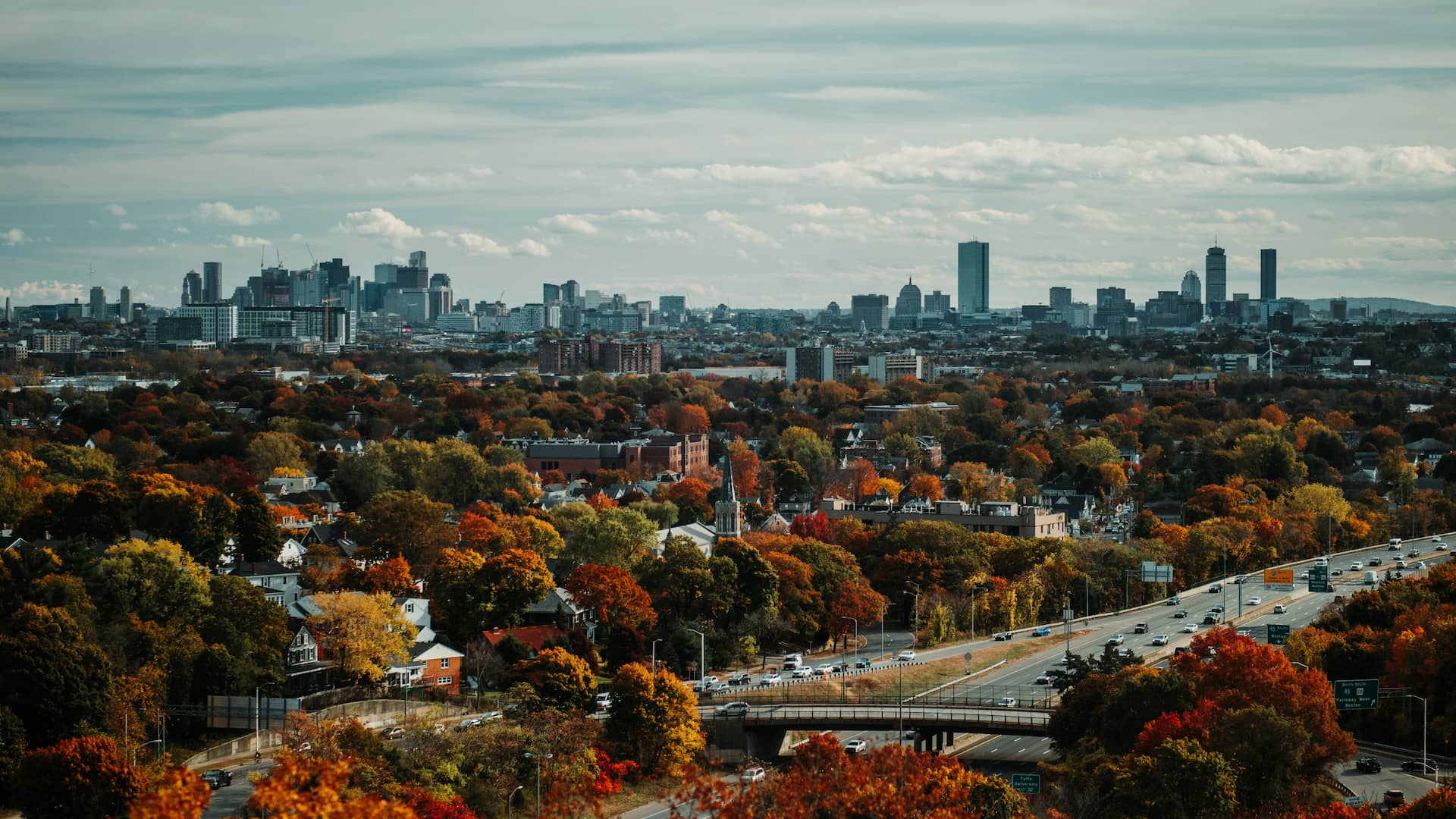

In short, Ayer has the lowest average one-bedroom asking rent in this group at about $1,695 a month. Brockton and Lowell are near $1,850, and Lynn is averaging $2,000. In Boston, a one-bedroom goes for about $2,600. Malden, Quincy and Revere are pricier than the outer commuter-rail cities, but their subway connections can ease the commute considerably.
Boston is among the nation’s priciest housing markets. Moving outside the city line can lower rent, but the cheapest apartment isn’t always the cheapest place to live. A long commute, a second car or daily station parking can eat up the difference.
This 2026 guide uses the same rental measure for all ten locations, so the numbers are comparable. It also covers home values, transit and the details that tend to matter on moving day. The list is about places that actually have a connection to Boston, not far-flung Massachusetts towns that are just cheap.
Cheapest places to live near Boston: 2026 comparison
The table runs from the lowest to the highest average one-bedroom asking rent. The annual savings column compares each location to the average one-bedroom in Boston, which costs $2,600. It does not include utilities, parking or transportation.
| Place | Approx. distance from downtown Boston | Average 1-bedroom rent | Typical home value | Potential annual rent savings vs. Boston | Main transit option |
|---|---|---|---|---|---|
| Ayer | About 40 miles | $1,695 | About $576,000 | $10,860 | Fitchburg Line commuter rail |
| Brockton | About 25 miles | $1,850 | About $509,000 | $9,000 | Fall River/New Bedford Line commuter rail |
| Lowell | About 30 miles | $1,850 | About $486,000 | $9,000 | Lowell Line commuter rail |
| Lynn | About 13 miles | $2,000 | About $580,000 | $7,200 | Newburyport/Rockport Line and bus |
| Malden | About 5 miles | $2,100 | About $675,000 | $6,000 | Orange Line |
| Waltham | About 11 miles | $2,150 | About $819,000 | $5,400 | Fitchburg Line and express bus |
| Salem | About 16 miles | $2,195 | About $609,000 | $4,860 | Newburyport/Rockport Line |
| Quincy | About 8 miles | $2,200 | About $680,000 | $4,800 | Red Line and commuter rail |
| Revere | About 5 miles | $2,300 | About $614,000 | $3,600 | Blue Line |
| Chelsea | About 3 miles | $2,350 | About $525,000 | $3,000 | Silver Line and commuter rail |
Data note: Asking-rent figures are Zillow Rentals averages for one-bedroom properties, checked September 11, 2026. Home figures are Zillow Home Value Index estimates rounded to the nearest $1,000, based on data through July or August 2026. The Boston comparison is Zillow's $2,600 average asking rent for a one-bedroom and about $775,000 typical home value. Listings change frequently and an apartment or property might be well above or below the local average, properties are presented for illustrative purposes only.
How we chose these affordable Boston-area cities
Massachusetts has more affordable towns than the ten on this list, but many are too far away for a regular commute. This list only includes communities within about 40 miles of downtown that have a direct MBTA subway, bus or commuter-rail connection, or a reasonable drive for someone on a hybrid schedule.
The rent for one bedroom carries the most weight because it provides renters with a constant comparison. Typical home value, distance and transit are also factors, If you need two cars, parking at the station and a long ride on the commuter rail, a lower rent may not mean much.
10 affordable places to live near Boston in 2026
1. Ayer: the lowest rent and the longest commute
For one-bedroom apartments, Ayer averages about $1,695 a month, or roughly $905 less per month than Boston. The median home value is around $576,000. A walkable center and a station on the Fitchburg Line, but the ride to North Station is long. If you work hybrid or remotely, or if your job is on Route 2 or I-495, Ayer is best. Before you sign a lease, check off-peak train frequency, station parking and the time of the last train home. A cheap rent is not much use if the timetable does not suit you.
2. Brockton: lower housing costs south of Boston
The average rent for a one-bedroom in Brockton is about $1,850, and the average value of a home is close to $509,000. It has several commuter-rail stations, and more multi-family and single-family housing than many inner suburbs. The return trip to Boston is longer, with conditions varying widely throughout the city. Go to the particular block at your usual travel time and try the way to the station or highway. If the apartment is in an older multi-family building, tell the mover about the floor, stairs and driveway before you get a quote.
3. Lowell: the lowest home value in the comparison
An average one-bedroom in Lowell costs about $1,850. The average home value is $486,000, the lowest of any in this group. The Lowell Line runs straight to North Station and the downtown has restaurants, museums, canals and apartments in converted mills. "Those mill buildings, ask movers if they have elevator reservations, loading dock rules or move-in fees. Every daily commuter into Boston should try the whole door-to-door, not just the scheduled train time.
4. Lynn: lower rent without moving as far out
Lynn's average one-bedroom rent is around $2,000, or about $600 a month cheaper than Boston. Its median home value is about $580,000. Lynn is about 13 miles from downtown, closer than the lowest-cost cities on this list, with commuter rail and bus connections, a downtown arts district and waterfront access. Housing and street conditions differ by neighborhood. Walk the route to transit, check out overnight parking rules and visit the block during the day and after dark. Limited curb space and tight stairs are common enough in older homes that they can affect the moving quote.
5. Malden: the least expensive subway option here
A one-bedroom in Malden will run you about $2,100 on average, which is about $500 cheaper than Boston. The median value of a home is about $675,000. Housing along the Orange Line’s Malden Center and Oak Grove stations is a mix of older multifamily homes and new apartment buildings. Check out the walk to the station, rather than rely on a listing that says the apartment is “near the Orange Line.” That can mean a five-minute walk. Or it can mean a bus ride. Make sure that the building is walk-up, or if you need to reserve the elevator and do insurance paperwork.
6. Waltham: better value for renters than buyers
The average rent for a one-bedroom in Waltham is about $2,150 and the average home value is about $819,000. The numbers make Waltham more interesting to renters than to price-focused buyers. It’s a logical place to put jobs in Waltham, along Route 128 or near Brandeis and Bentley, with commuter rail and bus service into Boston. Transit and walking distance varies across the city. Ask about resident parking and loading access around Moody St. If you are a downtown Boston commuter compare the whole trip to Malden or Quincy.
7. Salem: a walkable center and a direct train
Salem's downtown is walkable, has access to the waterfront and a direct train to North Station. Average rent for a one-bedroom apartment is $2,195, and the average home value is $609,000. Perfect for hybrid workers wanting a lively small city vibe without the need for constant daily subway trips. The complication is October. Autumn moves require earlier planning as tourism impacts traffic, parking and street access. Mark off-peak and weekend train frequency, too.
8. Quincy: several ways to get into Boston
A one-bedroom in Quincy costs around $2,200, with a median home price of about $680,000. The city has four Red Line stations, a commuter-rail stop, a large restaurant scene and neighborhoods that seem worlds apart. It can also work well for families trying to live with one car or no car at all. An apartment near North Quincy will not have the same commute as one near Quincy Adams, so use the exact address when planning the trip. For new buildings you may need to obtain a certificate of insurance and make a reservation for a service elevator. Older multifamily homes may have narrow stairs instead.
9. Revere: Blue Line access by the beach
Revere has Blue Line access and oceanfront living. The median home value is about $614,000, and the average one-bedroom is around $2,300. Rent savings not as great as Lynn or Lowell but a shorter transit trip might mean a car is unnecessary. Apartments in the vicinity of Wonderland, Revere Beach and Beachmont are at various distances from the station and in a variety of building types. Ask if the advertized rent includes parking, utilities or amenity fees. New waterfront buildings are often much more expensive than older units inland.
10. Chelsea: close to Boston, but no longer cheap to rent
Chelsea is just a couple miles from downtown, with Silver Line and commuter-rail service. Its average rent for a one-bedroom is about $2,350, not the under-$1,700 figure repeated in some older guides. Buying is another matter. Chelsea's median home value is around $525,000, one of the lowest in this comparison. Check the route to work from the exact address, because a short distance can still mean transfers or bridge traffic. It is also worth visiting the block to see about noise and truck access. Buildings under management may require elevator reservations or a certificate of insurance.
What if you want an affordable neighborhood inside Boston?
Some want to stay within city limits. For others looking for a cheap place near Boston… This means that it is a separate comparison because rent, resident services and transportation are different than in the suburbs. Good places to start are Hyde Park, Mattapan, Dorchester, Roslindale, East Boston and parts of Allston-Brighton, but prices vary sharply by block and apartment type.
In ZIP code 02136, which encompasses large parts of Hyde Park, a one-bedroom averages about $2,300 in Zillow’s September 2026 rental data. That’s about $300 a month below the citywide average for a one-bedroom in Boston. Hyde Park has commuter-rail and bus service, but no subway station. Specific station and walking distance to subway access in East Boston, Dorchester and Allston-Brighton apartments.
For a lifestyle comparison check out our guide to the best Boston neighborhoods for young professionals. That includes central neighborhoods that aren’t cheap, but might reduce transportation costs.
How to compare the true monthly cost
Rent is only one part of the budget. For each apartment use the same worksheet:
- Utilities, Rent, Renter's Insurance, Pet Fees & Mandatory Amenity Fees.
- Add in transit passes, station parking, car payments, insurance, fuel, tolls and upkeep.
- Time the door-to-door commute in normal traffic or against the train schedule you would take
- Set aside first month’s rent, last month’s if required, security deposit, possible broker fee and moving cost.
- Ask about parking costs, move-in fees, elevator reservations, and deposits.
At the common 30% rent-to-income guideline, Boston’s $2,600 average one-bedroom would need roughly $104,000 in gross annual income. The same math translates to about $67,800 in Ayer, $74,000 in Brockton or Lowell and $80,000 in Lynn. This is a budgeting benchmark, not a rule or statement of lease eligibility.
If you have a destination in mind, incorporate the one-time cost of relocating into the plan. Our 2026 Boston moving-cost guide breaks down crew rates and typical extras, and the moving checklist covers the work before and after moving day.
How to evaluate safety, comfort and commute
A citywide safety label doesn’t say much about an address. Crime reporting, neighborhood boundaries, and housing conditions differ, and averages can hide block-by-block differences. Check each address in the same way:
- Check the most recent local police data or latest incident maps or calls if available.
- Walk down the street in the morning rush, late at nite and on a weekend.
- Walk the same route to transit, parking, groceries and school/childcare you expect to use.
- Check for traffic noise, lights, flood exposure, snow parking rules and common area conditions.
- Test the commute at the hour you'll actually travel and review current MBTA schedules and alerts.
The address affects the move itself, too. A third floor walk up, narrow street or managed building with fixed elevator window can change the crew size and total time. When you ask for a quote from Boston movers, make sure to tell them both addresses, floor numbers, parking information and any building requirements.
Affordable-housing resources for Boston and Massachusetts
Market-rate listings. Boston Metrolist is the primary directory for income-restricted housing in Boston and the Greater Boston area. The state’s affordable-housing guide explains how to search Housing Navigator and other programs. Usually it’s based upon the income, the size of the household, and the rules for that property. Waitlists can be long so you may have to apply to several appropriate programs.
Before you book a Boston-area move
Each city or town has its own rules for temporary parking, posted signs and moving containers. A Boston permit is not valid in Cambridge, Chelsea, Quincy or other suburbs. Call your local parking or public-works department to see what each address requires. The buildings may have different rules for elevators, loading docks and certificates of insurance.
If one address is in Boston, read what to know before moving to Boston in 2026 and the Boston moving-permit guide. A legal space around the door usually saves more time than a slightly lower hourly rate.
Choosing among these places
How often do you have to go to Boston? That's the deciding factor. The biggest savings on rent are in Ayer, Brockton and Lowell. Lynn leans forward. Malden, Quincy and Revere are pricier but the subway access could let you ditch the car. Waltham is great for jobs on Route 128, Salem has a walkable downtown by the water, and Chelsea is close to Boston but has lower home values.
Pick 3 places and compare the total cost per month. Next, before you sign the lease, test the commute with actual listings. Once you have an address and move date, request a moving estimate using the parking, access and building details for that property.




