


The following area price overview uses the median sale price and median sale price per square foot from home purchases in February 2026, when available. For value-index context, Zillow's ZHVI data from January 31, 2026. The word "richest" refers to both ACS-based income measures and a Boston Globe study of neighborhoods.
Interactive guide
Tap a neighborhood to see what drives its luxury appeal.
Luxury driver
Luxury here is tied to centrality. Buyers are paying for a location in Boston’s business, political, and historic core, plus a relatively limited supply of high-end homes.
Read this section in the articleExecutive summary: The "most expensive area" in Boston is usually a small group of neighborhoods near the downtown core and the high-end harbor. The Financial District and Bay Village usually have the highest median sale prices, while the Seaport usually has the highest price per square foot. In February 2026, the median sale price in Financial District was about $2.58M, and the median sale price in Bay Village was about $2.44M. The median price per square foot in Seaport was about $2.2K. The usual sale price in Boston during the same time period was $812,5K. This shows how concentrated high-end prices are in just a few areas. "Richest" (highest number of high-income households) and "most expensive" (highest prices) are similar but not the same thing. According to The Boston Globe, the Seaport/South Boston Waterfront has the highest concentration of high-income households. The biggest change in moving plans is how to get to the street space, building time windows, lift rules, and long-haul planning.
How to Interpret “most expensive” in Boston
Other sites that write about this subject often start with a list of neighborhoods (like Beacon Hill, Back Bay, and Seaport) without making it clear what "most expensive" means. You need at least two numbers to get a useful, up-to-date answer: the median sale price, which is the price at which the average home sold, and the median price per square foot, which is a good way to compare "apples to apples" when one area has smaller luxury condos and another has larger houses.
Separating "sale metrics" from "value index metrics" is also helpful. The Zillow Home Value Index (ZHVI) uses property-level Zestimates to track monthly changes in home values. It is often smoother than month-to-month sale medians and can be useful for context but is not a replacement for "what sold last month."
One more word of warning about Boston: some neighborhoods are very small. If only a few homes sell in a month, the median can change a lot. This means that an area may seem like it has the most expensive homes based on a small sample. In February 2026, Redfin's neighborhood snapshot showed five sales in Bay Village. This is enough to give you some information, but it's still not very many sales for a few high-end closings to make a big difference in the median. In pricier neighborhoods where apartments can be smaller, checking storage options in Boston can help you keep extra furniture, sports gear, or seasonal items nearby without paying for more living space.
Most Expensive Boston Neighborhoods
A small group of neighborhoods close to downtown and the opulent harbor are typically referred to as the "most expensive area in Boston." Redfin's neighborhood property market pages are used to show the medians and median sell price per square foot for February 2026 in the table below. These are not "rankings for all time," but rather a picture with a date, which is what search purpose usually calls for.
| Neighborhood (Boston) | Median sale price (Feb 2026) | Median sale $/sq ft (latest month shown) | Homes sold (Feb 2026) |
|---|---|---|---|
| Financial District | $2,581,500 | $1.53K | 13 |
| Bay Village | $2,435,000 | $1.2K | 5 |
| Seaport District | $1,800,000 | $2.2K | 11 |
| Downtown Boston | $1,927,500 | $1.58K | 28 |
| Back Bay | $1,200,000 | $1.23K | 57 |
| South End | $1,300,000 | $1.1K | 60 |
| Beacon Hill | $1,157,500 | $1.7K | 24 |
Source note: The median sale price and $/sq ft numbers for each neighborhood come from the Redfin neighborhood housing market pages. The median sale price and number of "homes sold" numbers for February 2026 are clearly marked in the trend parts of those pages.
Most of the time, two takeaways are better than one "#1 neighborhood" label. To begin, the city center can win based on the median sale price. In February 2026, Financial District and Bay Village are two examples. The Seaport can also win in terms of price per square foot, which is often a result of newer luxury towers, better views, and buildings with lots of amenities.
Redfin's overall Boston picture from February 2026 shows that the median sale price was $812,500 and the median sale price per square foot was $603. If you look at how much homes cost per square foot in the Seaport and downtown-adjacent upscale zones, you can see why these areas are the most searched for "most expensive."
Another view that isn't affected by the monthly sales mix comes from Zillow, which says that the "typical home value" (ZHVI) in Boston is $772,838 through January 31, 2026. ZHVI is calculated by the monthly changes in property-level Zestimates. That can help you keep in mind when looking at neighborhood medians that might be off because of a few high-end closings.
A Closer Look at Boston’s Expensive Neighborhoods
To make this piece stronger, it would be good to go beyond numbers and explain why the same few districts keep coming up whenever the most expensive area in Boston is discussed. It's not more price copy that makes the growth stronger. It's about the housing in each neighborhood, what makes it unique, and why buyers keep treating it as top-notch Boston real estate.
Financial District
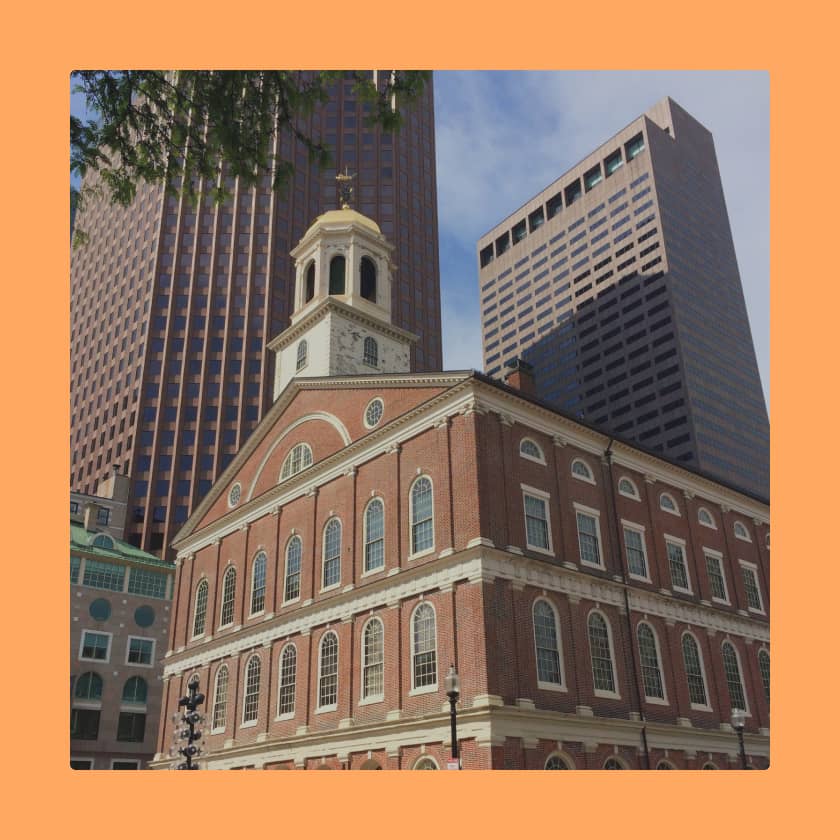
“20180526 - 02 - Boston, MA (Financial District)” by Andre Carrotflower, via Wikimedia Commons, licensed under CC BY-SA 4.0. Changes: cropped and color-adjusted.
The Downtown/Financial District is one of the best examples of how being in the middle of everything in Boston becomes a luxury. Office towers, famous properties, high-end apartment buildings, and easy access to some of Boston's oldest sites, like Old South Meeting House and Custom House Tower, can all be found in this part of the city. The city of Boston's new downtown zoning system is meant to support housing growth and continued development in the core. It also helps that downtown is becoming more mixed-use.
This mix is what makes the Financial District seem expensive before a buyer even looks at the price. The units aren't just high-end ones. Being in the middle of Boston's business, political, and historic center means being close to all of these things while also having a small selection of high-end homes.
Bay Village
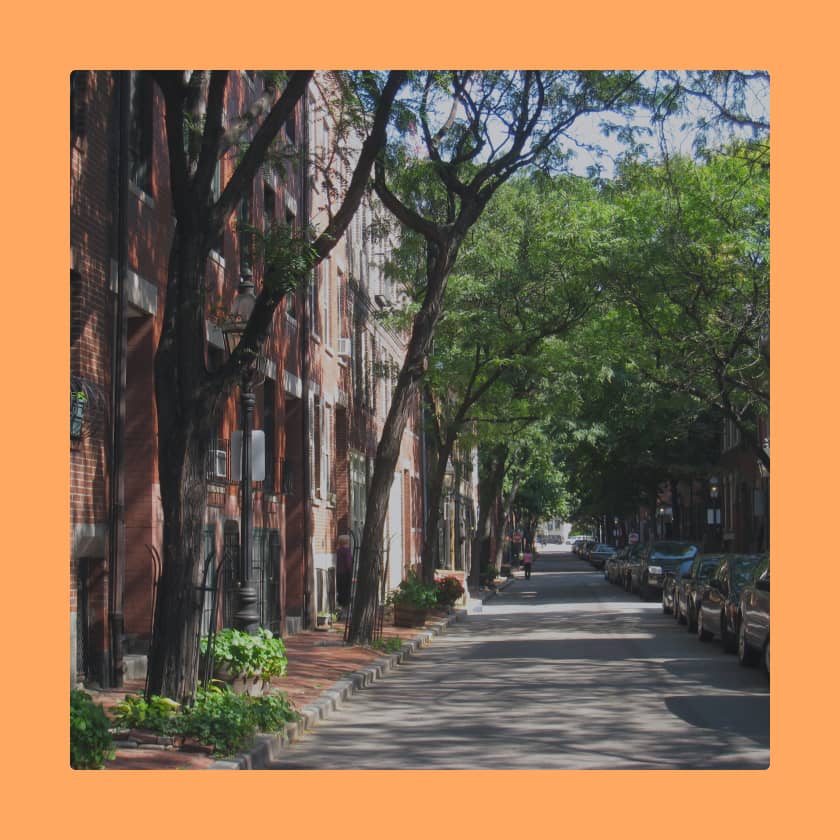
“Bay Village, Boston, MA - view 1” by Daderot, via Wikimedia Commons. This file was released into the public domain. Changes: cropped and color-adjusted.
Part of the reason why Bay Village seems pricey is that it is so small and hard to copy. The area is tucked between Chinatown, Back Bay, the South End, and Downtown. Boston calls it one of the city's smallest. Because of its location, it has easy access to some of Boston's best living and business areas at the same time. However, it still feels more private and enclosed than the streets around it.
The built form of the area is also important. The Bay Village Historic District page for the City says that most of the buildings were built between 1825 and 1899. The red brick and granite supports make the historic area look uniform. The government website Boston.gov also says that many of the homes there look like smaller versions of townhouses on Beacon Hill because they were built by the same builders. That mix of size, consistency, and position creates the exact kind of rarity that keeps top prices high over time.
Seaport District
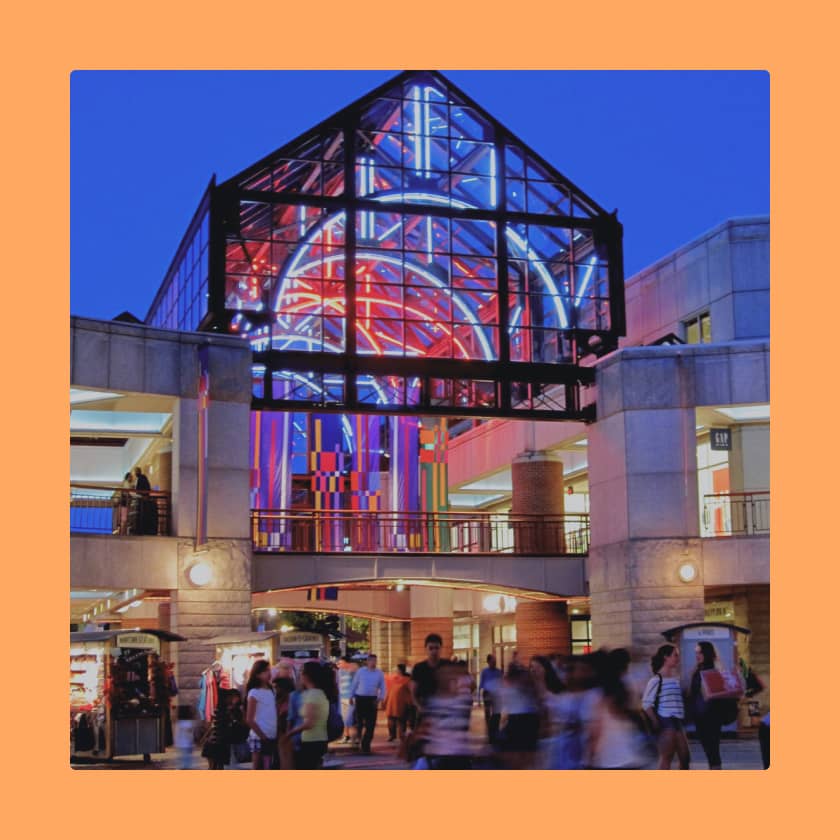
“Seaport District, Boston, MA, USA - panoramio” by Roman Kharkovski, via Wikimedia Commons, licensed under CC BY-SA 3.0. Changes: cropped and color-adjusted.
One of the most well-known examples of luxury living in Boston is the Seaport District. This is because it has large-scale modern harbor building, which isn't possible in the city's older wealthy areas. Meet Boston calls it the city's newest and fastest-growing area. It's home to the Boston Convention and Exhibition Center, the Institute of Contemporary Art, and more shops, businesses, and homes.
This new personality is still changing. The Boston Planning Department's Commonwealth Pier renewal project envisions the area as a spot for fresh seaside activities for everyone, better shops, and cutting-edge office and event spaces. It's easier to write a piece about Seaport's value than to list numbers from a table: buyers are paying for newness, perks, harbor access, and an area that keeps bringing in big investments.
Downtown Boston

“Downtown Boston, Mass skyline 2006” by Spinnick597, via Wikimedia Commons, licensed under CC BY-SA 2.5. Changes: cropped and color-adjusted.
Because it has been Boston's center since the 1700s, downtown is still a topic of conversation when people talk about the highest prices in the city. Boston says that the living here includes both old apartment buildings and new glass towers. Theaters, shops, access to the water, and large green areas are all within walking distance. It's one of the few places in the city where people live, work, take the bus, and visit tourists all mix very well.
Besides, it's no longer just a work area during the day. In the last twenty years, thousands of condos and apartments have been built in the area, according to the Downtown Boston Alliance, making it a great place to live. That change is important for SEO because it helps explain why Downtown comes up when people talk about both where in Boston is expensive and where high-end people choose to live.
Back Bay

“Boston Back Bay skyline from Common, 2010-07-01” by Cbaile19, via Wikimedia Commons, dedicated under CC0 1.0. Changes: cropped and color-adjusted.
One of the best reasons why Back Bay is still one of the most desirable places to live in Boston is its rich building past. According to the city, Back Bay used to be a body of water that changed with the tides. After a lot of trash was dumped there in the 1800s, it was turned into an early planned, trendy residential area. That story about how the neighborhood got its start still affects how it looks today, with its well-kept blocks, famous buildings, and built environment that feels purposefully big rather than random.
It's easy to see why they are very important on the ground. The Boston Public Library, Copley Square, Newbury Street, Commonwealth Avenue, and Trinity Church are in the middle of Back Bay. To make the part more in-depth, it's not necessary to repeat sale prices. Instead, show why buyers keep thinking of Back Bay as having one of the best mixes of design, walkability, culture, and status in the city.
South End

“Skyline from South End - Boston, MA - DSC06896” by Daderot, via Wikimedia Commons, dedicated under CC0 1.0. Changes: cropped and color-adjusted.
The South End Landmark District makes the buildings in this neighborhood look like they belong together in a way that not many other big urban districts can. Boston says that the area grew after wetland was filled in around the middle of the 1800s. Resident buildings were limited in size and material, so they were arranged in long, straight rows. Many people still experience the South End in the same way, and this helps to explain why it is so valuable.
Besides being important, though. The Meet Boston South End book talks about the Victorian brownstones, SoWa, restaurants, independent shops, and nearly 30 parks in the area. What makes the South End more than just a pretty place is the mix of well-kept homes and busy streets. In Boston, this is one of the few areas that feels both settled and very good for living in at the same time.
Beacon Hill
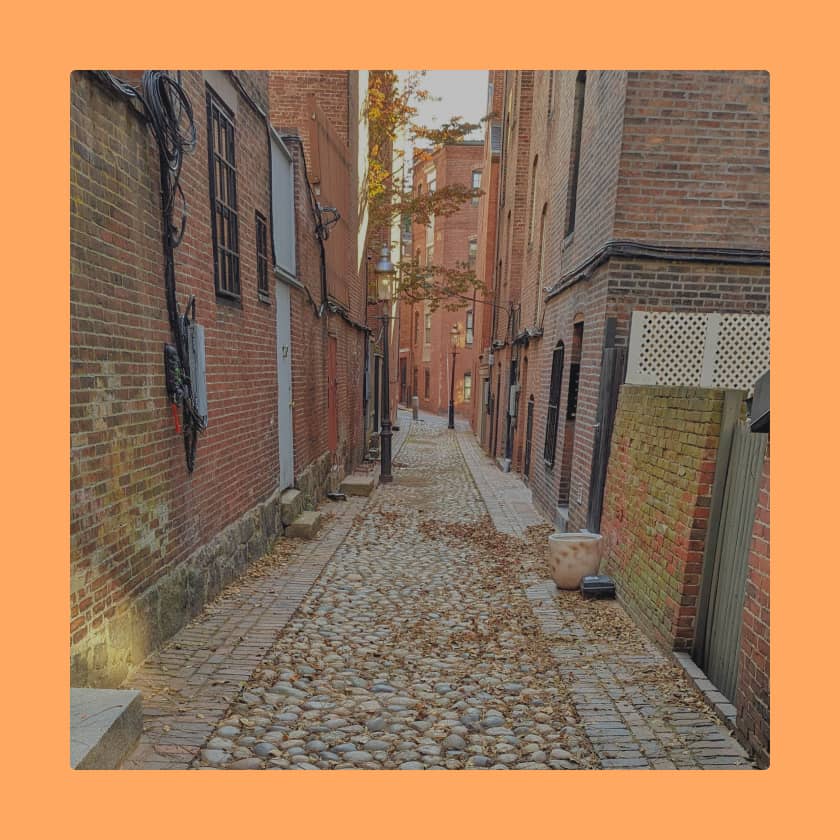
“Cedar Lane Way - Beacon Hill, Boston, MA - 02” by Daderot, via Wikimedia Commons, dedicated under CC0 1.0. Changes: cropped and color-adjusted.
Because it has kept its own character, Beacon Hill is still one of Boston's most prestigious areas. Boston calls it a protected historic area with narrow streets, brick paths, gas lamps, and small shops and restaurants on Charles Street. In this area, the neighborhood picture and the real-life street scene are very similar, almost block for block.
Along with its building value, it has cultural and historical value as well. The Black Heritage Trail and the Boston African American National Historic Site run by the National Park Service show how important Beacon Hill was to the past of abolitionists and African Americans in Boston. This gives the neighborhood more meaning than just the word "luxury." Beacon Hill should read as both expensive and historically unique in a better piece of writing, since that's more likely to explain why owners and readers keep coming back to it.
The fact that there isn't a clear winner in Boston is shown by these districts in their entirety. The more accurate response is that the most expensive area in Boston is actually a small group of upscale neighborhoods, each with its own reason for staying expensive: Bay Village for scarcity, Seaport for waterfront new-build luxury, Downtown and the Financial District for centrality, Back Bay and Beacon Hill for prestige, and the South End for historic character combined with everyday livability.
Most Expensive vs Richest
People who talk about the most expensive area in Boston usually focus on the same small group of high-end places that are also mentioned in conversations about the most expensive Boston neighborhoods. The question about the richest part of Boston is not always answered by that spread, though. Prices for homes represent where they are located, the views they get, the design, and the fact that there aren't many homes for sale. The term "richest" generally refers to the highest income and wealth concentration among residents. These ideas often come together in Boston in places like Back Bay, Beacon Hill, and the Seaport, but they are not the same thing.
To make the "richest" talk based on something real, the U.S. The American Community study, according to the Census Bureau, is "an ongoing survey that provides vital information on a yearly basis" about the people and the country. When comparing cities, figures of family income often come from the ACS.
For the years 2020–2024, Census QuickFacts says that the median household income in Boston is $97,344. That number is for the whole city; it doesn't say which neighborhood is the "richest," but it helps you understand what "high income" means in Boston.
According to The Boston Globe, the Seaport (South Boston Waterfront) neighborhood has the most high-income households in the city. More than 40% of the families there make more than the Globe's high-income standard. So, the Seaport is often called the wealthiest area of Boston in current articles that list incomes, even if another area has a higher "median sale price" at the time in question.
In real life, when someone says "richest part of Boston," they might be thinking about the people who live there and the range of family incomes in the area. When people say "most expensive," they usually mean the price of a house, and more often than not, the price of a fancy building close to downtown. There is a lot of overlap between these in the Seaport and downtown-adjacent areas, but they aren't always the same in each sample or each month.
Why these Areas Stay Expensive
There are three things that most of Boston's most expensive neighborhoods have in common: they are close to downtown jobs and amenities; the housing stock is either historically scarce (rowhouses, brownstones, small-lot streets) or newly luxury-positioned (full-amenity towers); and buyers who value walkability and location more than square footage are always looking to buy.
Prices in the downtown center, which includes the Financial District and Downtown, tend to represent a condo-heavy market with easy access to public transportation, workplaces, and views of the water. In February 2026, the typical sale price in Downtown Boston was about $1.93M and in the Financial District it was about $2.58M. These numbers can change depending on the number of high-end units that close in a particular month.
These little neighborhoods really do have an effect on Bay Village. Redfin's neighborhood snapshot for February 2026 only shows five sales. If a lot of high-end units close together, the typical sale price could go up. That means Bay Village usually shows up at or near the top of lists of "most expensive" homes. But you should always take that as "this month's typical sale," not as a fixed number that doesn't change.
The prices at the Seaport are a little different. Not only do they have high sale prices, but they also have very high price per square foot (about $2.2K in the Redfin sample), which is typical of luxury tower availability and demand driven by amenities. The Seaport is one of Boston's fastest-growing areas, according to the Boston Globe. It is full of high-end developments and luxury towers, which is another reason why it is often talked about as one of the most expensive and best places to live.
Meanwhile, Back Bay, Beacon Hill, and the South End are great examples of "prestige + scarce housing stock." These neighborhoods don't always have the highest median prices, but they stay among the most expensive in Boston over time because the housing stock (historic buildings, very walkable streets, and low inventory) makes them desirable over the long term. The same pattern holds outside the city: in MetroWest towns like Wellesley and Weston, limited land and steady demand keep single-family prices above $2M — Wellesley's 2025 median sale price was $2.21M, per Adler Connolly Squared, a luxury team covering both towns.
Moving planning in Boston’s high-priced neighborhoods
As it should be, this subject is mostly about neighborhoods and prices. If you're reading this on a blog for a moving company, I think you should know this: in Boston's dense, expensive neighborhoods, the success of move-day is often based on access—where the truck can legally stop, how long it can stay, and how quickly you can load and unload—not on how far away the house is on the map. The permit cost, the meter zones and the building rules for each of these neighborhoods are on our Boston movers page.
"A permit for your moving truck is not required, but it guarantees you a legal parking spot for the day of the move," says Boston's official website. If you're moving into a neighborhood with narrow streets, like Beacon Hill, Back Bay, or downtown, that guarantee can mean the difference between a smooth move and one that takes a long time.
Here are the main rules from the Boston City website for parking moving trucks:
A normal ticket holds two spots for one day, from 7 a.m. to 5 p.m. When applying online, you must have a moving date that is at least two weeks (15 days) away and no more than eight weeks away. The permit is mailed, usually within 10 days of approval. Also, the city says you need to put up signs at least 48 hours before the permit starts at 7 a.m., and three days before the move is even better.
Boston.gov says a one-day pass for two non-metered spaces costs $69 and comes with two signs. For two metered spaces, it costs an extra $40, and the page gives an example of how the fees for a two-metered-space permit add up to about $110.
On its general moving page, Boston also adds an important caveat: it says that getting a pass is "not legally required," but the city does suggest it in some neighborhoods as a kindness that also helps make sure your car is parked properly.
Simple permit timeline for a smoother move: For an easier move, here's a simple schedule for getting a permit: if you want to apply online, allow "15 days to 8 weeks" for sending and the application process; then, plan to post at least 48 hours before 7 a.m. (Boston suggests three days). You might need to talk to them in person instead of online if you're closer than that.
When it comes to upscale towers and managed condo buildings (which are popular in the Seaport and downtown), parking is only half the story. As soon as possible, you should also confirm the building rules, as they can set the pace for the whole move. These questions should be answered in writing by the building management before you move. This will make the planning process go more smoothly.
- Does the landlord require a certain time frame for moving in and out (only during the week, limited hours, or quiet hours)?
- Do you need to book a freight or service lift, and do they need padding?
- Do they need the moving company to give them a certificate of insurance (COI)? If so, what exactly do they want it to say?
- Will there be a loading dock, or will there be a long walk from legal parking to the lift for the move?
- Do floors, door frames, or walls in shared areas need extra protection?
Costs can be changed by work time and crew size more than the neighborhood's "name." Costs often go up in high-demand areas because there isn't enough street space, there are tight elevator bookings that make it hard to change plans, historic rowhouse layouts with multiple flights of stairs, and high-end buildings that need extra protection for the finishes.
If you want to learn more about planning in Boston, Move & Care has more information on its moving page.
FAQ
It depends on how you measure it. According to Redfin neighborhood photos from February 2026, the median sale price in the Financial District was about $2.58M, the highest of all the places mentioned here. The median sale price in Bay Village was also very high at about $2.44M, but there were fewer sales that month.
It is in the top group by typical sale price in February 2026, but it is not the highest at this time. The Seaport stands out because it costs about $2.2K per square foot, which is one reason why it's often thought of as "the most expensive."
The Boston Globe says that the Seaport/South Boston Waterfront has the biggest number of high-income households in the city, with more than 40% of households making more than the high-income level.
Both are very close to downtown, and the type of product that sells each month can have a big impact on both. Bay Village is also small, and there weren't many sales in February 2026, which can make changes in the median even bigger.
Although the City of Boston says it's not necessary, doing so ensures a legal parking spot. If you want to book room, the city's rules stress timing (when you can apply online and when mail can be delivered) and putting up signs at least 48 hours before the permit starts.
If seven-figure medians aren't the plan, our guide to the best neighborhoods in Boston for families covers areas where the money stretches further.
And before committing to any of these neighborhoods, check what to know before moving to Boston — high-end buildings tend to have the strictest move-in rules in the city.




