
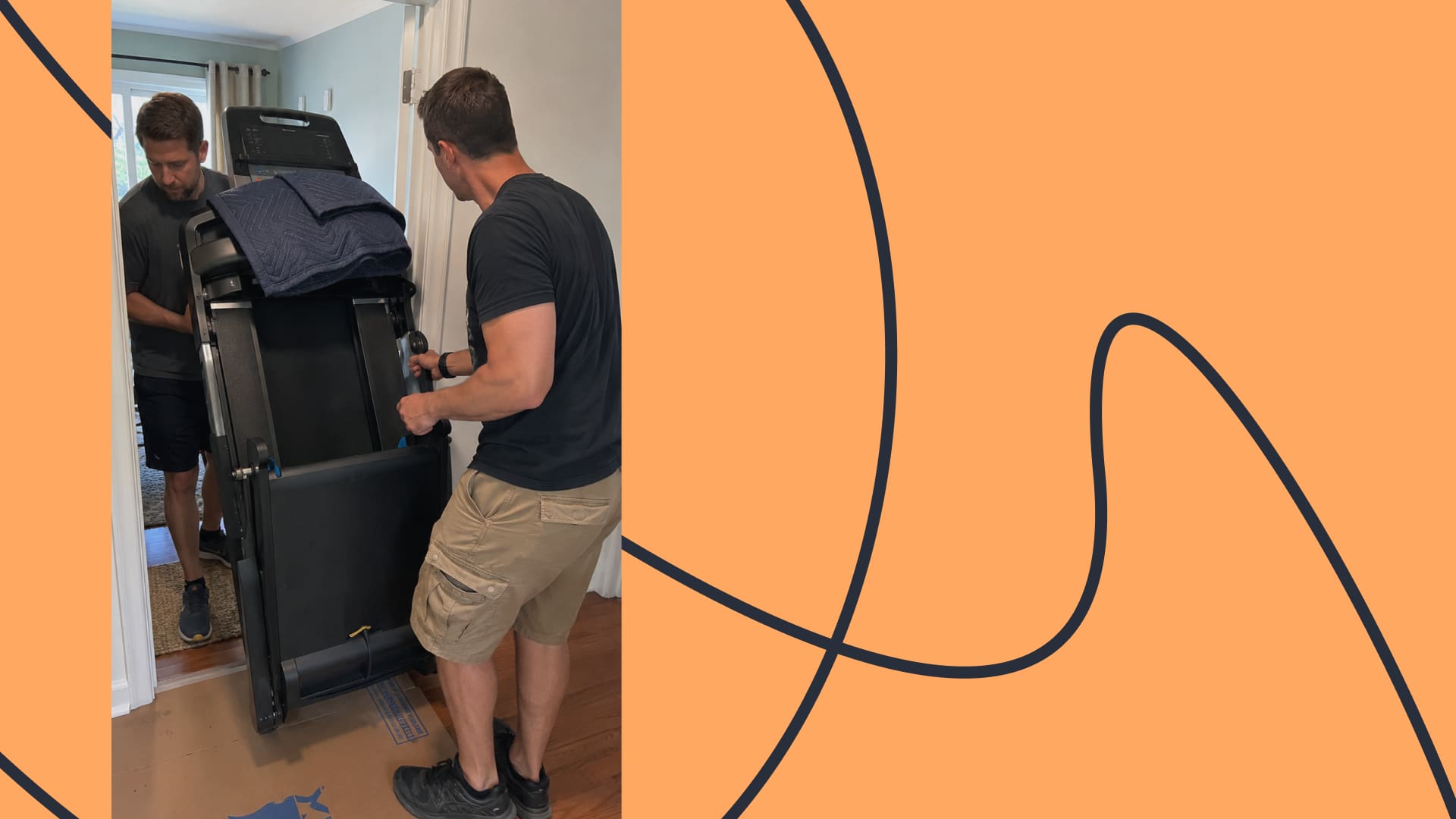

The danger in moving a treadmill typically happens before anyone realizes that there is a danger. The machine is halfway in a door, the console is too close to the trim, the deck starts to move, or the stairs are tighter than you thought. That’s when floors become scuffed, walls get marked, wires get torn and people start carrying more weight than they intended.
This article will explain how to properly transport a treadmill, when to fold it, when to remove pieces, what equipment helps, and when it’s smarter to get movers. The aim is not to make treadmill moving sound effortless. The aim is to display the dangerous portions before the lift begins.
Before touching anything: Locate the model number of your treadmill and look it up in the owner’s manual. Folding locks, transport wheels, console wiring, incline settings and disassembly stages vary by model.
Quick decision helper
First, decide if this is a DIY move
A treadmill can feel manageable until it reaches a stair turn, narrow doorway, or uneven threshold. Answer these questions before lifting anything.
Your result will appear here.
Answer the questions before lifting.
This gives you a safer starting point than guessing once the treadmill is already in motion.
Simple rule: DIY may be reasonable for a compact treadmill on the same floor. If there are stairs, tight turns, heavy parts, uncertain disassembly, or only one person available, hiring movers is usually the safer option.
Check the treadmill type before lifting
Begin with the kind of treadmill you have. Walking pads are typically low to the floor and small. A folding treadmill will take up less space but you still need a working clasp and adequate room to roll. A non-folding treadmill may have to be partially disassembled before it can be safely carried through a doorway, stairs or hallway turn.
This is where one-size-fits-all counsel might be an issue. A NordicTrack, ProForm, Sole, Horizon, Bowflex, Peloton or commercial treadmill will have its unique fastening system, console wiring, incline need and moving directions. Always follow the owner’s instructions over broad DIY recommendations.
“Make sure the storage latch is in the locked position. It might take two individuals to move the treadmill.”
The same manual recommends lowering the slope to zero before folding, removing the key, unplugging the power cord, not gripping the frame by the plastic foot rails, and not dragging the treadmill over uneven terrain. Those features matter because the construction of a treadmill determines the safest manner to move it.
Tools and supplies you may need
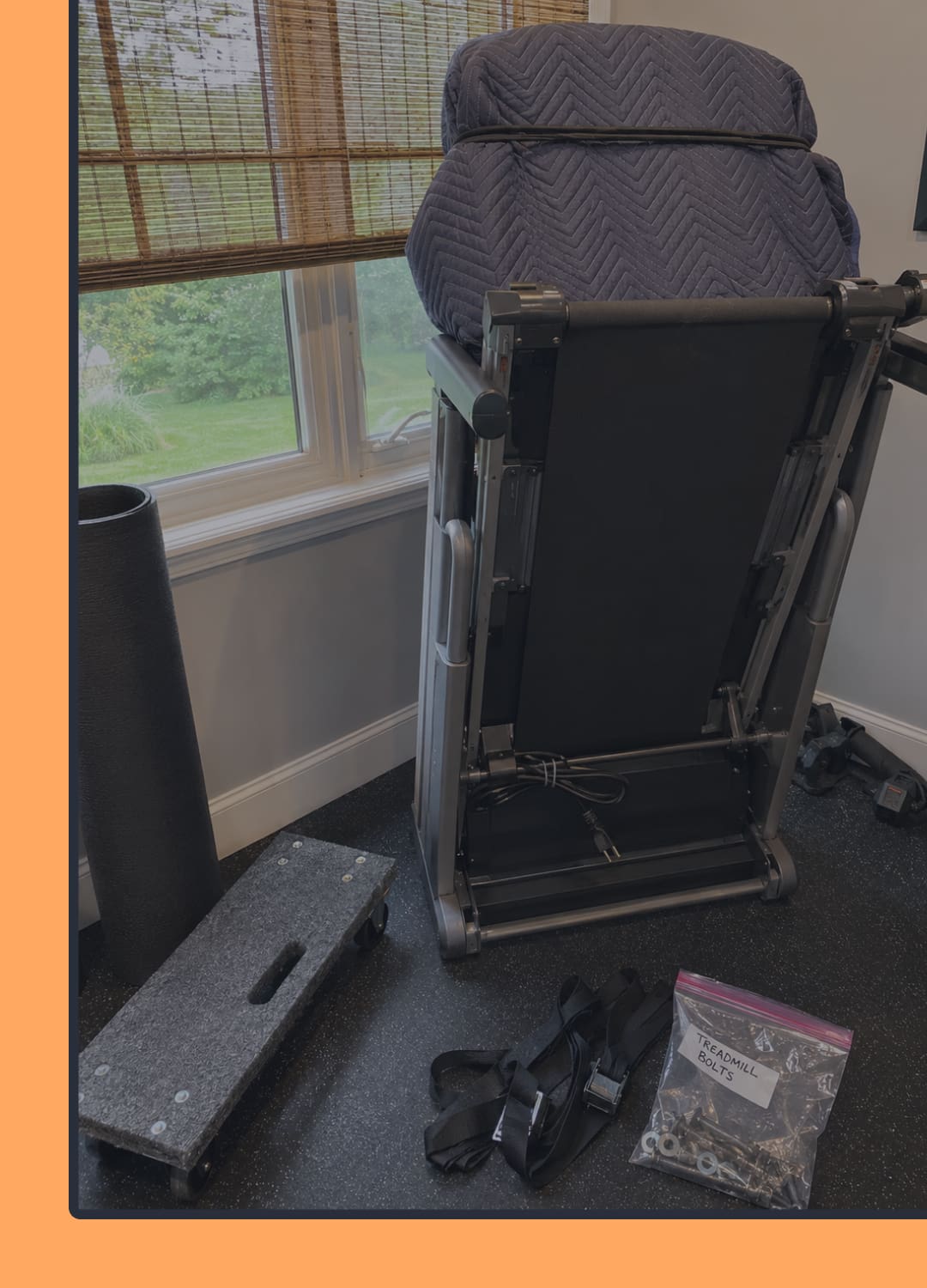
Guessing should not be the start of a treadmill maneuver. You need house protection, machine protection, and a mechanism to control the weight. Prepare the pathway before you take it up, not when the treadmill is already lodged in a doorway.
| Item | Why it matters |
|---|---|
| Moving blankets | Protect the console, rails, walls, trim, and floors from scratches. |
| Furniture or appliance dolly | Helps move the treadmill across flat areas without carrying the full weight. |
| Moving straps | Can improve control during short carries and stair moves when used correctly. |
| Screwdriver or socket wrench | Needed if the console, handrails, or uprights must be removed. |
| Zip bags and labels | Keep bolts, washers, the safety key, and small parts organized. |
| Floor runners or cardboard | Reduce the risk of dents, drag marks, and dirt on hardwood, tile, or carpet. |
Measure the route before the treadmill moves
Many treadmill moves go awry because the path is checked too late. If it folds, measure treadmill folded width, length and height. Measure doors, stair widths, hallway bends, elevator openings, and truck or vehicle space.
Don’t just inquire, “Will it fit in the doorway?” Ask if it will be able to turn once it is through the entrance. A treadmill might go through a door but not through a landing or corner in a corridor. If safer clearance is possible, take doors off hinges. Clear carpets, cords, shoes, boxes, pet bowls, and anything else that could catch a foot or wheel.
Move & Care field tip: Take photos of the treadmill, doorway, stairs and hallway turn before asking for an estimate. Crew uses photos to plan tools, crew size, protection and if partial disassembly may be needed.
How to move a treadmill step by step
Turn the treadmill off, remove the safety key and unplug the power cord. Coil the cord such that it shall not drag under the frame or be snagged in a wheel and fasten it. If your treadmill has incline, lower the incline to zero before folding or transferring the treadmill unless otherwise stated in your owner’s handbook.
If the treadmill is foldable, elevate the deck and ensure the latch is completely locked. Don’t trust a rapid click. Don’t think it’s safe. If the deck opens while the machine is in operation, it can harm the treadmill and create a hazardous condition for those handling it.
Wrap the console and rails in moving blankets. Beware of touchscreen consoles, plastic covers, cup holders and control panels. These are not handles, however they may appear to be handy things to grab.
For two persons, tilt the treadmill enough to use the transfer wheels, or put it on a dolly. Keep the machine level and go slow. Do not drag on the threshold of hard wood floors or on uneven surfaces. If the wheels catch on a door saddle, tile edge, or garage lip, stop and lift gradually, rather than pushing the machine forward.
Lifting well is not only about strength. The CDC/NIOSH lifting guidance says that lifting risk is dependent on a number of circumstances including the weight of the object, the hand position, vertical movement, twisting, duration and the quality of grip. It is because of this a treadmill can be dangerous even if two persons can officially lift it.
How to disassemble a treadmill for moving
If the treadmill is too wide, too long, or too awkward for the path, it may be safer to partially disassemble it than to force it through the residence. Most treadmills are not designed to be taken apart completely for a normal relocation but many include console, handrails or upright supports that may be taken off.
Photograph before you take anything apart. Take photos of the wiring, bolt locations, upright connections, and left / right locations. Place hardware in designated bags. Disconnect wires at connector carefully. Do not ever rip wires out of the console or frame.
Do not remove the motor cover unless the handbook specifically says to do this. The motor section may have electrical components and belt systems which are not standard moving disassembly. If the console or uprights don’t come off clean, halt before damage becomes the next concern.
How to move a treadmill through a doorway
Doorways are the graveyard of minor assumptions. Fold the deck. Lock the latch. Guard both sides of the entryway. Establish the angle before lifting. One person should lead the top and watch the console. The other must be in charge of the foundation and weight.
Go slow enough to stop before the treadmill meets the door frame. If it doesn't fit, don't force it. If the handbook allows it, remove the door from its hinges or disassemble the console or uprights. Forcing the frame can harm trim, plaster, rails, plastic covers or wiring.
How to move a treadmill upstairs or downstairs
Stairs are the least forgiving bit of motion on the treadmill. Transport wheels and a dolly can be helpful on flat ground. The weight is on the bottom person on stairs and the frame can slip or pull if both persons aren't moving simultaneously.
For a full-size treadmill, use two or more robust adults. A third person can help you notice the curve, defend the walls, and watch the landing. Decide who will lead before lifting. One foot after the other. The person below should never be surprised by a sudden push from above and the person above should not allow the treadmill slip down into them.
In a basement, an upstairs bedroom, a narrow apartment stairwell or a tight split-level landing, it’s generally better to hire movers. A crew of trained workers will first evaluate the route, safeguard the residence and determine whether to carry the treadmill whole or partially disassembled.
Common treadmill moving problems
-
Stop before forcing it. If necessary, remove the door. If allowed by the manual, remove the console or uprights. Measure the angle of turn. This is one of the most prevalent reasons for necessary partial disassembly of treadmills.
-
Don't move it till the latch checks out. Check the latch mechanism, and read the handbook. The deck is folded and when opened it moves which can hurt the individuals carrying it and also harm the machine.
-
Read the instructions first. Protect console, handrails and motor area. Never push on a touch-screen or plastic console enclosure.
Can one person move a treadmill?
If the transfer wheels work and there are no stairs, one person may be able to reposition a compact folding treadmill or walking mat across a flat floor. But it doesn’t imply one person should be carrying a full-size treadmill through a house, into a van, or down stairs.
The risk is not just the total weight. It is the uneven balance, long frame, console, motor side, and need to turn while holding the machine. If there's any risk that you'll have to catch, twist or force the treadmill, it's not a one-person job.
How to load and transport a treadmill
Once the treadmill is in the truck, it still has to be secured. Wrap the console and contact points in moving blankets. Use tie-down straps to secure the treadmill so it does not move during travel. Don’t put heavy boxes on the belt, motor cover or console.
If you have to lay the treadmill on its side, first consult the owner’s manual and safeguard the delicate side. Many treadmills are easier to move around when folded and in an upright position, however it depends on the type and truck space. The basic criterion is simple: The treadmill should not move within the truck when the vehicle turns, stops or drives over bumps.
Reassemble and test before using it
Place the treadmill in the place it will be used, and reassemble it, but do not fully fasten everything. First align the uprights, handrails and console, then tighten the bolts evenly. Ensure the wires are connected and not pinched. Ensure the treadmill is sitting level and has sufficient room around it for safe use.
Before plugging in, check the safety key, power cord, handrails, console, belt and frame. Run the machine first at slow speed. If you hear rubbing, clicking, scraping, or observe the belt moving wrongly, stop and check the handbook before using it.
When to hire movers for a treadmill
You should consider hiring movers if the treadmill is upstairs or downstairs, the path has sharp turns, the equipment needs to be disassembled, or you do not have enough personnel to operate it safely. It’s also a good solution for high-value treadmills, big consoles, commercial frames and residences with hardwood floors, small trim or hard to navigate stairways.
It is usual in the moving industry to discuss the difficult aspects too late. If a treadmill requires stairs, tools, protection, or cautious dismantling, it’s not just “one more item.” Before moving day, notify the moving firm the model of the treadmill, whether it folds or not, where it is located, and whether there are stairs or tight turns.
Our treadmill movers can help you with treadmill relocation, home protection, loading, unloading and placement in the new room. If you’re not sure if your treadmill can be carried securely in one piece, ask for an estimate and send pictures of the treadmill, entryway, stairs and route it will take. That’s the info the crew needs to organize the move before the risky section starts.
FAQ
Not necessarily. If the treadmill folds, locks securely, fits through the route, and can be managed by two people, it may move without disassembly. Partial disassembly is usually safer if it will not fit through a doorway, stair turn, or hallway corner.
Occasionally, but check the owner's manual first. Placing it on the wrong side or putting pressure on the console, screen or handrails can damage the machine.
Most full-size treadmills require two persons. Stairs, landings, tight bends, and commercial models may require more assistance or professional movers.
Don’t pull the treadmill straight across the floor. Use floor runners, cardboard, moving blankets or a good dolly. Lift over thresholds and uneven edges, rather than force the wheels over.
Stairs and tight corners are frequently the worst. The treadmill can be heavy and the frame may be too long to turn smoothly in compact places.
Yes. Local move, apartment move, or labor-only service — movers can move treadmills. Before seeking an estimate, tell us the treadmill model, location, stairs and access data.




