
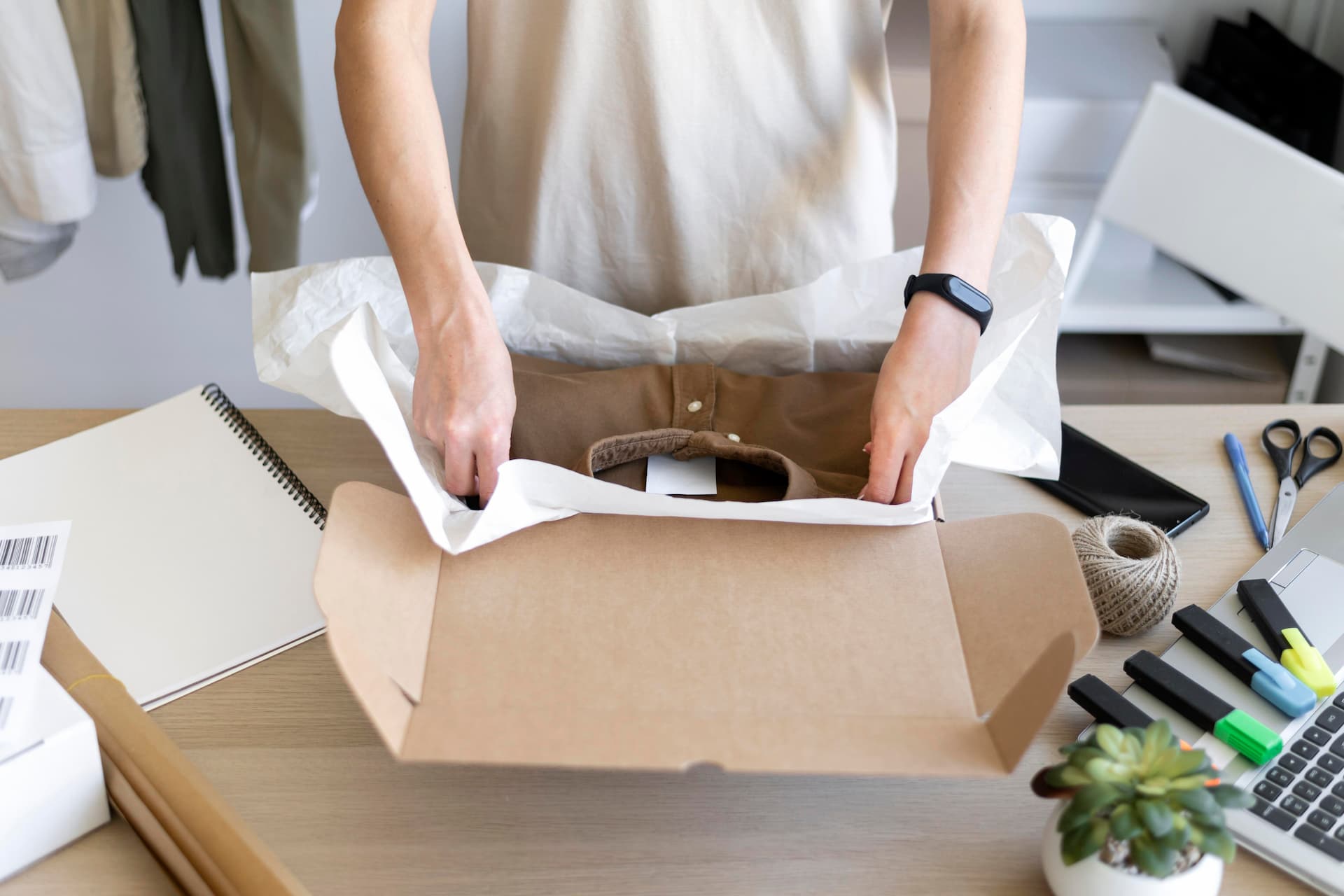

Packing things up? It's not an easy task, but it's a key one when moving. What needs to be done? Just pack your stuff? Wrap it in plastic wrap and throw it in a box? Deceptively simple until you are faced with reality. In this packing guide, we'll try to break it down and make your move simple.
Step 1 – Gather All Necessary Packing Supplies
Before the storm, there's calm-the calm of preparation. You need to gather all the necessary items to make the packing. Here is a table with all the basic items for packing:
| Packing Supply | Purpose |
| Sturdy moving boxes | For packing different-sized items |
| Packing tape | To seal boxes |
| Bubble wrap | To protect fragile items |
| Packing paper | To wrap breakable items like dishes and glasses |
| Markers | To label boxes |
| Box cutters | To open and close boxes |
| Furniture blankets | To cover large items |
| Stretch wrap | To secure furniture and drawers |
Never underestimate the power of high-quality supplies. Strong boxes, secure tape, and maybe even eco-friendly options if you want to save the planet while you pack.
How Do You Fold a Moving Box?
To fold a moving box for packing, open the flattened box into a square, fold the two small bottom flaps in first, fold the two large flaps over them, then tape the center seam and both side edges. Press the tape firmly so the box does not open when lifted.
- Open the flat box and square the corners.
- Turn the box upside down so the bottom faces up.
- Fold in the two short flaps.
- Fold the two long flaps over the short flaps.
- Tape the long center seam from edge to edge.
- Add one strip of tape across each end of the seam for extra support.
What Is a Moving Blanket?
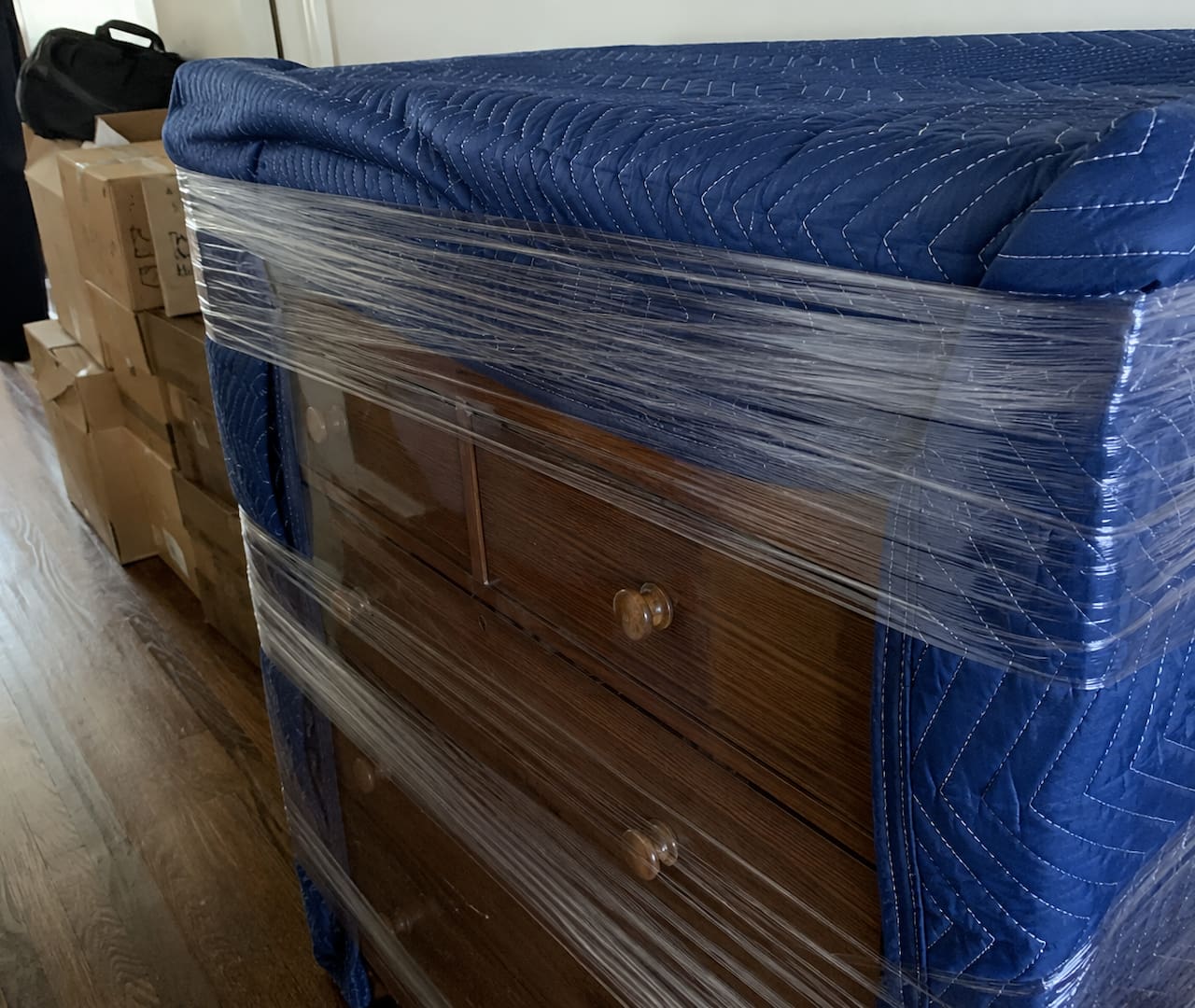
A moving blanket is a thick, padded cover used to protect furniture, appliances, mirrors, and other large items during a move. It is also called a furniture pad or furniture blanket. Use it on finished wood, glass, metal corners, dressers, tables, bed frames, and appliances before those items are carried or loaded into the truck.
What are moving blankets for? Moving blankets help prevent scratches, dents, chipped corners, rubbing marks, and shifting damage. They are most useful when one item can touch another item, the truck wall, the floor, or a doorway.
Example: Before moving a dresser, drape a moving blanket over the top and front edges, wrap it with stretch wrap, and tape only the wrap—not the furniture finish.
Use moving blankets first on items with finished surfaces, exposed corners, glass, or appliance panels. These are the pieces most likely to show damage after loading, transport, and unloading.
-
Use one blanket for a small nightstand, chair, TV stand, small dresser, or appliance panel if the item is already stable and only needs surface protection.
-
Use two or more blankets for dining tables, large dressers, mirrors, headboards, glass-front cabinets, and anything with exposed corners on multiple sides.
Step 2 – Declutter Before You Pack
Here’s the truth: you don’t need half the stuff you own. But realizing that? That’s the real struggle. However, if you do - not only will it save you time when packing and moving, but it will also save you money.
Here’s how to declutter effectively:
- Keep: For the essentials, the sentimental, the irreplaceable.
- Donate: For what serves no purpose but could in someone else’s life.
- Sell: Some items (like an extra guitar) can be tried and sold off.
- Discard: The rest? Goodbye.
Start with forgotten corners of guest rooms or closets. The easier you feel now, the easier you will feel later.
Step 3 – Pack Room by Room
It's much easier to work one room at a time. Think of each room as a chapter, each box as a sentence.
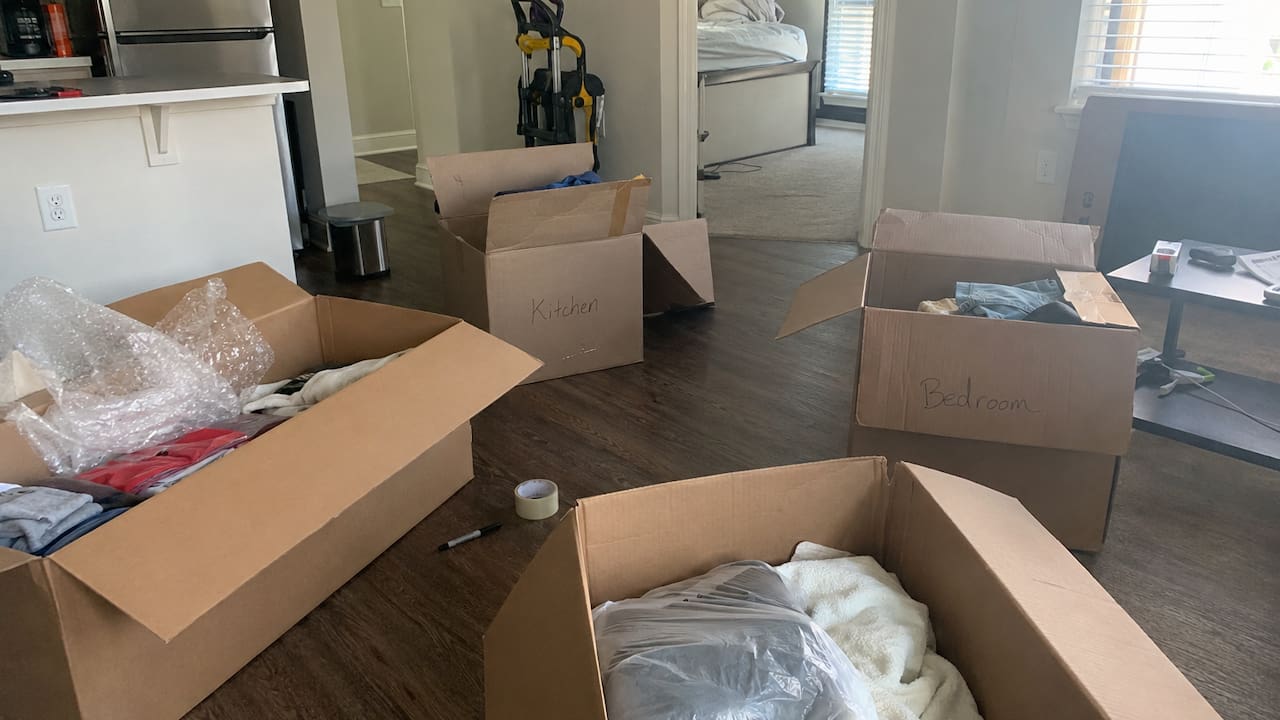
As you collect things, clearly label each box to which room it belongs. And categorize it. For example: “kitchen - dishes”; “bedroom - clothes”.
To further organize your move, use a color-coded system. Assign a different color to each room (red for kitchen, blue for bedroom, etc.). Label each box with a different color using a marker or label. Trust me, it's not only beautiful, but also convenient
Moving Clothes: Quick Ways to Pack Garments
The fastest way to pack clothes for moving is to keep each clothing type in the container that makes unpacking easiest. When moving clothes, do not empty every hanger and drawer unless you have time. Keep clean, dry clothes grouped by person, room, or season.
Best for hanging clothes
- Use wardrobe boxes for coats, dresses, suits, and wrinkle-prone items.
- For a faster option, keep clothes on hangers and cover each group with a clean trash bag or garment bag.
- Tie or rubber-band hanger tops together so each group stays organized.
Best for folded clothes
- Pack folded clothes in suitcases, small boxes, or medium boxes.
- Roll soft items like T-shirts, gym clothes, and pajamas to save space.
- Leave lightweight clothes in dresser drawers if the drawer can be removed and wrapped safely.
Example: Pack one suitcase like a three-day travel bag with clothes, shoes, toiletries, chargers, and medication. Then pack the rest of the closet by category so you are not opening every box on the first night.
Step 4 – Protect Fragile Items
Glass? Electronics? Care must be taken when packing any fragile items.
Each item must be packed separately. Bubble wrap, blankets or towels. Wrap each item like this. Cover the fragile items with crumpled packing paper or foam nuts on the bottom of the box and on the sides.
There should be no empty space in the boxes so that the items stay in place during the move and don't break.
Boxes with fragile items should be labeled “Fragile” and “Handle with Care” on each side.
Step 5 – Optimize Space in Boxes
Heavy on the bottom, light on top. It’s a simple rule, yet so often forgotten in the heat of packing. Under 50 pounds per box, ideally—let’s not overdo it.
Packing Tips:
- Heavier down low, lighter above: Gravity’s law still applies.
- Avoid overstuffing: A bulging box is just waiting to spill.
- Use small boxes for heavy items like books or tools.
Step 6 – Label Everything Clearly
Label it in a big way. Let no side of the box remain untouched by your markers. Room, contents, fragility - color the box with information. And if you really want to make an impression, make a master list. Keep track of every box or even every item.
Step 7 – Preparing an Essentials Box
A box of essentials, packed with the things you’ll need the moment you step through your new door. Toiletries, clothes, documents—anything you can’t afford to lose or delay.
Step 8 – Packing Tips for Last-Minute Moves
If the clock’s running out, prioritize. Essentials first—clothes, toiletries, documents. The rest can wait. Speed doesn’t mean sloppiness; even in haste, you can pack with precision.
How to Pack for a Move in One Day
To pack for a move in one day, pack essentials first, remove trash and donations, protect fragile items, then pack room by room with clear labels on every box. Do not aim for perfect sorting. The goal is to make every item safe, movable, and easy to identify at delivery.
One-day packing order
- Pack an essentials bag with clothes, toiletries, documents, chargers, medication, and basic tools.
- Walk through each room with three bags: trash, donation, and keep.
- Pack fragile items with paper, towels, or bubble wrap before the room gets crowded.
- Pack one room at a time and label boxes by room and contents.
- Use clothes, towels, and linens to fill box gaps and protect light items.
- Leave cleaning supplies, tape, markers, scissors, and trash bags accessible until the end.
How to pack quickly
- Use small boxes for books, dishes, tools, and heavy items.
- Use medium and large boxes for bedding, pillows, lampshades, and light household goods.
- Do not mix rooms unless the box is clearly labeled “mixed essentials.”
- Write labels on at least two sides so movers can read them when boxes are stacked.
- Set fragile and high-priority boxes in one area before loading.
Example: If you only have a few hours, start with the kitchen, bathroom, daily clothes, electronics, and fragile decor. These categories usually take longer than expected and are harder to pack safely at the last minute.
FAQ
Start by gathering boxes, tape, packing paper, bubble wrap, markers, stretch wrap, and moving blankets. Declutter before packing, then pack one room at a time. Put heavy items in small boxes, lighter items in larger boxes, protect fragile items with padding, and label every box by room and contents.
Pack essentials first, then move room by room. Start with daily clothes, toiletries, documents, chargers, medication, kitchen basics, and fragile items. Use towels, blankets, and clothing as padding when you are short on time. Label boxes clearly so movers know where each box goes.
To pack quickly, stop sorting small items one by one. Pack by room, use the right box size, keep supplies in one place, and label as you go. Use suitcases for clothes, small boxes for heavy items, and towels or linens to fill empty space around breakables.
Pack heavier items at the bottom and lighter items on top. Fill empty space with packing paper, towels, or soft items so nothing shifts inside the box. Do not overfill boxes or leave them bulging. Seal the bottom and top seams with packing tape and label at least two sides.
Open the flat box into a square, fold the two short bottom flaps first, then fold the two long flaps over them. Tape the center seam from edge to edge, then add extra tape across both ends of the seam for support.
Pack folded clothes in suitcases, drawers, or medium boxes. Keep hanging clothes on hangers when possible and cover each group with a garment bag or clean trash bag. Pack shoes separately from clean clothes, and keep a few days of outfits in an essentials bag.
Moving blankets are thick padded covers used to protect furniture, appliances, mirrors, and other large items during a move. They help prevent scratches, dents, chipped corners, rubbing marks, and damage from items shifting in the truck.
Of course, if you suddenly find it too difficult, our professional packing services are here to help. Don't forget to take our moving checklist to keep you sane.




