
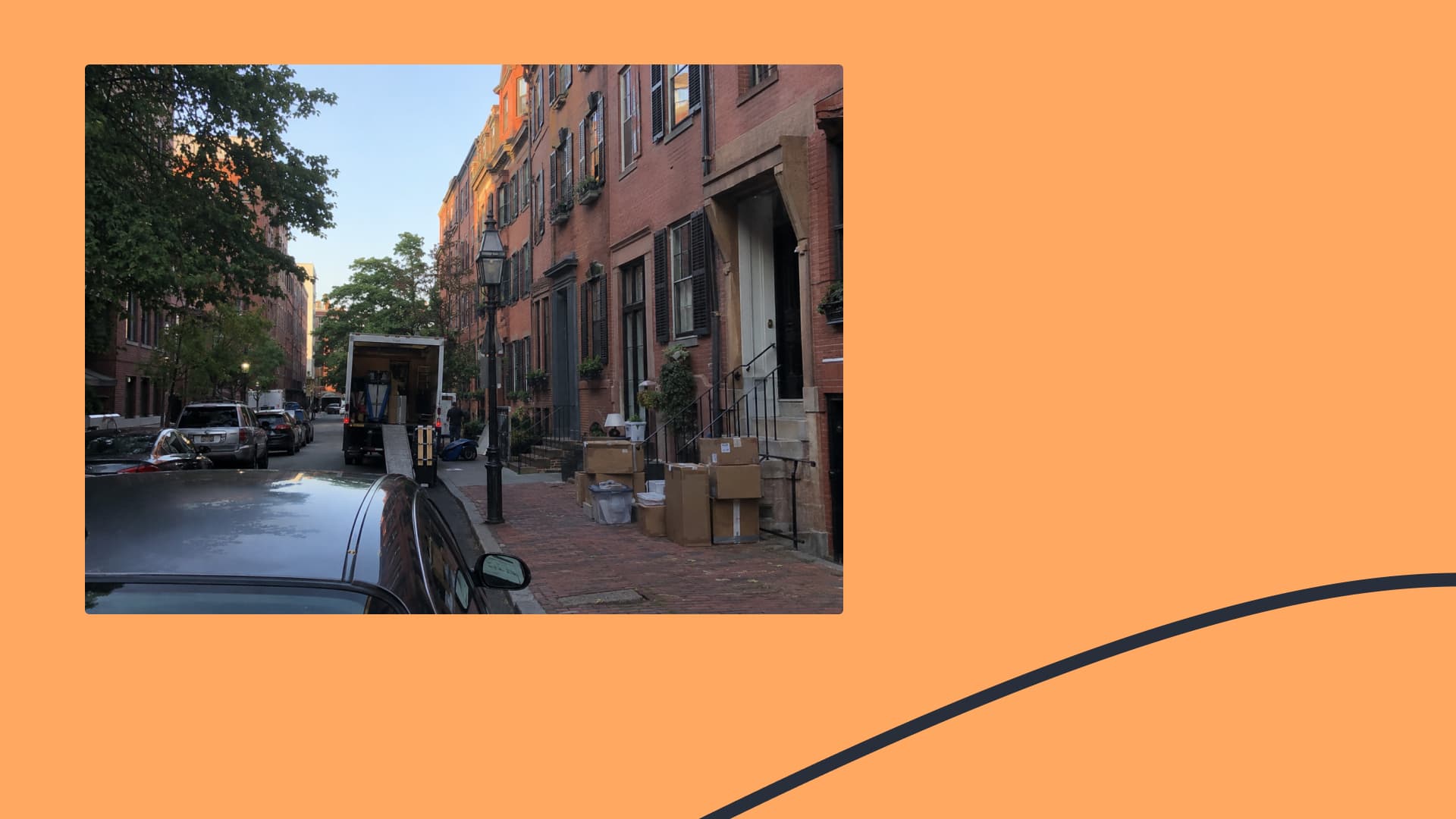

The difficult thing about moving to Boston is that many problems show up late. You find the apartment, sign the lease, book the truck, and then someone asks about parking, elevator rules, stair width, a certificate of insurance or if the truck can legally stop near the building. By then, a small detail could mean a ticket, a long carry, a delay or a more expensive move day.
This guide covers what to know before moving to Boston, before those details become problems. It's written for people who are new to the city, moving from another state or moving across town, and want a practical plan instead of last-minute guesses.
Interactive moving planner
Boston Move Risk Checker
Most Boston moving problems are easier to fix before move day. Answer a few questions to see which details need attention first.
Your result
Answer the questions to see your risk level.
The checker will show whether parking, building access, timing, truck routing, or furniture details need attention before move day.
- Confirm where the moving truck can legally stop.
- Ask the building about elevator, loading, and certificate of insurance rules.
- Measure large furniture before move day.
Quick answer: what should you know before moving to Boston?
Boston is dense, expensive, old, walkable and very neighborhood-specific. It’s this mix that makes the city appealing, but also makes it harder to move. Parking may be limited. Many apartments have narrow staircases or tiny elevators. Late August and early September can be rough because of the turnover of leases. Some streets are narrow, some busy, some restricted. A normal GPS route can also take a moving truck somewhere it shouldn't go.
“Moving’s hard no matter where you live. Let us help you plan your moving day in Boston before you pack a box.”
City of Boston moving guide
For most people, the simplest and safest plan is to check where the truck will park, how movers will get into the building, what the building requires, if your street needs a permit, and if your move date falls during a peak moving period.
Is Boston a good place to live? Pros and cons
Most people searching this are really asking two questions: can I afford it, and will I like it. The honest answer to the first is "run the numbers below." The answer to the second is usually yes, with caveats.
What Boston does well:
- Work. Hospitals like Mass General and Brigham and Women's, universities from Harvard and MIT to BU and Northeastern, the Kendall Square biotech cluster and an old, deep finance sector keep the job market strong.
- You can skip the car. In much of the city, the T plus your own feet cover daily life.
- Neighborhoods with actual character, from brick row houses on Beacon Hill to triple-deckers in Dorchester.
- Everything is close. The ocean, the mountains and three other states sit within a weekend drive.
What will test you:
- Housing. Rent is among the highest in the country, and much of the stock is over a century old.
- Winter. Snow emergencies, shoveled-out parking spots defended with lawn chairs, icy brick sidewalks.
- Parking, whether you pay for a spot or fight for street space.
- The September 1 lease cycle, which squeezes most of the city's moves into one chaotic week.
If the city fits your budget, commute and lifestyle, Boston could be a good idea for you. You get access to strong job markets, universities, hospitals, culture, history, public transportation and walkable neighborhoods. You might have trouble if you need to keep housing costs low, want easy parking, like big modern apartments, or need to drive easily every day.
The tradeoffs become clearer and then the decision becomes easier. Look at rent, cost to move in, commute, parking, size of apartment, access to building, time of year. If those pieces work, Boston is a great place to live. If they don't, the problems tend to pop up pretty fast.
Cost of moving to Boston
Moving to Boston is more than just rent. Before signing the lease, take a look at the total cash needed to move in. This might include first month’s rent, last month’s rent, security deposit, broker fee, utilities setup, renter’s insurance, parking, storage, packing materials and movers.
And this is where many people get stuck. A place can seem manageable by monthly rent, but the upfront cost can be much higher than expected. Another common surprise is parking. Some apartments don’t come with it. Some buildings charge more. Street parking may be restricted to residents with a parking permit, and even with a permit you may not be able to park in front of your building.
Rent, deposits and the full move-in stack
As of August 2026, the median rent in Boston is $2,875 for a one-bedroom and $3,407 for a two-bedroom, per Zumper's Boston rent data (updated August 5, 2026). Across all apartment sizes the median sits around $3,400 a month, up 3 percent from a year earlier.
Massachusetts law limits what a landlord can collect before you get keys: first month's rent, last month's rent, a security deposit of no more than one month's rent, and the cost of a new lock and key, per the state's security deposit rules. That cap still means a $3,000 apartment can require roughly $9,000 up front, so build that number before you fall in love with a listing.
One recent change works in your favor. Since August 1, 2025, the broker fee is paid by whoever hired the broker, per the state's broker fee advisory. If the landlord listed the unit through an agent, that fee is the landlord's problem now. You only owe one if you brought in your own broker.
What movers cost in Boston
If you’re considering DIY moving vs. professional movers, compare the actual cost, not just the cost of the rental truck. Fuel, supplies, risk of parking, stairs, time off work, help from friends, and what if the move takes longer than planned. For a more detailed breakdown, check out Move & Care’s guide to what is included in Boston moving rates.
Local moves in Boston are billed hourly by crew size, and our current rates are published on the pricing page. If your dates are flexible, picking the cheapest day to hire movers in Boston can take real money off the total.
Choosing a neighborhood around daily life, not only reputation
Boston neighborhoods can be like different small cities. Back Bay, Beacon Hill, South End, South Boston, East Boston, Allston, Brighton, Jamaica Plain, Dorchester, Fenway, Charlestown and the North End all have different tradeoffs. Depending on your commute and budget, nearby Cambridge, Somerville, Brookline, Quincy, Medford and other areas may also make sense.
The private worry is usually straightforward: “What if I choose the wrong area?” To make your decision the safer way, step back to your daily routine. Where will you go to work or study? Are you taking a car, walking, biking or the MBTA? Looking for parking? Are you looking for quiet streets, easy access to nightlife, family space, or a shorter commute?
Best for families
West Roxbury, Roslindale and parts of Jamaica Plain trade nightlife for yards, parking and quieter streets, and Charlestown adds a walk-to-downtown option. We compared space, schools and commutes in our guide to the best neighborhoods in Boston for families. Families who are buying rather than renting usually widen the search west of the city to Wellesley, Newton and Needham, where Steve and Nicole Connolly publish town-level market data and a relocation guide.
Best for young professionals
South Boston, Fenway, Allston and the North End put you near work, the T and everything that stays open late, at very different price points. Our breakdown of the best neighborhoods in Boston for young professionals covers commutes and rough rents for each.
Best on a budget
Inside city limits, the lower rents cluster in Allston, Brighton, Dorchester and East Boston. Widen the map and the math improves further; see the cheapest places to live near Boston for towns that keep a reasonable commute.
Before signing a lease
Test out your commute at the time of day you’ll be driving. Check MBTA access, parking, street noise, laundry, package delivery, grocery distance. On the map, even a short distance can seem slow when you have to transfer several times or find a parking garage.
Before booking movers
Check building type, floor number, elevator access, stair width, loading area and street parking. A 3rd floor walkup in the North End is not the same move as an elevator building in Seaport.
Boston apartments can make the move more complicated
Many of Boston’s apartments are older. They often have character, but may also have narrow staircases, small doorways, low ceilings, uneven entrances, no freight elevator, and limited space for furniture staging. Measure large couches, king mattresses, wardrobes, desks and exercise equipment prior to the day of moving.
Here's one of the details the moving industry often explains too late. Or the customer may only hear “that’s going to be hard” when the movers are already at the door. Better to check the hard parts early. Stairs, elevator size, parking distance, heavy items, fragile items, anything that might have to be taken apart.
If you’re moving into a managed apartment, condo or luxury building, get the move-in rules right away. Some buildings only allow moves at certain times. Others require elevator pads, loading dock reservations or a certificate of insurance from the moving company. If the details are not provided, the crew may show up ready to work, but will be stopped by building rules.
Moving permits and parking: reserve the curb
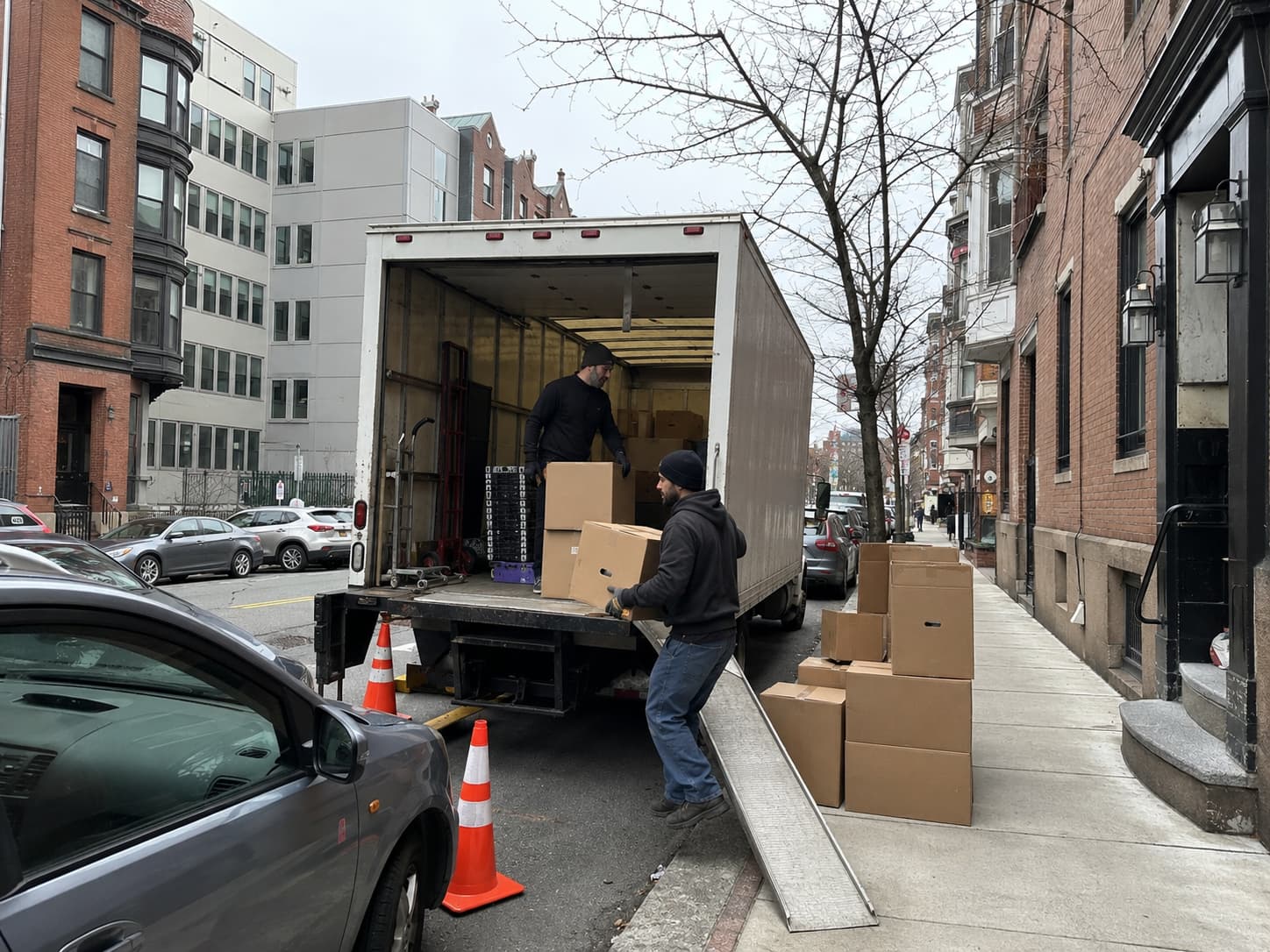
It’s not simply a question of “Do I need a permit?” A better question might be, “Where will the truck legally stop while everything is being hauled?” That answer is more important than people realize in many Boston neighborhoods.
The City says a moving day parking permit is not legally required, but suggests one in some neighborhoods because it reserves a parking space and keeps the moving vehicle parked legally. Per the City of Boston moving guide, online applications must go in at least fifteen days before the move, in-person applications at least three days before, and permits cost $69 to $109. Applications run through the Public Works street occupancy permit portal.
Move & Care tip: If your building is on a narrow street, a busy block or a resident-only parking street, include the parking permit in your move plan. A tight legal space can cut long carries, cut ticket risk and enable the crew to finish faster.
For the full walkthrough, including how many signs you need and what happens if someone parks in your reserved spot, see our guide to Boston moving permits and parking reservations.
Moving to Cambridge, Somerville or Brookline instead? Each city runs its own version of the process:
| City | What to get | The short version |
|---|---|---|
| Boston | Moving day parking permit | $69 to $109. Apply online at least 15 days ahead, or in person at least 3 days ahead. boston.gov |
| Cambridge | Street occupancy permit (moving van) | Issued for up to two consecutive days; apply through the city's online portal. cambridgema.gov |
| Somerville | Moving van parking permit | $40 per day for up to three days, plus $5 per sign. Buy signs at least 4 days before the move and post them at least 2 days ahead. somervillema.gov |
| Brookline | Moving permit (no parking signs) | $5 per sign, $24 per metered space per day. Post signs after 6 p.m. the evening before the move. brooklinema.gov |
| Move detail | Why it matters in Boston | What to check early |
|---|---|---|
| Moving day parking | Truck space can be limited or restricted. | Apply for a City permit if your street is tight, busy, or resident-only. |
| Building access | Older buildings may have narrow stairs or small elevators. | Measure large items and ask for move-in rules. |
| Truck route | Some roads have low clearance or poor truck access. | Confirm a truck-safe route before move day. |
| Move date | Early September is extremely busy. | Book movers, permits, and elevators early. |
Keep moving trucks off Storrow Drive
One of the most common Boston moving mistakes has its own reputation: a moving truck following GPS onto a low-clearance road. The City directly warns that moving trucks can’t drive on Storrow Drive because of low clearance and the height limit is 10 feet.
Locals even have a verb for it: "getting Storrowed." Almost every year, usually right around September 1, a rental truck loses its roof to a Storrow or Memorial Drive overpass, and the photos make the local news within the hour.
Don’t depend on regular GPS. If you are driving your own moving vehicle or renting a truck into Boston, check truck-safe routes before entering the city. Low bridges, parkways, tight turns and limited streets can soon become serious problems.
September 1: Boston’s moving day (and “Allston Christmas”)
If your lease begins on or about September 1, plan ahead earlier than you think you need to. The City points out that most leases in Boston turn over at the beginning of September. That drives up demand for movers, trucks, permits, elevator reservations and curb space, especially in student-heavy neighborhoods like Allston, Brighton, Fenway, Mission Hill and parts of Back Bay and South Boston.
The turnover even has a nickname. "Allston Christmas" is the last week of August in the student neighborhoods, when everything renters couldn't fit on the truck ends up on the curb. Be careful with curb finds (bedbugs are a real Boston problem), but it is also the best week of the year to score free moving boxes in Boston.
If you have some flexibility, moving a few days either before or after the peak window could make the process a bit easier. If you don’t have flexibility, get confirmation of your movers, permit, building rules, elevator reservation and key pickup timing in writing as soon as possible.
Moving into a dorm or student apartment? Universities layer their own drop-off windows and elevator rules on top of the city's chaos. Our college move-in checklist for Boston universities walks through the timing school by school.
Do you need a car in Boston?
Cars can work well in Boston, but not for everybody. If you live near the MBTA and work in a transit-friendly area, a car could be more of a cost than a convenience. If you have a reverse commute, kids, travel regionally often, or work outside the transit network, it still may make sense to keep a car.
Parking is the concern to solve before moving. Some streets are residents only. There are some neighborhoods with street cleaning rules, snow emergency rules and fierce competition for spaces. The Boston resident parking permit page states that your registration must reflect that the car is registered and principally garaged in your name at your current Boston address. The online application for new residents also says they should apply within 10 days of moving in.
If you are moving from another state, check out the Massachusetts RMV process before you get here. Mass.gov has information on how to transfer an out-of-state driver’s license to Massachusetts. This is important because license, registration, insurance and parking papers are often interconnected.
Getting around: MBTA basics for newcomers
For many Bostonians, the MBTA is a vital part of daily life. Living without a car is possible with the subway, buses and commuter rail. But a short-looking route on a map can be a different proposition if it involves multiple transfers, long walks or unreliable timing in inclement weather.
Budget-wise, the T is one of Boston's better deals: a subway ride is $2.40, a local bus is $1.70, and a monthly LinkPass covering both is $90. Commuter rail one-way fares run $2.40 to $13.25 depending on distance (MBTA fares, August 2026).
Test drive your commute on the MBTA website before signing a lease. Check walking distance, transfer points, frequency of service and late night or weekend options. For many new to Boston, the reality of commutes trumps neighborhood names.
Living in Boston: weather, jobs and daily life
Boston has four real seasons, and two of them will test you. Winter brings snow emergencies, parking bans and icy brick sidewalks; summer turns humid enough that window air conditioners sell out by July. If you're arriving from a mild climate, buy the boots and a serious coat before your first January, not during it.
The job market is anchored by things that don't relocate: the hospitals, the universities, the Kendall Square labs and the financial district. That mix is why so many people come to Boston for a degree or a job offer and are still here a decade later.
Daily life runs on a college-town rhythm at city scale. The city breathes out in June when students leave and inhales sharply at the end of August. In between you get Fenway on game nights, the Esplanade in summer, the North End for dinner and the Freedom Trail for every visitor you'll ever host. Give it one full lap of the calendar before judging; February Boston and June Boston barely seem like the same city.
First-week tasks after moving to Boston
The move is not fully finished until the movers leave. The first week is where you get stuck into small admin tasks. Address the basics early on so parking, garbage, documents and city services are not separate problems later.
-
Notify the Postal Service, banks, employer, insurance providers, subscriptions, school and any service that sends you important documents of your change of address.
-
Driving a car? Check the rules for resident parking, how to register your car, insurance and RMV requirements. Don’t wait until you get parking tickets or missing documents.
-
Boston has City tools for trash pickup, recycling, mattress pickup and household waste lookup. Before leaving furniture, boxes or mattresses outside, check the rules.
-
Boston's hospital systems are excellent, but new-patient waitlists can run months. Ask for primary care recommendations early, transfer prescriptions, and check which practices near you are actually accepting new patients.
-
Boston 311 can help with non-emergency city issues such as potholes, sidewalk repairs, missed trash pickup and questions about neighborhood services.
Moving to Boston from out of town or out of state
Long-distance moves into Boston add a layer of planning on top of everything above, because you can't scout the block in person. Listing photos rarely show the hydrant in front of the door or the four-story walkup behind it.
A few things matter more when you're coming from far away:
- Book earlier. Interstate movers fill their late-August and September calendars by early summer, and long hauls come with delivery windows rather than exact dates.
- Handle the paperwork before the truck leaves. Building COI requirements, elevator reservations and the parking permit all have lead times measured in weeks, not days.
- Ask what can't go on the truck. Propane tanks, opened liquids and plants are typical exclusions; our list of what movers won't move covers the rest.
- Have someone local walk the destination access for you: your broker, your landlord, or the movers themselves.
Coming from New York? That corridor is one we run constantly; see our Boston to NYC moving page. From anywhere farther, our long-distance moving service handles door-to-door interstate moves into any Boston neighborhood.
Once you land, give yourself a season to settle in. Join something (a gym, a run club, a neighborhood group), because Boston is friendlier than its reputation but rarely makes the first move. And walk your new neighborhood without GPS a few times. The street layout, where it follows any logic at all, is best learned on foot.
Hire movers who know Boston
Don’t judge a Boston move by the number of bedrooms. The details that make a move different tend to be more detailed: distance to parking, stairs, elevator access, building rules, heavy items, packing needs, fragile pieces, and whether it is a move on a peak date.
This is where vague moving answers are an issue. If a mover doesn’t ask about access, permits, elevators or big items, those issues may still arise later. They simply appear when it’s tougher to fix.
Move & Care is a Boston moving company, and checking these details is most of our job. We run local moves across the city and moves across Massachusetts every week, so we ask about stairs, parking and building rules before we quote, because that's exactly where Boston moves go wrong.
For moves within Massachusetts, the City of Boston directs residents to the Massachusetts Department of Public Utilities and states that moving companies in Massachusetts must be licensed by the department. For interstate moves, check registered movers and know your rights with the FMCSA Protect Your Move resources. The FMCSA states that interstate movers must provide consumers with the booklet “Your Rights and Responsibilities When You Move” before moving household goods.
Be specific when you request an estimate: both addresses, floor numbers, elevator access, parking distance, heavy items, packing needs and building time limits. Fewer unknowns mean a tighter estimate.
Our Boston movers ask about all of this up front — parking permits, elevator reservations, COIs and September 1st timing are daily routine for a local crew.




