


Main image: Back Bay skyline from Longfellow Bridge by King of Hearts, via Wikimedia Commons, licensed under CC BY-SA 4.0.
Choosing where to live in Boston at first glance can seem easy. Pick a neighborhood near your work, check out the rents, sign a lease. Then the real questions start. After a long day, will the commute still work? Is there parking for the moving truck close to the building? Are you looking at three flights of narrow stairs or is there an elevator? Do the movers need insurance paperwork before they can get into the building?
The best Boston neighborhoods for young professionals are about more than bars, restaurants, or train rides. They’re the places where your rent, commute, type of apartment, and move-in situation all come together. Usually the first areas to be compared are South Boston, Fenway-Kenmore, Allston-Brighton, East Boston, Jamaica Plain, South End, Back Bay, North End, Charlestown and Seaport. Other nearby places like Cambridge, Somerville, Brookline, Malden, Medford, and Quincy should be in the search if they fit your commute or budget better.
The City of Boston neighborhood guide is a good place to start, but it won't tell you what move-in day is like on a narrow street, in an older walk-up, or in a newer building with rules about the elevator. This guide explores where young professionals tend to live in Boston and what to look for before the lease becomes your moving plan.
Quick answer: For a social renter crowd, begin in South Boston. For nightlife and Longwood access, opt for Fenway-Kenmore. For lower 1-bedroom rent than central neighborhoods, choose Allston-Brighton. For Blue Line access, move to East Boston. For a calmer neighborhood feel, consider Jamaica Plain. For central access and if you can afford higher rent, Back Bay, South End, or Seaport are your options. Median 1-bedroom rents range from $2,450 in Allston to $4,270 in Seaport, according to ApartmentAdvisor’s May 2026 Boston Rent Report.
Not sure where to start? Use this quick matcher.
Answer a few move and lifestyle questions to get a practical shortlist of Boston neighborhoods to compare first.
Quick comparison: Boston neighborhoods for young professionals
How to read the data: Current rents and Census data answer different questions. The ApartmentAdvisor May 2026 Boston Rent Report shows current median one-bedroom rents by neighborhood. The U.S. Census Bureau QuickFacts page for Boston gives a citywide baseline: median gross rent of $2,147 for 2020–2024, median value for owner-occupied housing of $731,700 and a mean commute of 30.3 minutes. Use the rent column for current market pressure. Use the Census and ZIP/ZCTA columns for consistent neighborhood comparisons.
The table below combines current 1-bedroom rent with ZIP/ZCTA comparison data. ZIP codes don’t perfectly match Boston neighborhood boundaries, but they can help you compare housing value, income, commute time, age mix and renter turnover before you decide where to live.
| Neighborhood | Median 1BR rent | Home value | Household income | Median age | Mean commute | Moved last year |
|---|---|---|---|---|---|---|
| South Boston ZIP proxy: 02127 |
$3,300 | $863,700 | $164,387 | 32.3 | 30 min | 20.7% |
| Fenway-Kenmore ZIP proxy: 02215 |
$3,175 | $750,000 | $72,095 | 21.6 | 19.9 min | 43.6% |
| Allston ZIP proxy: 02134 |
$2,450 | $657,300 | $78,679 | 28.5 | 33 min | 32.8% |
| Brighton ZIP proxy: 02135 |
$2,495 | $681,200 | $90,829 | 30.4 | 32.1 min | 26.4% |
| East Boston ZIP proxy: 02128 |
$2,600 | $668,000 | $90,106 | 34.5 | 32 min | 15.6% |
| Jamaica Plain ZIP proxy: 02130 |
$2,716 | $822,300 | $131,551 | 35.3 | 30.6 min | 19.7% |
| South End ZIP proxy: 02118 |
$3,604 | $1,058,200 | $98,224 | 36.9 | 26.5 min | 22% |
| Back Bay ZIP proxy: 02116 |
$3,350 | $1,562,500 | $126,496 | 34.5 | 24 min | 26% |
| North End ZIP proxy: 02113 |
$2,678 | $662,000 | $113,314 | 29.4 | 24 min | 33.8% |
| Charlestown ZIP proxy: 02129 |
$2,938 | $912,000 | $157,247 | 35.6 | 28.7 min | 14.3% |
| Seaport / Fort Point ZIP proxy: 02210 |
$4,270 | $1,190,900 | $172,124 | 35.7 | 23.9 min | 29.6% |
| Mission Hill ZIP proxy: 02120 |
$2,600 | $885,900 | $64,289 | 23.6 | 24.3 min | 34.3% |
| Dorchester / Savin Hill ZIP proxy: 02125 |
$2,574 | $657,100 | $82,953 | 34.4 | 30.3 min | 14.5% |
Data note: Median 1-bedroom rent from ApartmentAdvisor’s May 2026 Boston Rent Report, published June 1, 2026. Home value, household income, median age, commute time and mover-share data are from Census Reporter ZIP/ZCTA profiles based on American Community Survey data. ZIP/ZCTA boundaries do not perfectly align with Boston neighborhood boundaries, so use this table as a comparison layer, not a building-level rent estimate.
How to choose the right neighborhood before you sign
Begin with your commute. Boston is small, but a short distance can also be a frustrating daily trip if it involves a transfer, a long walk to the station, or a route that does not fit your work schedule. Check the MBTA schedules and trip tools for the actual line you would use, not just the neighborhood name.
Planning for a family instead? Our guide to the best neighborhoods in Boston for families weighs schools and space over nightlife.
And before you sign anything, run through what to know before moving to Boston — the move-day details (parking, elevators, September 1st) are where budgets slip.
Then examine the building. Moving to a Back Bay apartment in an older brownstone is not like moving to a Seaport apartment with a loading dock. A side street in South Boston is not the same as a larger managed building near Broadway. Many moving problems start when the apartment looks good online, but nobody checks stairs, elevator rules, parking or truck access soon enough.
Rent too must be judged with caution. The U.S. Census Bureau QuickFacts page for Boston states a citywide median gross rent of $2,147 for 2020-2024, but current asking rents are often higher. In ApartmentAdvisor’s May 2026 Boston Rent Report, median 1-bedroom rent is $2,450 in Allston, $2,600 in East Boston, $3,300 in South Boston, $3,604 in South End and $4,270 in Seaport. Don’t judge a neighborhood on reputation alone. Compare the total monthly cost: rent, utilities, parking, transit, renter’s insurance, broker fee if applicable, and move-in costs.
Best if you want social life
Generally, South Boston, Fenway-Kenmore, Allston, Seaport, and parts of Somerville are better if you want restaurants, bars, gyms, and a younger renter crowd nearby.
Best if you want a calmer setup
If you're looking for a less frenetic day-to-day life within the Boston area, Jamaica Plain, Brighton, Brookline, Charlestown and parts of Cambridge can be more suitable.
South Boston: best for a social renter crowd
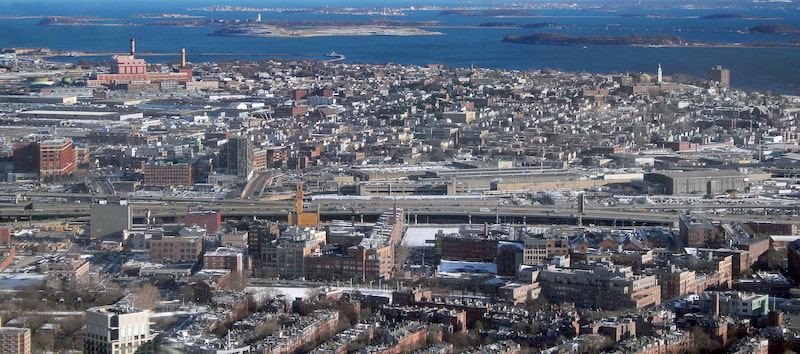
Image: South Boston landscape by Luciof, via Wikimedia Commons, licensed under CC BY-SA 3.0.
South Boston, or Southie as it’s often called, is one of the most popular answers to “where do young professionals live in Boston?” It’s a good fit for renters who want restaurants, bars, gyms, access to the waterfront and a younger social scene without living in the center of downtown. The Red Line is convenient for downtown, Cambridge and South Station commutes. Parts of South Boston around Broadway or Andrew are convenient.
The access is the thing to verify. Some apartments are further from the train than they appear and parking is tight. The problem on moving day is usually whether the truck can get close enough to the building to stop. A short carry from the curb is possible. Moving furniture around the block is another job. If moving into South Boston, please check truck access prior to crew arrival.
Fenway-Kenmore: best for nightlife, Longwood, and car-free living
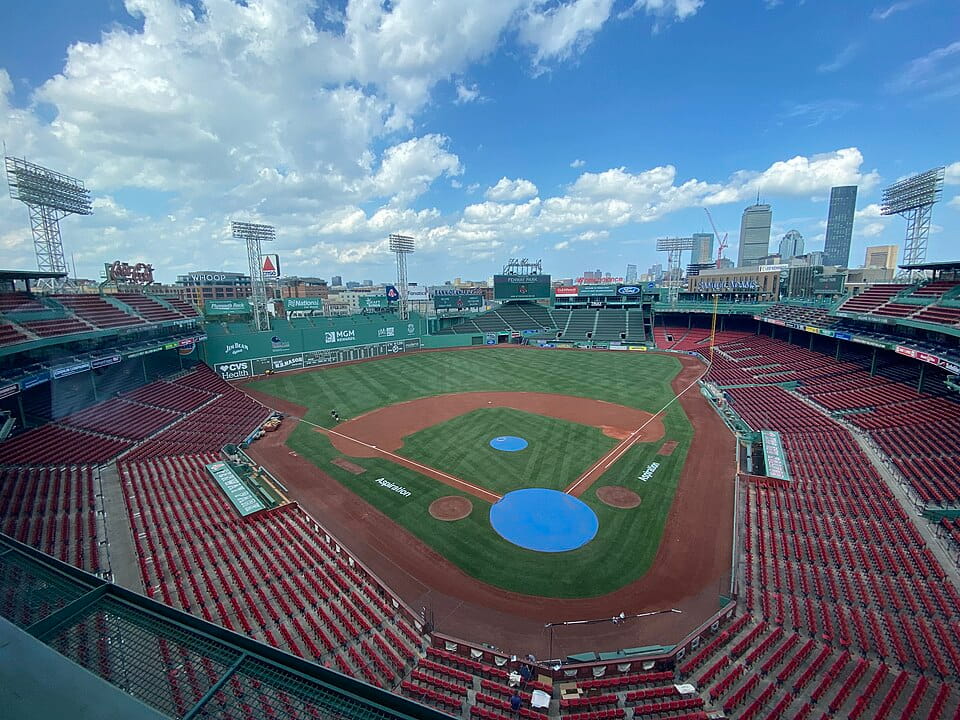
Image: View of Fenway Park by Gatorfan252525, via Wikimedia Commons, licensed under CC BY-SA 4.0.
Fenway-Kenmore is a great match for young professionals looking for restaurants, music venues, universities, Fenway Park and access to the Longwood Medical Area. It’s one of the easier neighborhoods in Boston for those who don’t want to own a car. If you work in Back Bay, downtown, Longwood, or nearby campuses, the Green Line, bus routes, bike options, and walkable streets make daily life practical.
Timing is the risk. Fenway has a lot of renters, students and event crowds. If your move is late August or September 1, expect more pressure on parking, elevators and loading space. Even a small apartment move can be easy, but the details need to be clear: floor number, stairs, entrance access, and where the truck can stop.
Allston-Brighton: best for more room and roommates
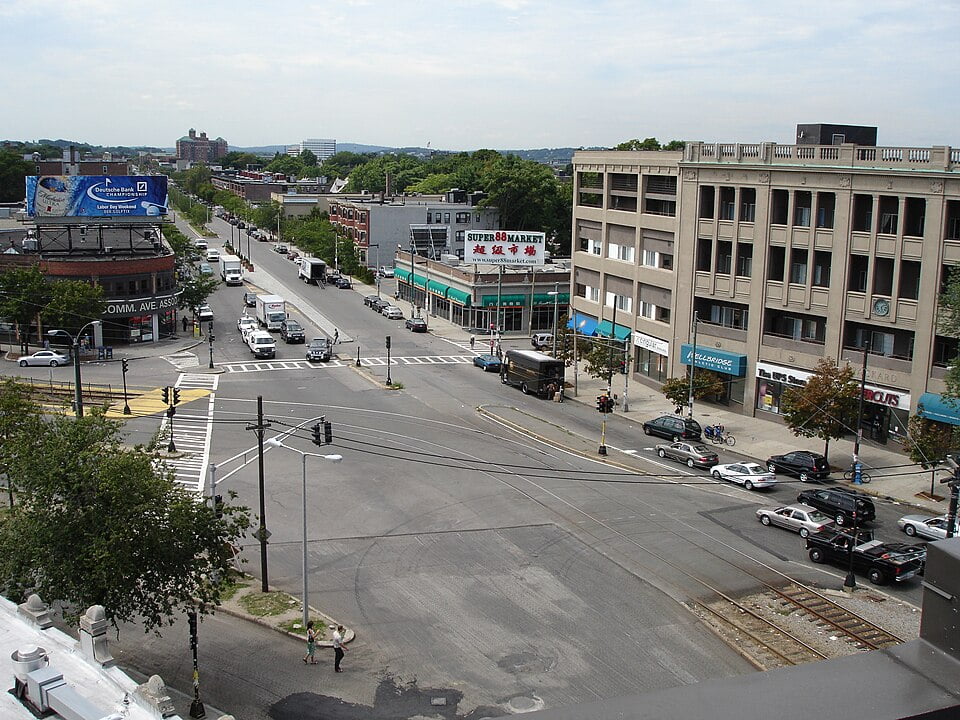
Image: Packard’s Corner by DoorFrame, via Wikimedia Commons, licensed under CC BY-SA 3.0.
Allston-Brighton is a practical first stop for young professionals looking to stay in Boston without paying Back Bay or Seaport prices. Allston is younger, more bustling, with restaurants, music venues and shared apartments. Brighton is generally quieter and might be better if you want more space or less of an evening scene.
This is not a one-commute neighborhood. A trip to a location near Packard’s Corner, Harvard Avenue, Cleveland Circle or Brighton Center can be a very different daily trip. Judge the area and then look up the exact Green Line branch or bus route. Allston-Brighton is one of the neighborhoods where late planning can do harm from a moving perspective. Many buildings are older, many leases expire at the same time, and stair access can determine how long the move takes.
Moving note: If your lease starts near September 1, don’t wait to check on parking, keys, elevator time, and building access. Move-in season is a busy time for Boston’s neighborhoods with lots of renters.
East Boston: best for Blue Line access and relative value
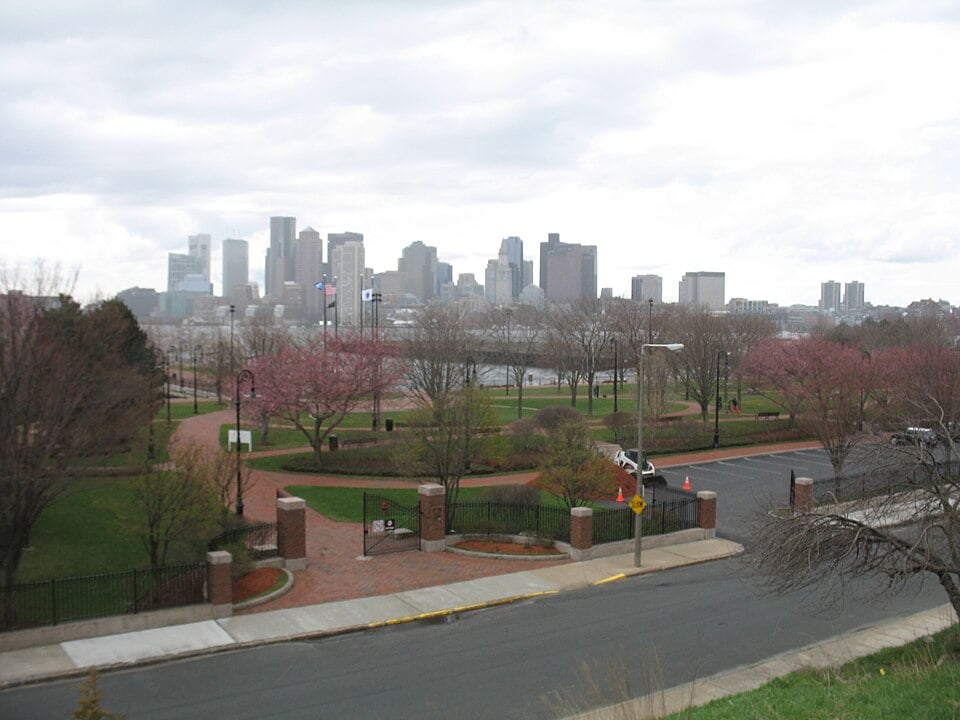
Image: Piers Park by Dominic, via Wikimedia Commons, licensed under CC BY-SA 3.0.
If you want to be minutes away from downtown, Logan Airport, water views, and maybe rents that are a little more palatable than neighborhoods in central Boston, East Boston is a great option. Jeffries Point, Maverick Square, Eagle Hill and Orient Heights can all feel different, so walk the same blocks before you decide.
The Blue Line is the big advantage. It connects East Boston to downtown quickly, and Airport Station is convenient for frequent travelers. The good thing is the planning of the route. Trucks may have to consider tunnel traffic, airport area traffic and limited curb space. That doesn't make the move hard by default, but timing should be taken care of early.
Jamaica Plain: best for green space and a calmer pace
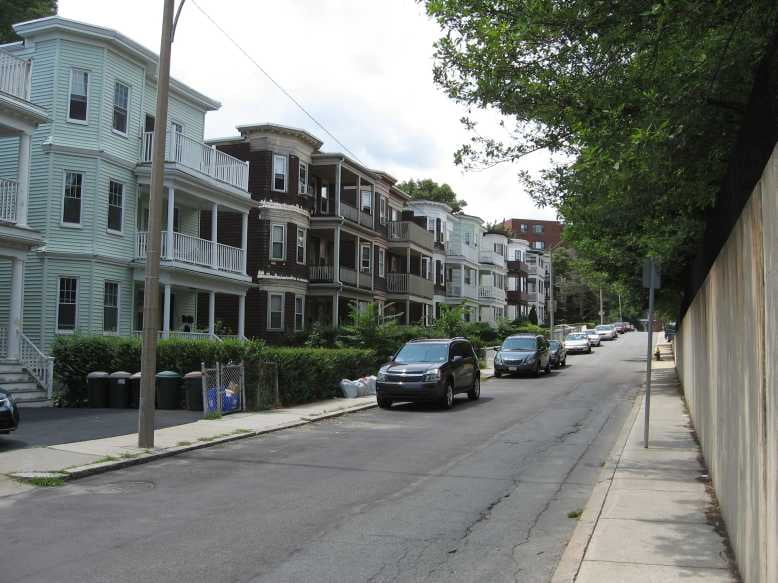
Image: Triple-decker houses in Jamaica Plain by MarkinBoston, via Wikimedia Commons, public domain.
If you want restaurants, coffee shops, parks and a neighborhood feel without leaving the city, Jamaica Plain is a good choice. It may offer better value than the core neighborhoods of Back Bay, South End, South Boston or the Seaport, but don't think of it as cheap. The median 1-bedroom rent in Jamaica Plain is $2,716, according to ApartmentAdvisor’s May 2026 report. The Orange Line provides a useful link for sections of JP to downtown, Back Bay and job centers on the north side.
For many tenants, part of the appeal of JP is that it’s not as nightlife-heavy as South Boston or Fenway. Good for hybrid workers, pet owners, or anyone who wants access to the Arnold Arboretum, Jamaica Pond, or Southwest Corridor. For moving, expect a mixture of triple-deckers, older homes, apartments and some larger buildings. Ask about stairs, porch access, and where a truck can stop.
South End and Back Bay: best for central access if the budget works
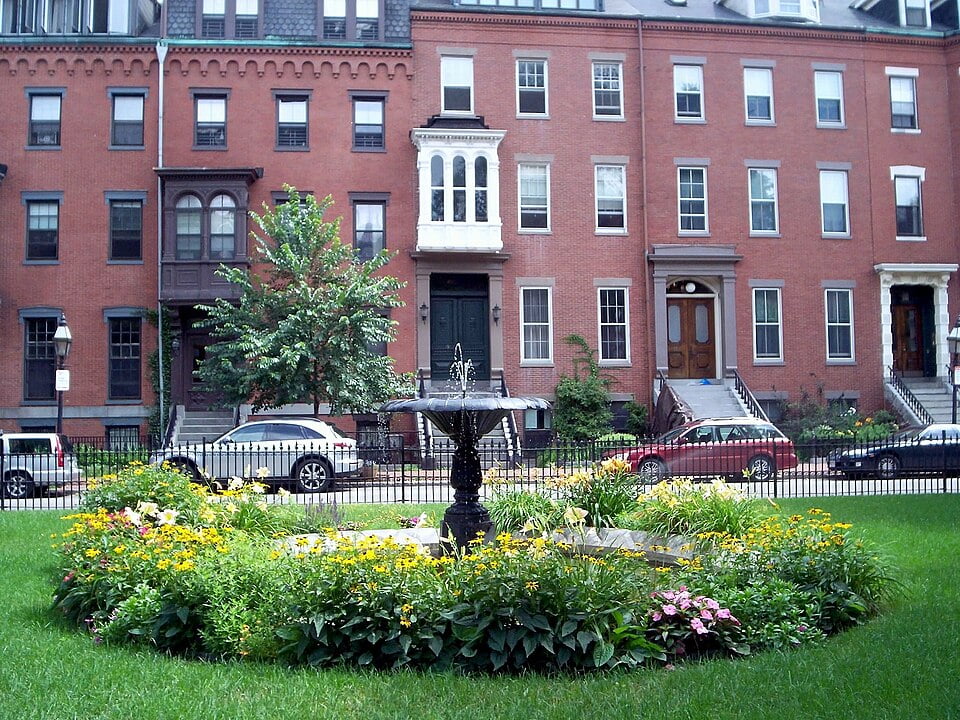
Image: Union Park by Boston Starbucks Rebel, via Wikimedia Commons, public domain.
The South End is one of Boston’s most walkable, restaurant-rich, and centrally located neighborhoods. If you want to be near Back Bay, downtown, the Orange Line and major medical or office areas, it can be a good choice. It’s also suitable for those who prefer a residential feel but not too far from the city.
Back Bay is more central. It's close to the Green Line, Orange Line, commuter rail, Copley, Newbury Street, the Prudential area, and downtown offices. The location is unbeatable for young professionals who can afford the rent and want to live in the middle of the city.
In both neighborhoods the trade-off is space and access. You could pay more for less space, and older buildings may have narrow halls, stairs or limited move-in windows. If you’re considering South End or Back Bay, learn building rules before you book a move. Some properties require notice, proof of insurance and specific times for the elevator.
Seaport: best for newer apartments and nearby office jobs
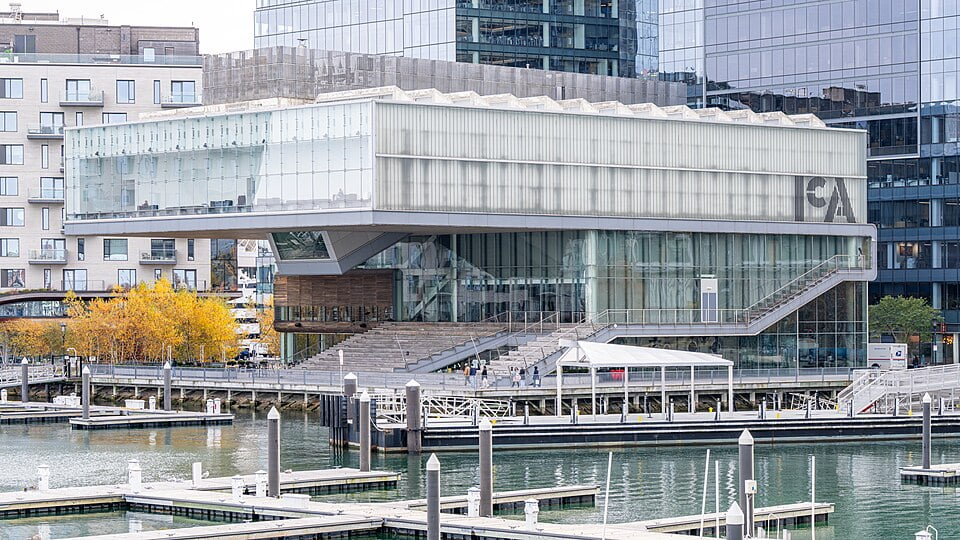
Image: Institute of Contemporary Art, Boston by Ajay Suresh, via Wikimedia Commons, licensed under CC BY 4.0.
Seaport is ideal for young professionals wanting newer buildings, waterfront access, gyms, restaurants and a short commute to finance, tech and office jobs in the Seaport or Financial District. It is also great for renters who like managed buildings with elevators, package rooms and building services.
The stairs usually aren't the problem. It’s coordination. Seaport buildings often have rules for loading docks, elevator reservations, move-in windows and certificate of insurance requirements. If they are caught early these are not problems. They are a problem when the crew arrives and the building is not ready for the move.
North End and Charlestown: best for neighborhood feel
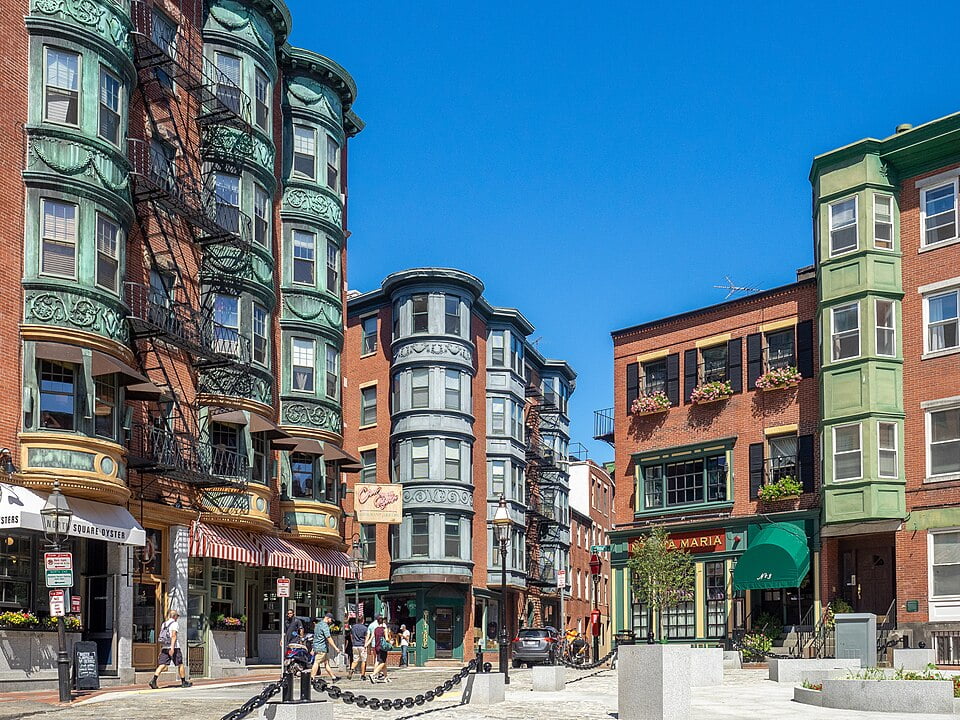
Image: Boston — North End by Ajay Suresh, via Wikimedia Commons, licensed under CC BY 2.0.
The North End is a good choice if you want a dense walkable area with restaurants, waterfront access and a short trip to downtown. This can be a particularly good option if you don’t own a lot of furniture and want a smaller apartment in a historic part of town. Moving is a problem, obviously. Narrow streets, old buildings, stairs, little curb space.
If you want a quieter neighborhood but still want access to downtown, North Station and the job centers nearby, Charlestown is a better match. Some moves are easy, especially in new builds, but older houses and steeper streets can add time if no one checks the access first.
Best nearby areas for young professionals near Boston
Many people looking for the best neighborhoods in Boston for young professionals should also look outside the city proper. This is not a demotion. That’s often the practical answer when rent, commute and apartment size don’t align in the city.
Cambridge and Somerville
If you work in Kendall Square, Harvard Square, Central Square, MIT, or the tech and biotech corridor, Cambridge is a good choice. If you want restaurants, nightlife, and access to the Green Line Extension or Red Line depending on the area of the city, Somerville is a good option.
Brookline, Malden, Medford, and Quincy
Brookline is good for Longwood, Fenway and renters who want a more residential, calmer vibe with Green Line access. If you want more space, more parking, or a commute that still works by Orange or Red Line, Malden, Medford and Quincy are reasonable choices.
Best affordable neighborhoods in Boston for young professionals
"Affordable" is relative in Boston. Check out neighborhoods for what you get for your money instead of just cheap rent. Allston-Brighton, East Boston, parts of Jamaica Plain, Mission Hill and parts of Dorchester can be more realistic for renters who are open to roommates, older buildings or a longer commute. If the commute is feasible, nearby cities like Malden, Medford, Quincy, and parts of Somerville could also make sense.
The practical step is to set a complete monthly housing number, not just rent. Utilities, parking, transit, renter's insurance and move-in costs. A cheaper apartment can be expensive if you need a car. A smaller apartment closer to work may cost more per month but save time and transportation costs.
Best neighborhoods by commute
If you work downtown or near the Financial District, Back Bay, South Boston, North End, South End, East Boston and parts of Charlestown can all work. If you work in Seaport, start looking in South Boston, Seaport, Fort Point, East Boston and downtown-adjacent neighborhoods. If you work in Cambridge or Kendall Square, Cambridge itself is usually the easiest answer, but Somerville and South Boston on the Red Line and parts of Brookline or Allston can also work depending on transfers. Double check the exact route using MBTA schedules and trip tools before you sign on the dotted line, because a single transfer can impact your daily commute more than the neighborhood name suggests.
If you work in Longwood Medical Area, Fenway-Kenmore, Mission Hill, Jamaica Plain, Brookline, and parts of Allston-Brighton should be high on your list. If you travel a lot, East Boston is convenient for access to Logan Airport; Back Bay and downtown can be convenient for Amtrak and commuter rail connections. Don’t just look at the neighborhood name; always check the exact station-to-door route.
What to check before move day in Boston
Boston moves are often defined by details, which seem small until they’re not there. The Allston place is a third floor walk-up, not an elevator building in Seaport. South End brownstone may require delicate furniture moving. Smaller truck plan for a North End apartment? If you’re moving into a managed building, ask about elevator reservations, loading dock hours, protection rules and insurance requirements before move day.
“A permit for your moving truck is not required, but it guarantees you a legal parking spot for the day of the move.”
City of Boston, Reserve a parking spot for your moving truck
The City of Boston moving truck permit page says a standard moving permit reserves two parking spaces for one day, starting at 7 a.m. to 5 p.m. Online applications are only possible if your moving date is at least 15 days away and not more than eight weeks away. The City also says signs should be posted at least 48 hours before the permit start time and recommends signs be posted three days before the move.
Also, check the truck route before the move day. Boston.gov warns that moving trucks cannot drive on Storrow Drive because of low clearance, with a listed height limit of 10 feet. Forget a default GPS route for a rental truck or moving truck in Boston.
-
If the building is on a narrow street, metered block, resident-only street, or busy commercial corridor, check whether a moving truck permit makes sense. This matters in South Boston, Back Bay, South End, North End, Fenway, and many parts of Allston-Brighton.
-
Managed buildings may require an elevator reservation, loading dock time, move-in window, floor protection, or certificate of insurance. This is common in newer buildings and larger apartment communities.
-
Older Boston apartments can have tight turns, narrow staircases, and smaller doors. Sofas, mattresses, desks, and dressers should be checked before move day, especially in walk-ups and brownstones.
-
Many Boston leases turn over around September 1. Allston, Brighton, Fenway, Mission Hill, South Boston, Back Bay, and South End can become harder to move into because of traffic, parking demand, elevator limits, and overlapping move-ins. The City of Boston also notes that from August 31 to September 2, some common moving locations are blocked off for moving truck drop-offs and do not require a permit.
Already have a neighborhood? Check what can affect move-in day.
Building access, parking, stairs, elevators, and September 1 timing can change how simple a Boston move feels.
Safety, rent, and lifestyle: how to check before signing
No article will tell you if a particular block is going to feel right for you. Safety, noise, and comfort can differ from street to street. Go during the day and at night, walk the route from the train and check out the building entrance, lighting and parking situation. For official local data, explore public datasets through Analyze Boston, including Boston public safety and 311 data when appropriate, and combine that data with your own visit, because noise, lighting, building access and block-level comfort can change street by street.
Don’t trust neighborhood labels for rent. A less expensive neighborhood may have fewer apartments that fit your needs and a more expensive neighborhood may have more roommate options that fit better. Look at current listings, ask what is included, and find out if the building has move-in fees, elevator fees, or move-in paperwork required.
So, where should a young professional live in Boston?
If you want nightlife and a younger demographic of renters, start with South Boston, Fenway and Allston. Want a better rent-to-space tradeoff? Consider Allston-Brighton, East Boston, Mission Hill, Dorchester, Jamaica Plain and neighboring cities like Malden or Quincy. If you’re looking for a walkable, central lifestyle and have the budget, consider Back Bay, South End, North End and Seaport. If you have a job in Cambridge don’t force a Boston proper address unless the commute still works.
The best neighborhood is the one that fits your apartment, commute, budget, and move-in plan. Check the exact transit route, building rules, parking situation and furniture access before signing. If you know your move date and neighborhood, Move & Care can help plan for the size of the crew, truck access and building requirements before move day. Once you have your apartment details, you can request an estimate for Boston movers.
FAQ
There are many young professionals that look at places like South Boston, Fenway-Kenmore, Allston-Brighton, East Boston, South End, Back Bay, Jamaica Plain, Seaport, Cambridge and Somerville. The right choice depends on rent, commute and if you want nightlife, quiet streets or more apartment space.
If you don't have a car, good options are Fenway-Kenmore, Back Bay, South End, North End, South Boston near the Red Line, East Boston near the Blue Line, and Cambridge near the Red Line. Be sure to check the exact walking distance to the station before signing a lease.
Allston-Brighton, East Boston, Jamaica Plain, Mission Hill and parts of Dorchester are more likely than Back Bay, South End or Seaport. Transit can also work near Medford, Quincy, and parts of Somerville and Malden if your job allows.
Yes, South Boston is a good fit for young professionals looking for restaurants, bars, gyms, waterfront access, and Red Line connections. If you want quiet streets, easy parking or the lowest rent it may not be the place for you.
Pick Cambridge if you work near Kendall Square, Central Square, Harvard, MIT or the biotech and tech corridor. Choose Boston if you’d rather be closer to downtown, the Seaport, Back Bay, Fenway, Longwood or South Boston for work, a social life or apartment preferences.




