
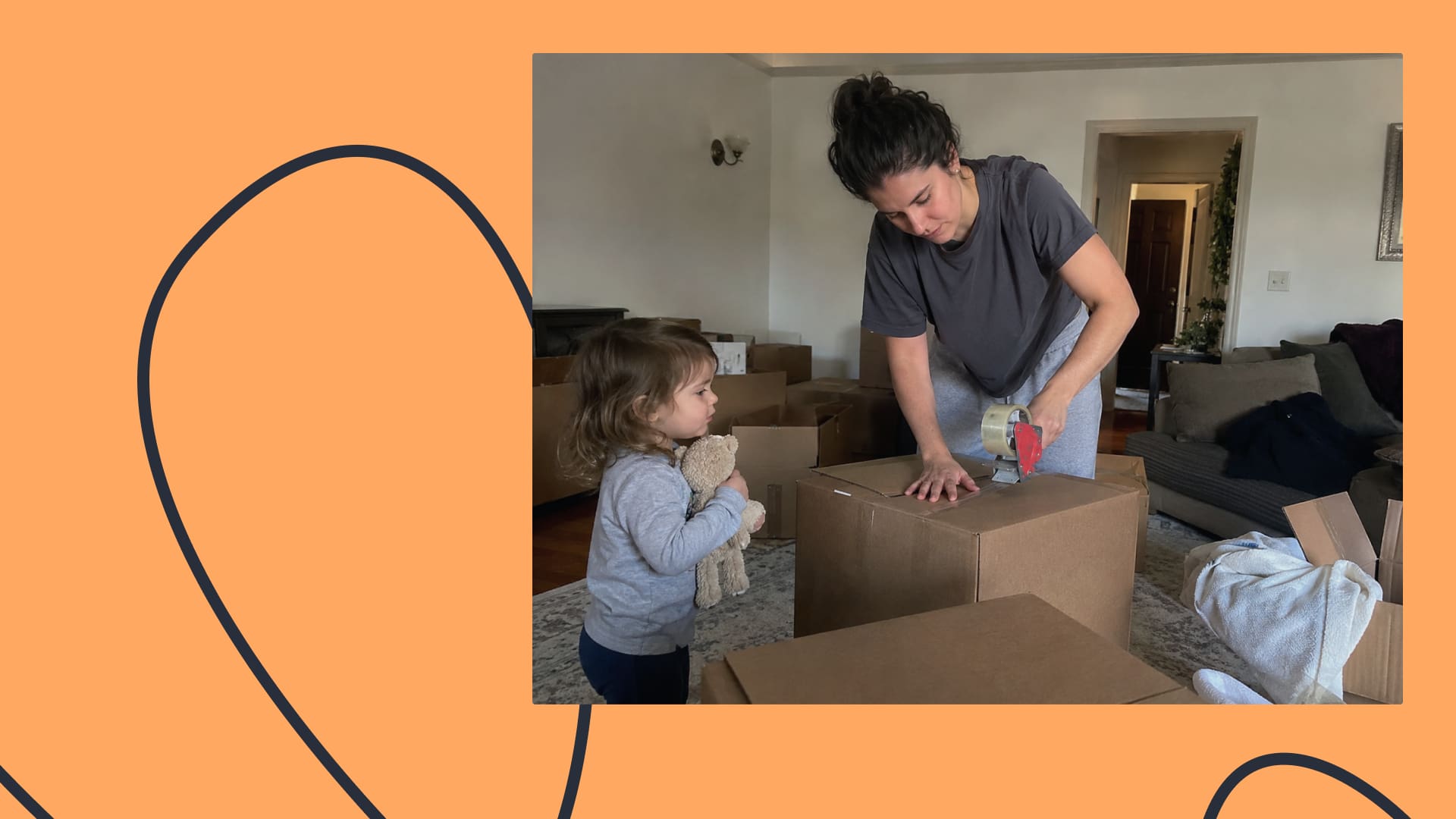

Families are often told that moving is easy if you “stay organized.” That is not very helpful when you are packing around naps, school forms, snacks, medical records and a child asking whether they will still see their friends. A better plan starts with the parts that usually go wrong and addresses them early.
This guide covers getting children ready for the move, what to keep close at hand, how to move with a baby or newborn, and how to make moving day safer. This isn’t about making the moving look easy. The idea is to find the risky bits before they become a problem.
Parent-first moving rule: pack around routines, not just rooms. Keep bedtime, meals, school mornings, diaper changes and comfort items within easy reach until the move is complete.
Tell children what is happening before the boxes take over
Timing is one of the first things that can go wrong. The move can feel sudden and out of their control when they only understand it once boxes are everywhere. Let them know where you are going, when it is happening and what will stay the same. Younger children might need to hear the same simple explanation more than once. Older kids may want more space to talk about friends, school, sports or the neighbourhood they are leaving.
If you can, show the children the new home. If you can’t go in person, use pictures, maps or a short video. Talk about practicalities, where they will be sleeping, where the kitchen is, how they will get to school, what park is nearby. Kids can anticipate what is going to happen next, so a move is less uncertain.
“It is so much easier to deal with something you know is coming than to be shocked and unprepared for a stressor.”
Jamie Howard, PhD, quoted by the Child Mind Institute
Use a family moving timeline
The typical moving checklist includes packing, utilities and address changes. Those steps are what families need, but so are school records, medical records, child care, safe sleep set-up, snacks, comfort items, and a first-night plan. These are the details that are easy to explain too late in the moving process.
| Timeframe | What to do when moving with children |
|---|---|
| 6–8 weeks before moving | Tell children about the move, research schools or childcare, request school and medical records, and decide whether you need packing help or movers. |
| 3–4 weeks before moving | Pack items children do not use daily, label kids’ boxes clearly, plan childcare for moving day, and decide which rooms must be unpacked first. |
| 1 week before moving | Pack essentials bags, refill prescriptions, confirm mover arrival details, keep comfort items out, and separate documents that should travel with you. |
| Moving day | Keep children away from loading areas, use off-site childcare or a safe room, keep food and medications with you, and unload children’s sleep items early. |
| First week after moving | Restore bedtime and meal routines, set up children’s rooms, contact schools, explore the neighborhood, and watch for signs that children need extra support. |
Moving planner interactive
Build a safer moving plan for your family
Moving with kids is more than the boxes. The hard part. It's knowing what can go wrong first: the baby supplies get packed, the toddler walks into the loading path, or bedtime begins before the beds are ready. Select your family situation below and get a practical plan.
Your family moving plan
Begin with moving-day safety and then cover the items your children need before bedtime.
Risk to handle early
With doors open and adults distracted, children can reach the loading path.
Keep with you
- Water and snacks
- Drugs or medicines
- Comforting items
- First night outfits
Do before movers arrive
- Pick an adult who will be in charge of watching the children.
- Provide off-site childcare or a safe room away from the path of movement.
- Tell the movers if there will be children at home.
Note for your mover
Ask the crew to remove children’s beds, cot parts or sleeping items early to prevent delays at bedtime.
Pack for daily routines first
Many families make the mistake of packing room-to-room. That is fine for furniture, but not for children. A child doesn’t need “bedroom box 4.” They need PJs, a toothbrush, a comfort item, medication, snacks and something familiar before bedtime.
Make sure to pack an essentials bag for each child. For toddlers and school age kids add pyjamas, clothing, toothbrush, toy for comfort, medications, snack, water bottle, books, headphones and 1 or 2 easy activities. For babies: diapers, wipes, bottles, formula or pumped milk supplies, burp cloths, pacifiers, extra clothing, and baby-safe toiletries.
Keep your child’s room mostly normal until later in the packing process. A bedroom that vanishes too quickly can make the move feel larger and more unsettling. Older kids can bring a small box of things they want to open first at the new house. That gives them control without the heavy lifting of packing.
Keep with you, not on the truck
Medications, paperwork, snacks, baby items, chargers, comfort items, first night clothing, school paperwork, anything needed before bedtime should go with the family.
Load early or mark clearly
When the truck is unpacked, it should be easy to find cribs, children’s beds, bedding, bathroom basics, high chairs, school bags and nursery furniture.
Moving with a baby: protect feeding, naps, and safe sleep
When you move with a baby the worry is generally simple – what if the one thing you need is packed somewhere you can't get to? Therefore, baby supplies should not be treated as regular household items. Feed supplies, diapers, clean clothes, medicine and sleep items should be with you, not on the moving truck.
Set up the baby’s sleeping area before unpacking the less urgent stuff. The crib, bassinet, portable play yard, changing supplies and feeding area should be among the first things ready in the new home for many families.
“Always place your baby on his or her back for all sleep times–naps and at night.”
CDC safe sleep guidance
The CDC also recommends a firm, flat sleep surface, and avoiding soft bedding in the baby’s sleep area. This is important when you move as parents might be tempted to let a baby sleep in whatever space is available. It is safer to have the crib, bassinet or portable play yard set up before the first night.
If you’re on a long drive, allow for more stops than you would make without a baby. Keep feeding supplies readily available, check diapers frequently, and avoid using the car seat for sleeping routinely after trips. Safe sleep guidance is explained by HealthyChildren.org safe sleep guidance, through the American Academy of Pediatrics. If a baby falls asleep in a car seat, stroller, swing, carrier or sling, the baby should be moved to a firm sleep surface on their back as soon as possible.
Moving with a newborn: reduce the physical workload
Moving with a newborn is one of those times where “we can do it ourselves” can turn into a more difficult day than you anticipated. Newborn care is continuous and one of the parents may still be recovering physically. The moving plan should ease pressure, not add another layer of lifting, sorting and last-minute decisions.
If you are moving to another city or state, check with your pediatrician before moving day. Ask about how to transfer records and when to see your newborn again. Pack a bag with the birth papers, insurance cards, discharge papers, prescriptions, and feeding information you’ll have with you.
This is one of the most obvious cases where professional movers can make a difference. Packing services, loading help, furniture disassembly and room-by-room unloading means parents can focus on feeding, safe sleep, recovery, and basic care instead of carrying boxes while sleep-deprived.
If you are moving with a newborn: Make the first-night setup easy. Before you unpack any decorative items, ensure you have your safe sleep space, feeding supplies, diapers, clean clothes, medications and parent recovery items set up.
Plan moving day so children are not in the work zone
Moving day is when vague plans usually show. Doors remain open. Furniture goes through tight spots. Tools, tape, boxes, cords and hardware may be on the floor. Adults are distracted. That can quickly become unsafe for toddlers and young kids.
Best choice: Off-site childcare with a trusted relative, friend, sitter or daycare. Otherwise, make a safe room out of the movers’ way. Keep it stocked with snacks, water, activities, chargers, diapers if needed, and a small first aid kit. Children should be under the supervision of one adult. Don’t assume they’re being watched.
If you have children at home, let your movers know in advance. A good moving crew shouldn't learn this at the door. Knowing the family situation early helps the crew plan better walking paths, loading order and room priority. For example, they are able to unload the crib, children’s beds or nursery furniture early so that bedtime is not an additional problem after a long moving day.
Use age-specific planning, but keep it simple
Different ages require different support. A toddler might need repetition, comfort objects. A school-age child might be worried about friends and school. A teen may want privacy, independence and a way to stay connected to her old life. The move should not be treated the same for every child.
-
Keep bedtime items handy. Use short explanations. Repeat what will happen. Don’t pack favourite comfort items too early. Keep routines as normal as possible.
-
Talk about the new school, the first morning, transport, activities and how they can keep in touch with friends. Let them make little choices in their new room.
-
Give notice when you can, recognise that it may feel disruptive and involve them in practical decisions. Perhaps the physical move is not as important as privacy, continuity of schooling, activities and friendships.
Protect school, medical, and daily-life continuity
When you leave school and medical details until the end a move can get messy fast. For school-age children, moving is often tied to the emotional aspect of school, friends, activities and identity. Try to obtain school records, vaccination forms, special education documents, sports forms and contact information before the move. If your child has an IEP, 504 plan, therapy schedule, or medical needs, bring copies of the key documents with you.
Don't wait until the first day of school to figure out transportation, lunch, supplies, or arrival time. Walk the route, drive by the school, visit the building if you can. Explain what the first day may look like in simple language.
For toddlers and preschoolers, continuity may be smaller but does matter. The same bedtime routine, the same stuffed animal, the same breakfast bowl or the same story before sleep can help them feel that family life goes on in the new home.
Help children say goodbye
Kids might need a real goodbye. It doesn’t have to be sad to make the move, but it does mean giving them space to close the chapter. Go to favourite places once more. Take photos of their room, school, playground or street. If it’s appropriate, let them exchange contact info with close friends.
According to Zero to Three, moving can be stressful for infants and toddlers, and parents can help young children cope with reassurance, familiar routines and simple explanations. Babies and toddlers don’t process every detail, but they respond to the tone, consistency and availability of their carers.
A farewell ritual can be very simple: a family walk, a small photo album, a last meal in the old home, a small memory box. Don’t promise that nothing will change. But be honest. Things will change, but the family will face them together.
Make the first night easy to manage
Many moving problems are apparent the first night. The truck is unloaded, everybody is tired and all of a sudden the pyjamas, medicine, crib sheet or child's favourite toy is in a box nobody can find. Pack the first-night kit separately and keep it handy to avoid this.
Include sheets, pyjamas, toiletries, toilet paper, phone chargers, medications, basic cleaning supplies, snacks, breakfast items, and children’s essentials. Set up kids sleeping areas early. For babies and newborns this means a safe crib, bassinet or portable play yard with a firm, flat surface. For older children, this could mean making their beds, having familiar objects close by, and keeping the bedtime routine as close to normal as possible.
Don't try to unpack everything the first night. Think about safety, sleep, food, bathrooms and tomorrow morning. An empty living room is not nearly as useful as a quiet first night.
Expect adjustment after the move
Kids may behave differently when they move. Some get clingy. Some test rules. Some have difficulty sleeping. Some look fine at first, and respond later when the change looks permanent. This does not necessarily mean something is wrong. It often means the child is processing a big transition.
Get routines back in place as soon as you can. Children need structure and routine – mealtimes, school mornings, bath time, bed time, family check-ins. Walk around the new neighbourhood in small steps. Locate the closest park, library, grocery store or walking trail. Let children help arrange a part of their room so they have ownership over the new space.
If you see persistent depression, sleep problems, school refusal, severe anxiety or behaviour changes, speak with your pediatrician, school counselor or qualified child mental health professional.
When hiring movers makes sense for families
You can move yourself but the question is not only that. What it is, is whether or not you can pack, lift, load, drive, unload, supervise children, protect sleep routines and make decisions at the same time. That’s too much for many families to safely handle.
Professional movers can be most helpful if the family has a baby, newborn, multiple children, stairs, heavy furniture, a long distance move, tight parking or limited childcare. Packing assistance can also cut down on the number of late nights parents spend boxing up the home after children are asleep.
Move & Care helps families with local or long distance moves with efficient scheduling, furniture protection, and careful loading and unloading room by room. If you’re moving with children and want fewer surprises on moving day, get an estimate before you lock in your preferred date.
FAQ
Once the move looks certain, tell your child so you can answer basic questions. Simple explanations repeated several times are usually necessary for younger children. Older children may require more time to process changes with school, friends, and activities.
Pack clothing, pyjamas, toiletries, snacks, water, medications, comfort items, small toys or books, chargers and any other bedtime needs. For babies, add diapers, wipes, feeding supplies, pacifiers, burp cloths, extra outfits and safe sleep items.
It can be safe with the right support, but parents should avoid physical strain, keep supplies for newborns within reach, protect feeding and sleep routines, and follow pediatric guidance. Heavy lifting and moving that can be exhausting should be passed on to someone else if a parent is recovering from surgery or birth.
Children should be away from the home and with a trusted carer during loading and unloading, if possible. If they have to be home, keep them in a safe room away from doors, stairs, tools, and the path of the movers.
Unpack sleep spaces, bathroom basics, medications, food, school stuff, baby supplies and kids stuff first. Set up a child's bedroom or nursery early enough to protect bedtime.




