


Will the carrier take the size? Will the dresser be safe enough? Who is liable if something is damaged? And when does “shipping a few things” turn into a small interstate move?
These are the questions you need to answer before you go for the cheapest looking option. There are lots of ways to ship belongings to another state, but not all of them are made for the same type of move. A few boxes of clothes can usually go by parcel carrier. One couch or dresser might need furniture shipping or freight. You may often need a moving container, small-load movers or a long-distance moving company for a studio, apartment or household shipment.
Quick rule: for boxes, go parcel; for one large item, consider freight; for when the shipment begins to feel like a small move, compare movers or containers.
Best ways to ship belongings to another state
First, you’ll need to know the size of your shipment. This avoids a common mistake of trying to force furniture, fragile items or partial apartment moves into a service built for regular packages. That could look cheaper initially but end up costing more when you consider packing, pickup limits, damage risk, and delivery access.
| Method | Best for | What to check before booking |
|---|---|---|
| Parcel carriers | Clothes, books, shoes, small kitchen items, and boxed personal belongings | Weight limits, box size, tracking, declared value, and prohibited items |
| Furniture shipping or freight | One large item or a few heavy pieces | Whether pickup is curbside, whether the item needs a pallet or crate, and who packs it |
| Portable moving container | People who want to load themselves and may need storage | Parking space, container rules, loading help, and delivery window |
| Small-load or long-distance movers | A studio, apartment, furniture set, or fragile household shipment | FMCSA registration, written estimate, inventory, valuation coverage, and delivery terms |
| Rental truck | DIY moves where you are comfortable loading and driving | Fuel, tolls, overnight stops, labor help, and insurance |
If you are shipping only boxes
If all you need to do is ship boxes to another state, parcel shipping is usually the first to price. Works best for items that are not oversized and can withstand normal package handling. Clothes, bedding, books, office supplies, and dorm stuff are usually better bets than dishes, mirrors, lamps, or delicate electronics.
USPS Ground Advantage is an example of a domestic package service. The service ships within the U.S., provides tracking and can handle mailable items up to 70 lbs. USPS says the expected delivery is 2-5 days for many shipments. USPS also says $100 insurance is included, and additional optional coverage can be bought. Check the current rules for USPS Ground Advantage before you pack heavy boxes, as size, shape, weight and contents can affect the price.
Sometimes the biggest box is not the safest box. Use smaller boxes for heavy stuff. Light items like bedding or coats can be packed in larger boxes. A large box full of books may seem like an efficient way to pack, but it can break, be too heavy to move, or cost more to ship. Fill each box so items do not shift inside. Tape the bottom well, mark the box clearly and save all tracking numbers until delivery is complete.
If you need to ship furniture to another state
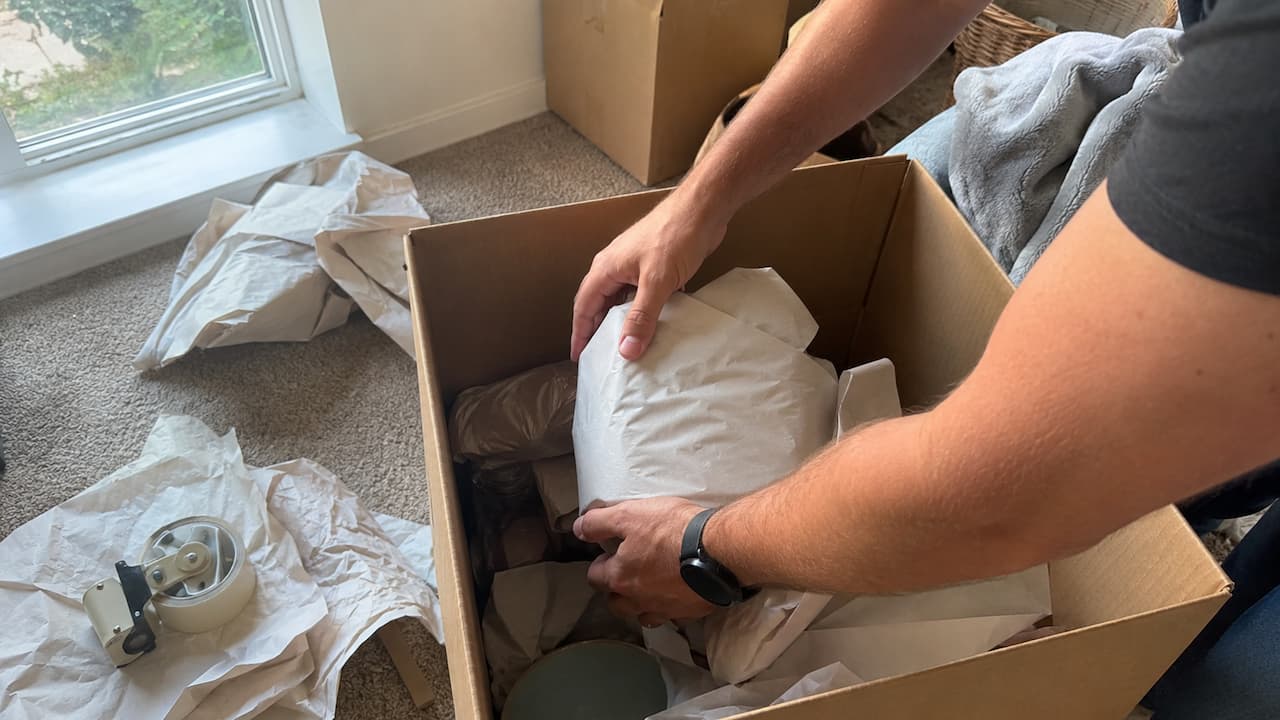
With the furniture the risk is different. Typically a dresser, couch, table, mattress, or bed frame is too large to ship via regular parcel. You may need a furniture shipping company, freight, small-load mover or long-distance moving company. The right choice depends on the value of the item, the packing required, the conditions of pickup and delivery.
Freight could work for one large item if you can meet the packing requirements. Some services require the item to be boxed, crated, blanket-wrapped or placed on a pallet. Some deliveries are curbside delivery only. This detail is important if the item is coming out of a walk-up apartment, a narrow street, a building with elevator rules, or a home where no one can help carry it inside.
Freight can be useful when one item is big, but the shipment is not really a move. The trade-off is responsibility. Freight carriers often rely on terminals, forklifts, pallets and curbside delivery instead of room-to-room handling. Ask before booking: who prepares the item, whether liftgate service is included, whether the delivery is inside or curbside, and what happens if the item arrives with visible damage. If you can't pack the item to freight standards, a moving company might be the safer bet.
For furniture you care about, packing is never a side task. Legs may need to come off. Corners need padding. Never rub wood on metal, cardboard or other furniture. Mattresses require proper bags. Moving blankets are not enough for antiques, marble, mirrors and glass. If you're just wrapping it like a local move and the service is expecting you to pack the item like freight, a low price on shipping doesn't help much.
If you are moving a studio, apartment, or household
If you have more than a few boxes and a piece of furniture, compare shipping with moving services. A small-load mover or long-distance moving company may be a better bet, as the shipment is considered household goods. That’s one pickup, one inventory, one delivery process and a clearer path if something is damaged or missing.
If your shipment has gone from "some boxes" to "this needs a moving plan" the estimate should be based on the actual inventory and access conditions. For Move & Care long-distance moving services this means looking at what is being moved, the packing requirements, building access and delivery plan before confirming the move. That’s the difference between shipping labels and a controlled household-goods move.
This is also where the moving industry likes to muddy the waters. A customer asks for a price and then finds out there are different rules for paperwork, inventory, valuation, delivery windows, or broker involvement. For interstate household-goods moves, the Federal Motor Carrier Safety Administration requires movers to provide customers with the Your Rights and Responsibilities When You Move booklet and the Ready to Move brochure before the move.
“movers are required to provide you with the Your Rights and Responsibilities When You Move booklet and FMCSA’s Ready to Move brochure.”
Federal Motor Carrier Safety Administration
Before you hire an interstate mover, be sure that you are dealing with a mover and not a broker. The FMCSA's movers vs. brokers guidance details the difference, and its registered mover search tool allows you to check company registration. This step should be completed before your belongings are loaded, not after a problem arises.
How much does it cost to ship belongings to another state?
The cost varies with the method. Parcel carriers typically charge by size, weight, distance, speed and service type. Freight may add charges for residential pickup, liftgate service, inside pickup, special handling or oversized items. Moving containers are typically priced based on container size, distance, rental duration, storage, and delivery timing. Long-distance movers consider size of shipment, distance, labor, access, packing and timing.
For a small shipment, shipping boxes may be cheaper than hiring movers. The math can change fast for a bigger shipment. Ten heavy boxes, a mattress and several furniture pieces are hard to handle with separate services. You can spend less at the checkout then pay in packing materials, missed pickups, extra handling or risk of damage.
Don’t just compare the sticker price. Compare the total cost. A parcel rate is not a freight rate, a freight rate is not a container rate, and a mover’s estimate is not a parcel rate.
When you’re comparing prices, ask each option the same question. What is being picked up? Who packs it? Who loads it? Where does delivery occur? What protection applies? What could be charged later? Just comparing the first number can hide the part that causes the problem later.
The wise thing to do is to compare all the costs, not just the base rate. Ask what it includes. Ask about what happens if the pickup involves stairs, a long carry, limited parking or no elevator reservation. Have a mover give you a written estimate and be sure the inventory is what is actually being moved. On its pricing page, Move & Care lays out what can impact the cost of moving, including packing materials, large or heavy items, coverage options and access details. Vague pricing is one of the places where problems with moving get started.
Cheapest way to ship belongings to another state
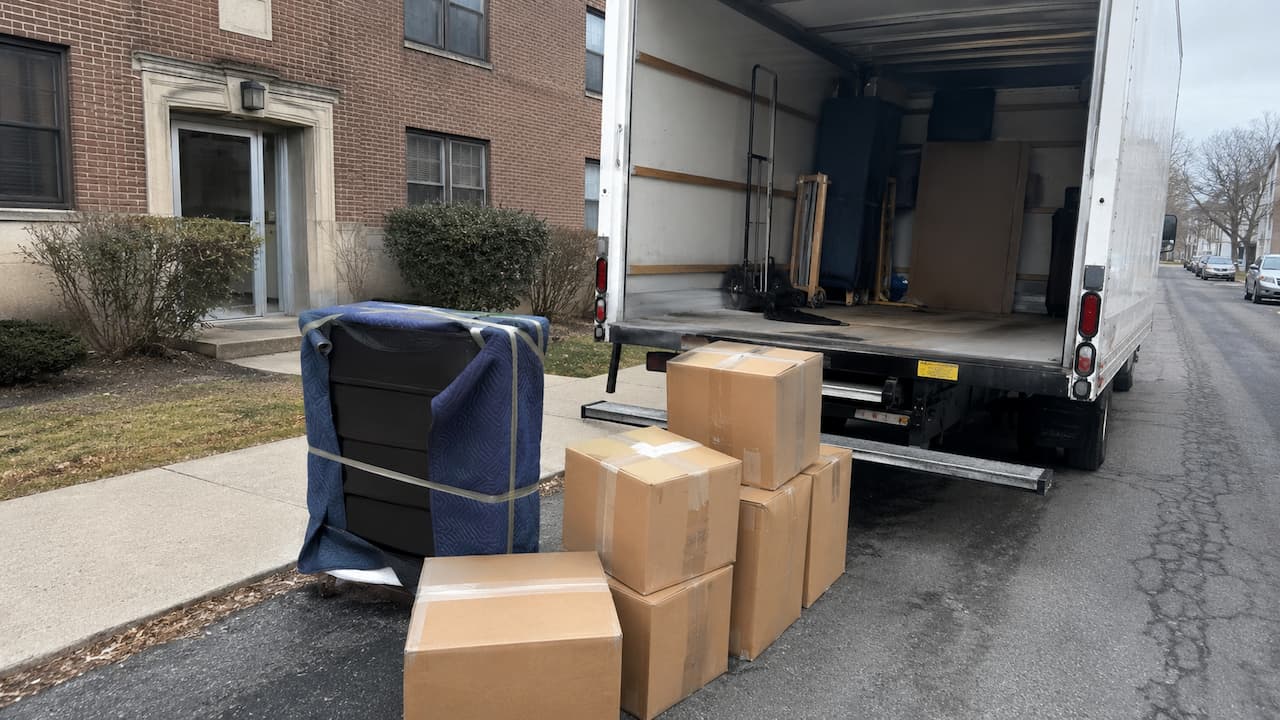
What you decide not to ship is the cheapest option. For a few boxes with no furniture, ground parcel shipping is often the first option to check. For low-value furniture, it may be cheaper to sell the item and buy a new one after the move than to ship it. The real comparison for a small apartment usually is between a rental truck, a moving container and a small-load interstate mover.
It’s not just the truck, but a rental truck can seem cheaper. Gas, tolls, hotels, assistance loading, anxiety driving. A moving container can solve the driving problem but you still need a place to put it and enough people to load it properly. While a small-load mover might cost more than going the do-it-yourself route, it can be worth it if furniture needs protection, the building has access rules, or you don’t want to coordinate multiple shipping services yourself.
What not to ship
Check carrier or mover rules before packing prohibited or high-risk items. The USPS has domestic shipping restrictions for items like ammunition, explosives, gasoline, liquid mercury, and marijuana listed on its shipping restrictions page. Other items may not be prohibited outright but are restricted, which means they require special handling or cannot be moved by air.
If you can, keep documents, medication, cash, jewelry, passports, small electronics, and irreplaceable personal items on your person. A mover or carrier may be able to move household goods but that does not mean that every item should be in the shipment.
If losing the item would present a serious personal or financial problem, do not treat it as a normal box. That’s true for parcel shipping, freight, moving containers and full-service moving.
How to prepare belongings for interstate shipping
Reduce the shipment to begin with. Generally, size, weight, labor, distance or space affect shipping. Anything you don’t need adds cost or risk of handling. Donate, sell or recycle things that are damaged, easy to replace or not worth the cost of transport. If the furniture is large, unwieldy or hard to protect, measure it before looking at options.
Pack boxes according to weight and fragility. Heavy stuff goes in small boxes. Larger boxes can take lighter items. Fragile items should be padded within so that they do not move when the box is lifted or stacked. Use heavy duty packing tape to seal the bottom and top. Mark each box with the room and what it contains. The label “fragile” helps, but it is no substitute for proper packing.
Get pictures of furniture before pickup. Take pictures of corners, legs, glass, wood surfaces and any existing scratches. Remove loose components and place hardware in a labeled bag. Ask the company before pickup what coverage you have and what you’re responsible for. If the item is fragile, bulky or difficult to pack properly, consider weighing the option of packing it yourself against professional packing services before the pickup date. This is where an early clear answer can prevent a problem later.
Before you book, check these details
This is the part that gets explained too late. Just be sure the service you’re paying for is applicable to the shipment before you pay or schedule a pick-up.
-
Check if pickup and delivery are curbside, inside, room-to-room or building-limited. Stairs, lifts, parking, long walks and narrow streets can alter the plan.
-
See who packs the item and to what standard. A parcel box, freight shipment and household-goods move don’t require the same protection.
-
Keep estimates, claim instructions, tracking numbers, inventory lists, photos, valuation options. This information is important if an item is delayed, lost or damaged.
Understand coverage before you choose a service
One of the biggest misunderstandings in shipping is coverage. A tracking number isn't complete protection. Declared value is not insurance, necessarily. According to FedEx, reimbursement can be based on proof of loss or damage, proof of fault, packaging quality and service limits.
Declared value is not shipping insurance.
FedEx
If you are moving interstate, check paperwork the day before loading. Verify company name, USDOT info, pick up and delivery addresses, inventory, payment terms, estimate type and valuation option. If a company doesn’t give you written information, won’t tell you whether it’s a mover or broker, or rushes you into making a decision before you can review the terms, slow down and check out the company first.
When shipping is not the best option
Shipping doesn't always make sense. If you have a furniture set, fragile items, multiple rooms or a building with stairs and parking limits you may need a moving plan instead of a shipping label. A moving company can look at the whole thing together: inventory, access, truck needs, packing and delivery timing. That’s often better than trying to break a household move into parcel, freight and separate furniture services.
The correct answer has to present the risky part prior to pickup, not after your stuff is already gone.
FAQ
Yeah. Long-distance movers, moving containers, freight services and parcel carriers can all be used to send belongings to another state. Which method is right for you depends on whether you are sending boxes, furniture or a larger household shipment.
Sometimes it is cheaper to send a few boxes. For many boxes plus furniture, movers or a moving container may be more practical as the shipment can move together and the handling is designed for household goods.
If it’s a basic item, furniture shipping or freight could work. When moving valuable, fragile or multiple pieces of furniture, it is often safer to hire a small-load mover or long-distance moving company, as the item can be protected, loaded and delivered as part of one shipment.
The cheapest way is typically to send a few boxes via ground parcel, to sell furniture that isn’t worth much before the move, or to rent a DIY truck or container for a larger load. The actual price depends on weight, size, labor, distance, access and risk of damage.
Take important papers, medication, cash, jewelry, and irreplaceable personal belongings with you. Even if there is coverage on a shipment, the claim process can not replace items of personal value.
Allow plenty of time to pack well and check carrier rules for boxes. Start earlier for movers, containers, summer, month end dates, moves with elevator reservations, parking permits or strict building access.




