
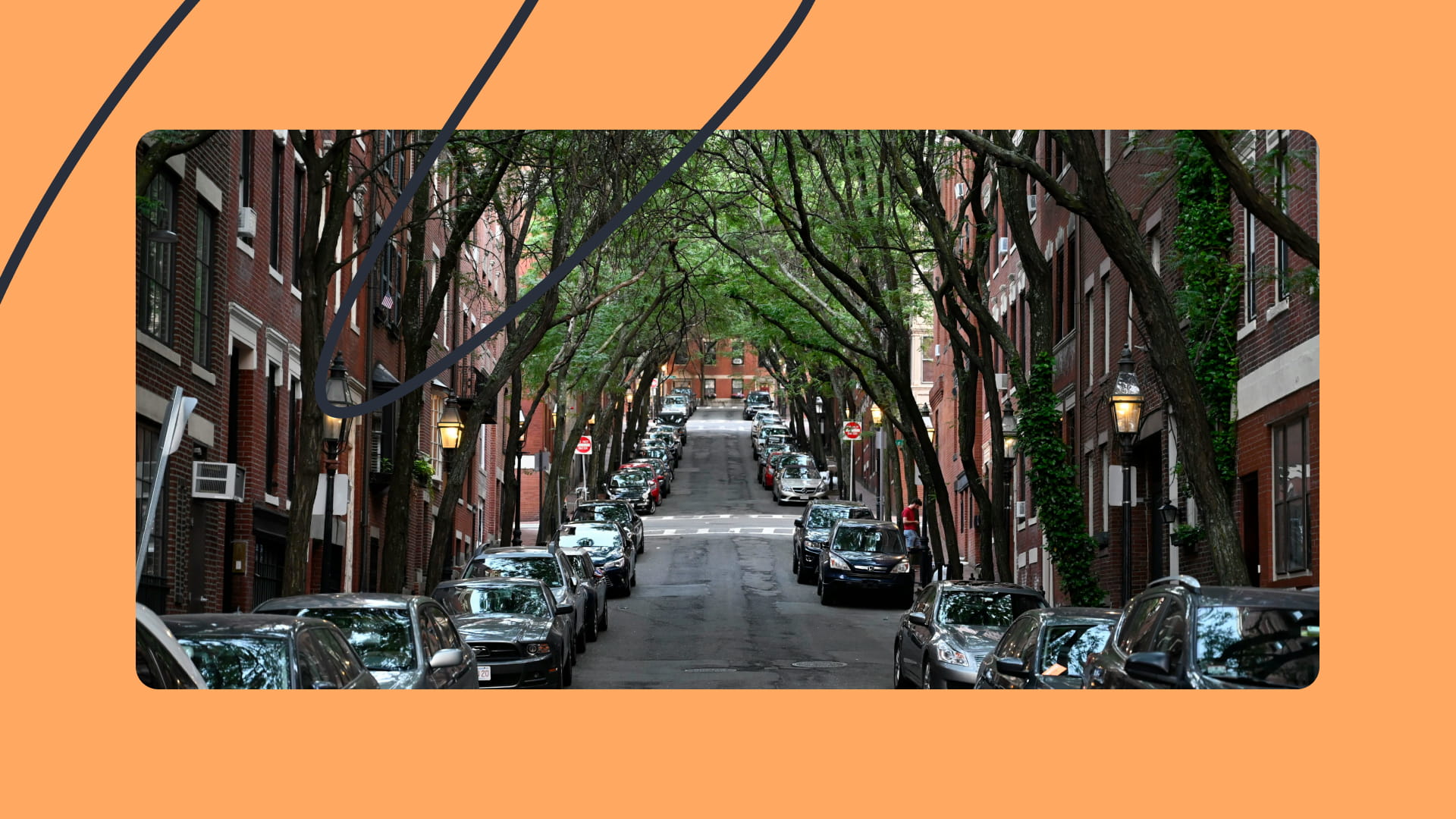

2026 Updated: A standard City of Boston moving permit covers two legal parking spaces for one day, between 7 a.m. and 5 p.m. $69 for two non-metered spots or $109 for two metered spots. You are not required by law to get one, but without it there is no guaranty the truck will have space at the curb.
The official name is a moving truck permit. It can be called a moving parking permit, a moving van permit, or a temporary no-parking permit. The rules apply to streets owned by the City of Boston. Cambridge, Brookline, Somerville and other nearby cities and towns have their own permit systems.
Boston moving permit requirements
| Question | 2026 requirement |
|---|---|
| Is a permit required? | No, but it reserves legal curb space for the moving truck. |
| What does a standard permit reserve? | Two legal parking spaces for one day, usually from 7 a.m. to 5 p.m. |
| How much does it cost? | $69 for two non-metered spaces or $109 for two metered spaces. |
| When can you apply online? | When the move is 15 days to eight weeks away. Online applications are for a standard one-day permit. |
| When can you apply in person? | When the move is three days to eight weeks away. In-person permits can cover up to five consecutive days. |
| When must signs be posted? | At least 48 hours before the permit starts. The City recommends posting them three days before the move. |
| Can you reserve space for a personal car? | No. The permit is for a moving truck or an eligible moving container, not a personal vehicle. |
Before you apply, check the address in the City's Street Occupancy Permit Lookup. There may be a permit on the space you want that already exists.
Do you need a moving permit in Boston?
No moving truck permit is required for every move in Boston. If the truck can use your building’s loading dock, a private driveway or some other legal off-street area, you probably don’t need one. Reserve curb space if the truck has to park on the street, especially on a narrow block or one that is usually full.
The address on the permit must be a legal parking space that exists. A permit cannot change a fire lane, accessible parking space, construction zone or no-stopping area into a loading spot. Snow emergency rules still in effect. Someone has to stand with the truck while the streets are being cleaned.
How much is a Boston moving permit in 2026?
The cost of a one-day permit for two unmetered spaces is $69 and comes with two official signs. Two spaces metered $109. The meter charge is $20 per meter per day, so the additional $40 is for two meters, not one.
Here’s how the standard $69 fee breaks down: $50 base fee, about $11 for a typical 40-foot by 8-foot curb area for one day and $8 for two signs. If you pay in person with a credit card or pinless debit card, the processor adds 2.5 percent with a $1 minimum.
How to apply for a Boston moving permit
- Verify eligibility for curb. It must be a legal parking space on a city street. Search the address in the street-occupancy database before payment.
- Apply in person or online. If your move is between 15 days and 8 weeks away, the online moving truck permit portal allows you to make standard one-day reservations. If you're moving in three to 14 days, need several days, or are using an eligible moving container, visit City Hall.
- Enter move details. You will need the date, the address where the truck will be parked and information about any parking meters. Provide a mailing address where someone can receive the physical permit and sign for it.
- Allow time for the post. After approval, permits typically arrive within 7-10 business days. If you haven't received it in two weeks, ask for a replacement at least three days before you move.
- Show the signs and let your neighbors know. The signs must be posted at least 48 hours before a permit is to begin at 7 a.m. Boston recommends posting the signs three days before. Leave copies of the City’s flier on cars for at least two days in a half block each day. When booking metered spots, a day of fliers is enough.
- Clean up. When the reservation is done, take down the signs and fliers and remove any moving debris.
Applications may be filed in person at the Office of the Parking Clerk, Boston City Hall, Room 224, Windows 4–5, Monday through Friday, between the hours of 8:30 a.m. and 4:30 p.m. For questions regarding permits, call 617-635-2560 or email movingtrucks@boston.gov.
What if a car is parked in your reserved moving space?
Call Boston Police Department non-emergency line 617-343-4911. Tell the dispatcher the plate number and that the car is in a properly posted permitted spot. If police can’t contact the owner, they may arrange to have it towed.
Paper alone will not make parked cars disappear. Timely posting of the signs and fliers is important. They provide advance notice to drivers and allow the City to enforce your reservation.
Where a City of Boston moving permit does not apply
A Boston permit is only valid on City-owned streets. The online program cannot be used for these state-owned roads and addresses:
- 1101–1209 Boylston St.
- Charlesgate East and Charlesgate West
- 11–468 Park Dr.
- Fenway, Riverway, Arborway, and Jamaicaway
If the Massachusetts Department of Conservation and Recreation owns the road, call DCR at 857-393-5412 or AccessPermits@mass.gov to inquire about a temporary road access permit. I wonder who owns the street. Check this out first so you don’t end up paying the wrong agency.
North End moving restrictions in summer 2026
Another check in July or August when you’re moving in the North End. Several streets are closed for summer feasts; an address that normally qualifies may not be available on your date, so call the Office of the Parking Clerk before applying. Boston has these event periods for 2026:
- July 30–August 2 St. Agrippina The closure will begin at 396 Hanover Street and include all of Battery Street.
- Madonna Della Cava: August 7-9. The closure begins at 396 Hanover Street and includes all of Battery Street.
- Fisherman's Feast: August 13-16. This affects Fleet Street, Lewis Street and 183-330 North Street.
- Saint Lucia and Saint Anthony: Aug. 27-30. The changes will impact Thatcher Street, North Margin Street, Endicott Street and portions of Cooper and Prince Streets.
- San Gennaro: When we updated this guide, Boston still had the dates as TBD. The area in question is Paul Revere Mall on Hanover Street.
University move-in to mean more temporary parking restrictions. Boston may set up popular moving locations as truck drop-off points that do not require an individual permit between August 31 and September 2. The streets change, so before the move check the current traffic advisories and the signs on the block.
Moving containers, PODS, and rental trucks
There is no space to reserve a personal car or minivan. You might be able to get a rental moving truck, including U-Haul. For most moving containers, apply in person and bring a letter of authorization from the container company. That company must also hold a bond with the City.
PODS does it differently. Instead of the usual moving truck application, Boston sends PODS customers to Permit Puller at 617-424-7275.
Boston moving-day parking tips
- Have both addresses ready. If you’re moving within Boston, see if you need to reserve parking spots at the curb at both the start and end points of your move.
- Match the truck to the space. The average reservation is approximately 40 feet. Please confirm the truck length prior to applying.
- Stay away from Storrow Drive. Moving trucks are not allowed due to low clearance, posted height limit is 10 feet.
- Show the permit. Bring your move-day paperwork, your physical permit for the truck and the City’s phone numbers.
- Arrange building access too. A curb reservation does not reserve a loading dock or service elevator, nor does it meet a building’s certificate-of-insurance requirements.
Move and Care can help you through the permit process and point out parking information that could change the crew’s plan or schedule. You will need to arrange a separate permit service. Otherwise the customer is responsible for getting the permit and posting the signs.
Still deciding on a date? The cheapest day to hire movers in Boston: Weekday Pricing, Month-End Demand, and September’s Lease Cycle. Once you know the addresses and access to the buildings, get an estimate from our Boston movers.
Verified against City of Boston's moving truck permit page, moving guide, and Moving Truck Permit FAQs on September 15, 2026. City fees, event dates and street restrictions are subject to change. Verify the address in the official portal before applying.




