
The company that customers love
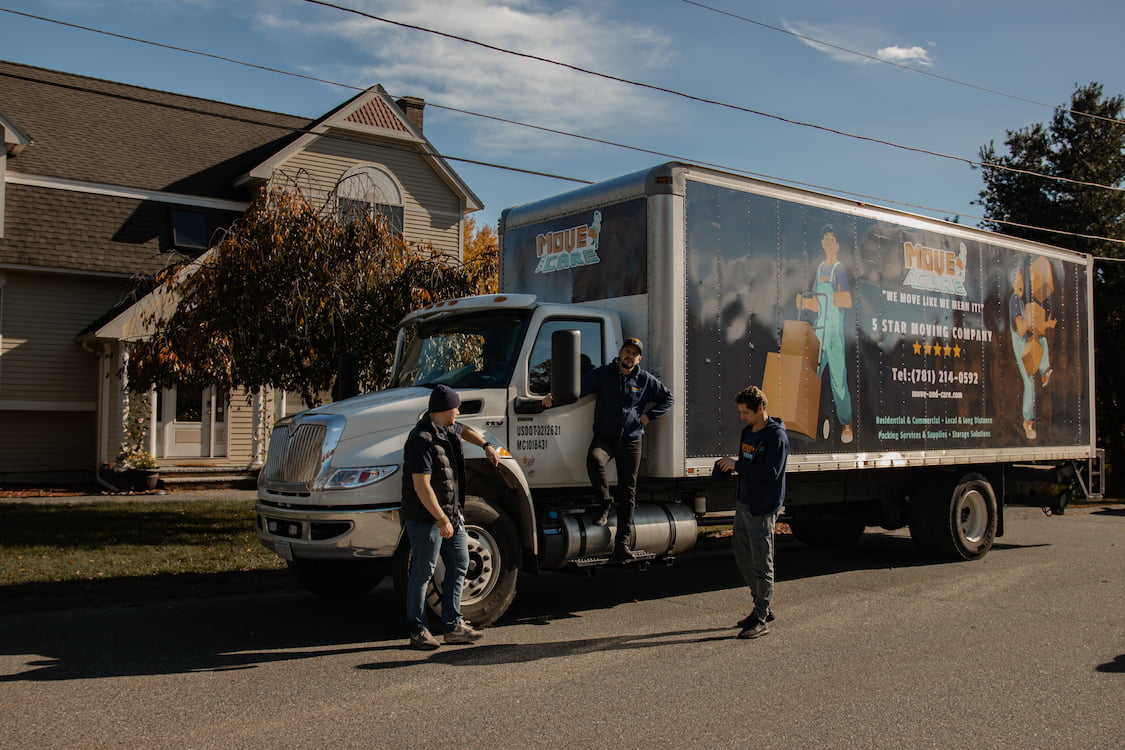
Move and Care strives to satisfy our client's needs 100%. Our company is well-reviewed, so we are not shy about showing over 2500 reviews of our company in Boston, Austin, San Antonio, Charlotte and Irvine! Explore the reviews and get an idea of our company.
Read Move and Care ReviewsThe company with a reputation
Move and Care has managed to become one of the best moving companies. Our company is based in Boston, MA; Austin, TX; San Antonio, TX; Charlotte, NC and Irvine, CA. We are also very familiar with Philadelphia and it is part of our area of work.
Check Our Licenses and Awards


Our NYC to Philadelphia Moving Services

Residential Moving
Service for smooth and easy family moves

Commercial Moving
Smooth business moving to keep the business running

Packing Services & Supplies
Complete packing help and quality materials

Storage Solutions
Safe storage spaces for your items, available anytime

Piano Moving
Skilled piano transport to maintain condition.

White Glove Moving
Moving services with extra care for valuable items

Senior Moving
Gentle and efficient relocations for seniors.
What Customers Say About Us
Influencers who move with Move & Care
Hear how creators and community leaders describe their move-day experience, from booking to the moment every box is in place.
Our Text Reviews
Know Your Moving Cost Today
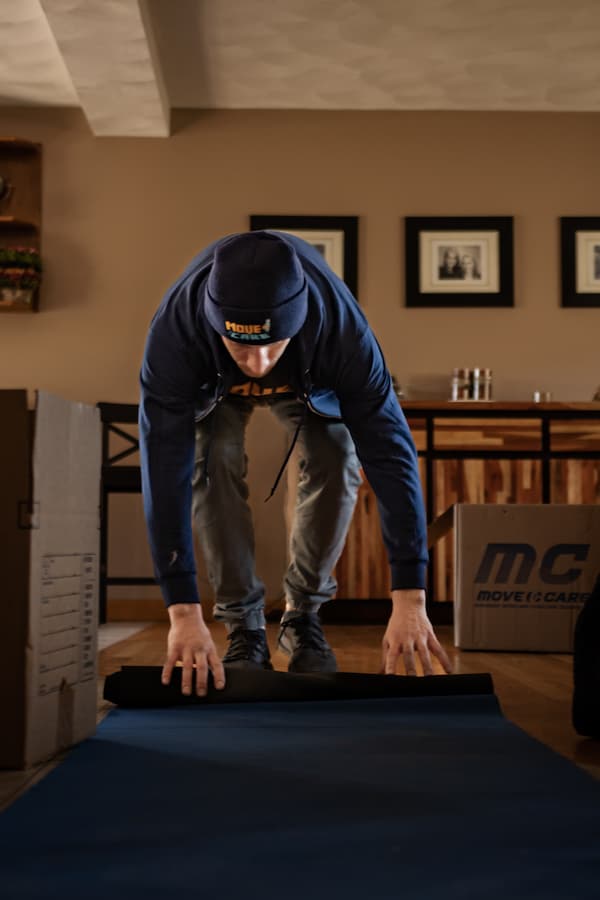
Why We're a Trusted
moving company from NYC to
Philadelphia
Choosing Move and Care for your move from NYC to
Philadelphia means the same crews that run our local moves in
NYC load the truck, and the destination is handled by a coordinator who
has driven the route.
When you choose Move and Care for your move from NYC to
Philadelphia, you get a moving crew that knows the ins and outs of long-distance moves — from careful packing to
on-time delivery — making the entire process smooth, quick, and safe.
More About us

Fully Licensed & Insured
We are legally authorized to handle moves of any type and distance. Licenses: USDOT #3212621; MC #1018431; NCUC #C-3067; TXDMV #009636518C.

Cost Efficiency
We offer flexible pricing options. Flat rates with a binding moving quote and tailored plans — so you know exactly what to expect with no hidden costs.

Full-Service
We manage everything: careful packing, secure loading, route planning, delivery, and even unpacking at your new house.

Safety
Our movers use professional packing techniques, every truck is GPS-tracked, and insurance coverage is included — so your belongings arrive just as they left.
What you get by moving from NYC to Philadelphia with us?

Loading and Unloading
We will load into the truck and unload at a new place all of
your items.

Gas, Tolls
Our moving company rates include all the charges, no hidden
fees.

Dedicated Manager
Our dedicated manager will walk you through the whole moving
process.

Transportation
Our Company makes sure all of your belongings are safe during
delivery.

Moving Insurance
Insurance coverage helps save your items from unexpected
damages.

Assemble and Disassemble
We make sure your furniture is Assembled and Disassembled.



Our Licenses & Awards
We’ve helped over 5,000 people move safely — from single-bedroom apartments to 5-bedroom houses and full office moves. Our team has completed more than 1,200 long-distance moves across the U.S., always on time and with belongings protected. With licensed movers, GPS-tracked trucks, and full packing support, we make sure every step of your move is handled with care you can count on.
See Price Estimate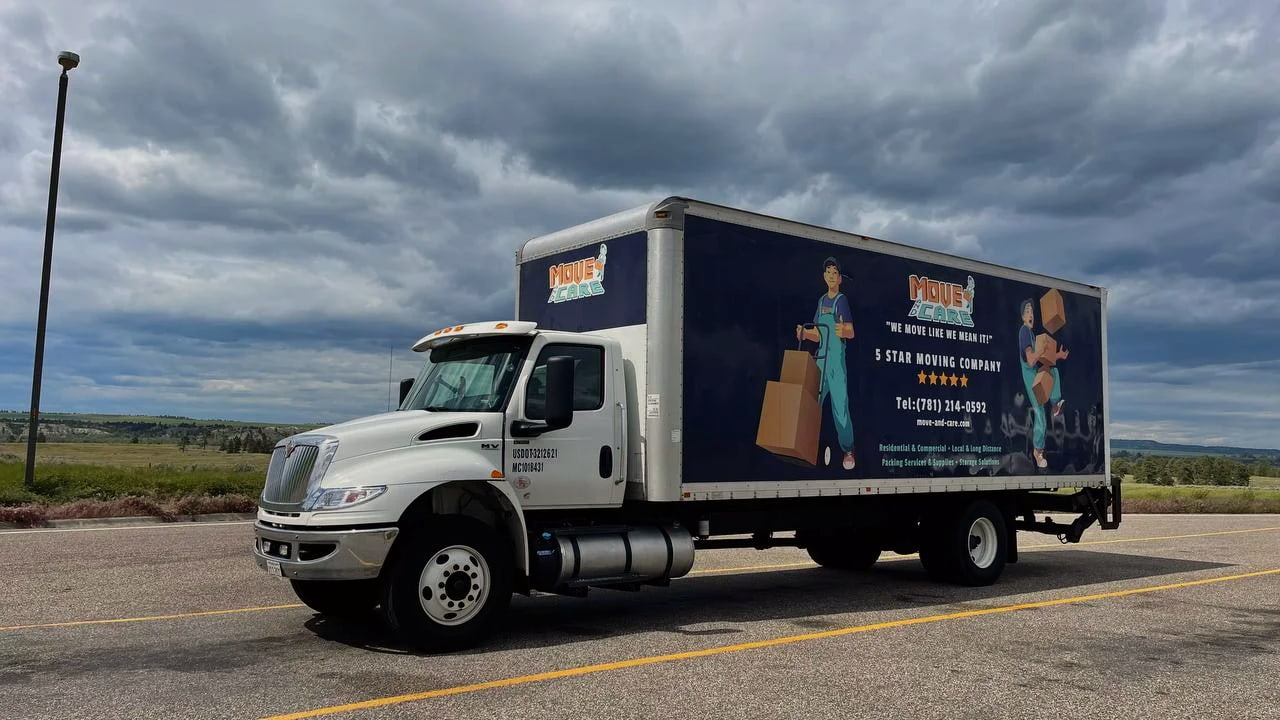

USDOT
3212621
MA DPU
31854
NCUC
C-3067
TXDMV
009636518C






Have Questions?
Ask Professional
How Much Does It Cost to Move from NYC to Philadelphia?
| Size of the Move | What the Flat Rate Is Built From | Access Factors That Change It |
|---|---|---|
| Studio / Small 1 Bedroom | Inventory list, packing level, distance | Walk-up flights at the New York end; whether the Philadelphia block is wide enough for the truck to pass parked cars |
| Large 1 Bedroom / Small 2 Bedroom | Inventory volume, packing materials, protection | COI and freight elevator reservation in New York; TNP permit tier in Philadelphia ($50/day in Center City and University City, $25 elsewhere) |
| Large 2 Bedroom | Volume, disassembly and reassembly, materials | Long carry from the curb at either end; stoop entry with no curb cut |
| 3 Bedroom Apartment / Rowhome | Volume, packing scope, specialty items | Three- and four-story rowhouse stairs; winder or spiral staircases; hoisting when a piece will not turn the landing |
| 4 Bedroom or Larger Home | Volume, full packing, specialty and heavy items, storage if dates do not line up | Street width, mechanical street-cleaning hours on the block, building move window |
You get one flat-rate figure for the whole job. Usually it includes the crew, truck, fuel, tolls, transportation, basic insurance and the $50 equipment charge for blankets, dolly and tools. We can also prepare a COI if your building requires it.
You are price quoted for the approved inventory and services. No surprise fees.
Here flat-rate isn’t a marketing word — it’s how federal rules define a binding estimate. An interstate mover is required under 49 CFR Part 375 to perform a physical survey of the goods and provide you with a written estimate, and a binding estimate “guarantees the total cost of the move based upon the quantities and services shown.” That’s true for a 95-mile interstate move just as it is for a 1,600-mile one, which is why we review your inventory before quoting rather than after.
If you’re wondering how much it costs to move from NYC to Philadelphia, the truth is that access matters more than distance on this route. The estimate depends on volume of inventory, access at both addresses, timing and the services you select. Specialty items are priced separately and published: an upright piano is $160 and baby grand $240, items over 200 pounds may incur charges that start at $60, and hoisting is $40 per item per flight of stairs — a charge that comes up more often on this route than most, because a Philadelphia rowhouse staircase and a pre-war Brooklyn stairwell fail on the same piece of furniture. Safes, pool tables and such items need to be priced individually for the particular item.
Packing is quoted separately because the amount of stuff can vary so much from a Manhattan studio to a four-bedroom household. Labor per hour and materials per item: small box $6.50, medium $7.50, large $8.50, tape $7 per roll, shrink-wrap $10 per item, mattress cover $17, wardrobe box $28. Packing services and storage are the two most common add-ons that can change the entire bill, especially storage if a New York lease expires before a Philadelphia settlement date. Payment note: a 3.5% card processing fee will be added to card payments, and a 5% discount may be applied to cash payments.
Want exact moving prices? Request a free estimate. We’ll review your inventory, addresses and access requirements, and then provide you with a formal estimate.
Sample NYC to Philadelphia Moving Timeline
The drive itself is a couple hours at about 95 miles. It’s not federal hours-of-service limits, which turn a route to Texas or Florida into a multi-day haul. The schedule on this run is determined by how long it takes to load in New York and if a truck can legally stop outside the door in Philadelphia.
The most common part that runs long is loading day in New York, and this is due to street rules. Commercial vehicles may remain in one block for up to three hours. Both sides of the street are considered the same block. Double parking alongside parked cars is limited to 20 minutes. It is allowed only while actively loading, only where standing is not otherwise prohibited, and only where there isn’t an open space or loading zone on the same side of the block. Never block the only travel lane. Curb availability that morning varies with Alternate Side Parking hours and suspensions.
The size of the truck is determined in New York, not Philadelphia. City truck routes are limited to a 35-foot single-unit box truck and trucks are banned from most NYC parkways including the Belt, F.D.R. Drive, Henry Hudson north of 59th Street, Cross Island and Jackie Robinson. Philadelphia just requires a special hauling permit over 40’ in length, 8’ in width or 13’6” in height, so a truck legal on a New York truck route is already legal in Philadelphia. To get out of town, it’s the truck route network, then the NJ Turnpike and the I-95 corridor south.
Once your truck leaves the loading dock and is scheduled to arrive in Philadelphia, the move coordinator will keep you informed about the progress of the truck.
What to Know Before Moving from NYC to Philadelphia
Most long-distance moves come with a simple destination in exchange for a hard starting point. This one doesn’t. Both New York and Philadelphia are old, attached, stair-heavy, curb-reliant housing markets — which is unusual, and changes what a good plan looks like.
New York’s stock is old and upright. The 2023 NYC Housing and Vacancy Survey shows that 54% of the city’s units are in buildings built before 1947, only 46% of units are in buildings with an elevator, and 873,600 units — 24% of the stock — require one or more flight of stairs just to reach the door. That’s not neglect: NYC Building Code §3002.4 only requires elevators in new buildings of five stories or more, meaning legal four-story walkups are common. At the other end of the spectrum, 22% of NYC units are in buildings of 100+ units, where the move is dictated by a freight elevator booking and a COI, not the curb.
Philadelphia is old and horizontal. The geometry is equally challenging. This is made explicit in the City Planning Commission’s Philadelphia Rowhouse Manual: Philadelphia “is largely a rowhouse city” and rowhouses “outnumber all other housing types” and are each occupying “a narrow street frontage and attached to adjacent houses on both sides.” Being attached on both sides means no side access and no garage bypass: everything goes through one front door, often up a stoop and no curb cut. The manual also describes the small Colonial-era “trinity” houses of 400–600 square feet with “one entry, winder stair,” and warns that winder stairs are “best avoided” because “it is easy to lose your footing on the narrow part of the tread.” A sofa or armoire that cleared a Brooklyn stairwell will not necessarily turn a trinity landing, which is when hoisting is priced in. And the housing is truly old: according to the Economy League of Greater Philadelphia, citing ACS five-year estimates, 41% of Philadelphia’s housing units were constructed before 1940 and just 15% since 1980. Narrow door frames, plaster walls and original stair treads are the norm, not the exception, and the 47 districts designated by the Philadelphia Historical Commission — Society Hill, Old City, Rittenhouse-Fitler, Washington Square West, Powelton Village, Main Street Manayunk among them — concentrate the tightest streets and oldest stairs. Designation does not set rules for moving, but it does give a good indication of where protection of floor and walls is important.
The split between the two cities is the curb, and that’s the single most helpful thing to know before booking. You can’t buy the curb in New York. NYC DOT’s permits are for construction and infrastructure work, not residential moves, so the plan is based on the three-hour block limit and the 20-minute double-parking rule. You can in Philly. The Department of Streets Right-of-Way Unit issues a Temporary No Parking permit for a moving truck at $50 per day per 40 feet in Center City and University City, $25 per day per 40 feet elsewhere, where “forty feet is roughly equal to two parking spaces.” The catch is the calendar: the ROW Unit “requires a minimum of four (4) full business days of notice,” applications are processed in order of move date, the permit is non-refundable, and it covers one address only. You pick up signs from your local Police District and must post them “at least 24 hours before you need the spaces.” If a car is parked in your reserved space on move day, the city’s direction is to call the Police District to have it ticketed, and then it can be towed. That four-business-day rule silently ties your booking date to your permit date — book three days out and you’ve got no permit for your block.
There’s a second Philadelphia curb rule that baffles newcomers. The Department of Sanitation’s mechanical street cleaning program runs Monday, April 6 through Thursday, October 29, 2026, Monday through Thursday, in fourteen neighborhoods: Frankford, Germantown, Kensington, Logan, Nicetown, North Central, Paschall, Point Breeze, Port Richmond, South Philly, Southwest, Strawberry Mansion, West Fairhill and West Philly. Parking is limited on those blocks from 9 a.m. to 3 p.m. No Parking signs have been posted and fines enforced since April 20 on a staggered schedule, and some expanded routes require residents to move their vehicles. If you’re moving into Point Breeze, South Philly, Kensington, Port Richmond or West Philly during the season, that six-hour window lands right on top of a normal delivery start, so we check the published cleaning boundaries and schedule before setting the arrival time.
Timing has a third input: the university calendar. University City is in the $50-per-day TNP tier, and the third week of August is when arrivals across West and North Philadelphia all come together. Penn’s Fall 2026 move-in begins Aug. 17 for select populations, Aug. 18 for first-years and Aug. 21–23 for returning students, while Temple takes new students Aug. 18–20 and returning students Aug. 21–22. If you’re looking to move into Powelton Village, Spruce Hill or the blocks around Temple in that window, you have to file the permit earlier, and assume a longer carry.
Weather is less of a factor on this route than on the Sun Belt ones, but it is not nothing. The NOAA 1991–2020 normals for Philadelphia International show a normal daily high of 87.8°F in July and 85.8°F in August — warm enough to factor into crew pacing and temperature-sensitive items, but not a scheduling constraint like a Houston or Austin delivery. The more difficult variable is winter: the January normal high is 41.3°F with 7.1 inches of normal January snowfall, and snow does two things to a rowhouse move — it makes stone stoops and narrow steps truly dangerous, and it constricts the street so the curb space your permit reserved is no longer usable.
Have something big or heavy to be moved? Let us know prior to move day. A piano or a safe, a pool table, gym equipment or anything over 200 pounds may require extra labor, hoisting or a custom handling plan — and between a pre-1947 New York staircase and a Philadelphia winder stair, that decision is better made a week out than on the landing.
The Moving Process (NYC to Philadelphia)
Preparation
We begin with your inventory and create a service plan: what’s moving, what’s packing, what access will be like at both ends, whether either building requires a COI or elevator reservation. If you require packing services, we will arrange for full or partial packing before your move day.
What to arrange yourself on this route. Start with the Philadelphia permit — it has the longest lead time of anything on the list. The Temporary No Parking permit must be obtained at least four full business days in advance. You will need the exact address of destination and length of truck, so you will need to confirm truck size with us first. Get the signs from your local Police District and hang them up at least 24 hours before you move, and see if your block is in one of the 14 mechanical street cleaning neighborhoods, and what its 9 a.m. to 3 p.m. window is. If you’re moving into an apartment or condo instead of a rowhome, ask the property manager, HOA or building office if there’s a move-in time window, a loading dock or elevator to reserve, a COI requirement or a gate code — there’s no citywide source for those, so the building is the only authority. Ask your managing agent or board three questions early on the New York end: what does the COI have to say and who has to be named on it, what days and hours are moves allowed, and does the freight elevator have to be reserved. Know that commercial vehicles cannot park on residential streets between 9 p.m. and 5 a.m., so the truck cannot be left outside overnight before an early start. Check the posted signs on your block to find the hours of street cleaning and metered “No Standing Commercial Vehicles Only” zones. Parking arrangements and any required permits are the responsibility of the customer at both addresses. Clear walkways and the curb area at either end before the crew arrives. Disconnect any appliance connected to a water or gas line. Empty desk and dresser drawers and label sealed boxes by room of destination. Crews may not carry any objects that are flammable, explosive, related to firearms, filled with gasoline or filled with propane.
We will show the final scope clearly on your estimate. The timing and price can be affected by packing level, special items and building access.
Moving Day
Furniture is padded and shrink-wrapped, load inventoried and stacked for the drive. You get a copy of the bill of lading at the time of loading or before, which the FMCSA calls the contract between you and the mover for the movement of the shipment.
Because this is an interstate move, it’s federally regulated — and it’s worth spelling this out, because people assume otherwise because of the short distance. The Pennsylvania Public Utility Commission licenses movers “operating within Pennsylvania,” and explicitly says it cannot “investigate a complaint involving goods moved out of Pennsylvania.” The New York Attorney General draws the same line from the other side: movers are licensed by NYSDOT “for moves wholly within New York, and by the Federal Motor Carrier Safety Administration for moves between New York and another state.” So it’s not a PA PUC number that governs your move. The authority that matters is USDOT 3212621 and MC 1018431, and you can look us up in the federal movers database before signing anything.
Delivery & Unpacking
In Philadelphia we unload, place furniture in designated rooms and reassemble standard items. Unpacking, if booked — we remove boxes and packing material after setup. On a rowhouse delivery, the sequence of the carry is more important than usual — with only one front door and a stair that might not turn, large pieces are staged and sequenced rather than moved in whatever order they come off the truck.
If anything is damaged or missing, report it to the crew immediately, and fill out a Damage Report before they leave if possible. Any damages noted after the move shall be reported within 96 hours.
Basic Released Value Protection is included free of charge, and it is worth knowing what it actually covers. FMCSA limits that liability to 60 cents per pound per item, and gives its own example: a 25-pound television that is lost or damaged results in a $15 loss. The Full Value Protection option, for an additional fee, makes the mover liable for the replacement value of the shipment. The FMCSA Rights and Responsibilities handbook states that the minimum valuation under the Full Value Protection option is $6.00 per pound times the shipment weight. If you own anything over $100 a pound — jewelry, china, furs — the item has to be specifically listed on the shipping documents before you’ll be covered. This takes five minutes to do and is well worth it before loading. Your right to file a claim with the carrier is preserved separate from our 96-hour reporting request under federal law: a carrier cannot provide a filing period of less than nine months from delivery under 49 U.S.C. §14706. Check out our reviews and about us to see what previous customers have said about the process, or get in contact to talk about your dates.
More About PricingF.A.Q. about moving from NYC to Philadelphia
Long distance moves are flat rate, meaning the price is locked in for your job, rather than going up hourly. Access drives the number more than distance does because the drive is only about 95 miles: inventory volume, stairs and carry distance at both ends, timing, and the services you choose. In most cases the rate includes crew, truck, gas, tolls, transportation and basic insurance, plus a $50 equipment charge for blankets, dolly and tools. Specialty pricing is posted. An upright piano is $160, a baby grand $240, items over 200 pounds may start at $60, and hoisting is $40 per item per flight of stairs. Packing labor is charged by the hour and materials by the item. A 3.5% processing fee will be applied to card payments and cash may receive a 5% discount.
Yes, if you want to book the curb space. The Philadelphia Department of Streets issues a Temporary No Parking (TNP) permit for moving trucks, and the city requires that you apply at least four business days in advance of when you need it. The fee is $50 a day per 40 feet in Center City and University City, and $25 a day per 40 feet elsewhere. Forty feet is about the size of two parking spaces. One permit per address, and it is non-refundable. You pick up the signs from your local Police District and post them at least 24 hours in advance. If there's a car in your space on move day, the city instructs you to contact the Police District to get it ticketed and maybe towed. Apply at phila.gov, and note that parking arrangements are the customer's responsibility.
No NYC DOT permit reserves curb space for a residential move. Its published permit list includes construction, street openings, sidewalk work and other similar infrastructure work. Instead, the standing commercial vehicle rules apply. A commercial vehicle may have a single block for up to three hours, and both sides of the street count as the same block. You can double-park beside a parked car for no longer than 20 minutes, and only if you're actively loading, and only if there's no space or loading zone on that side of the block. Check posted signs and Alternate Side Parking hours for your block at nyc.gov. This is the primary planning difference between the two ends of the route: in Philadelphia you can reserve the curb, in New York you plan for not being able to.
The line haul is a couple of hours, not a multi-day trip. The drive is about 95 miles on the New Jersey Turnpike and I-95 corridor. Federal hours of service limits are not the limiting factor on this route. The schedule is driven by loading in New York and access in Philadelphia. In New York, a building that limits moves to weekday business hours or requires a freight elevator reservation will have more impact on the morning than the mileage does, and in Philadelphia the arrival time depends on whether a TNP permit is in place and whether the block is subject to mechanical street cleaning between 9 a.m. and 3 p.m. You receive a delivery window up front, and your coordinator confirms when loading is complete and what time the truck is expected.
No. The Pennsylvania Public Utility Commission licenses movers operating in Pennsylvania and states that it cannot investigate a complaint involving goods moved out of Pennsylvania. The New York Attorney General sees the same split from the other side: NYSDOT licenses moves that are entirely within New York, and the Federal Motor Carrier Safety Administration regulates moves between New York and another state. This route crosses a state line, so it's a federally regulated interstate move, no matter how short the drive. The credential to watch is the federal credential. You can look up Move & Care by yourself in the FMCSA mover database under USDOT 3212621 and MC 1018431 before booking.
Rowhouses are joined on both sides, so there is no side access and no garage bypass. All deliveries come in through one front door, usually up a stoop with no curb cut, so the carry distance is a direct function of where the truck can legally stop. The City Planning Commission's Rowhouse Manual states that rowhouses are more numerous than all other types of housing in Philadelphia and describes small "trinity" houses of 400 to 600 square feet that have a single entry and a winder stair. It warns that winder stairs are best avoided as it is easy to lose your footing on the narrow tread. That means more than the usual disassembly and reassembly in practice, and hoisting at $40 per item per flight when something will not turn the landing. Tell us about oversized items before moving day.

Our Instagram Profile


Contact Us
Fast, Fair Moving Estimate
Clear pricing. Certified pros.
Careful handling.
Start your smooth move with Move and Care.




