
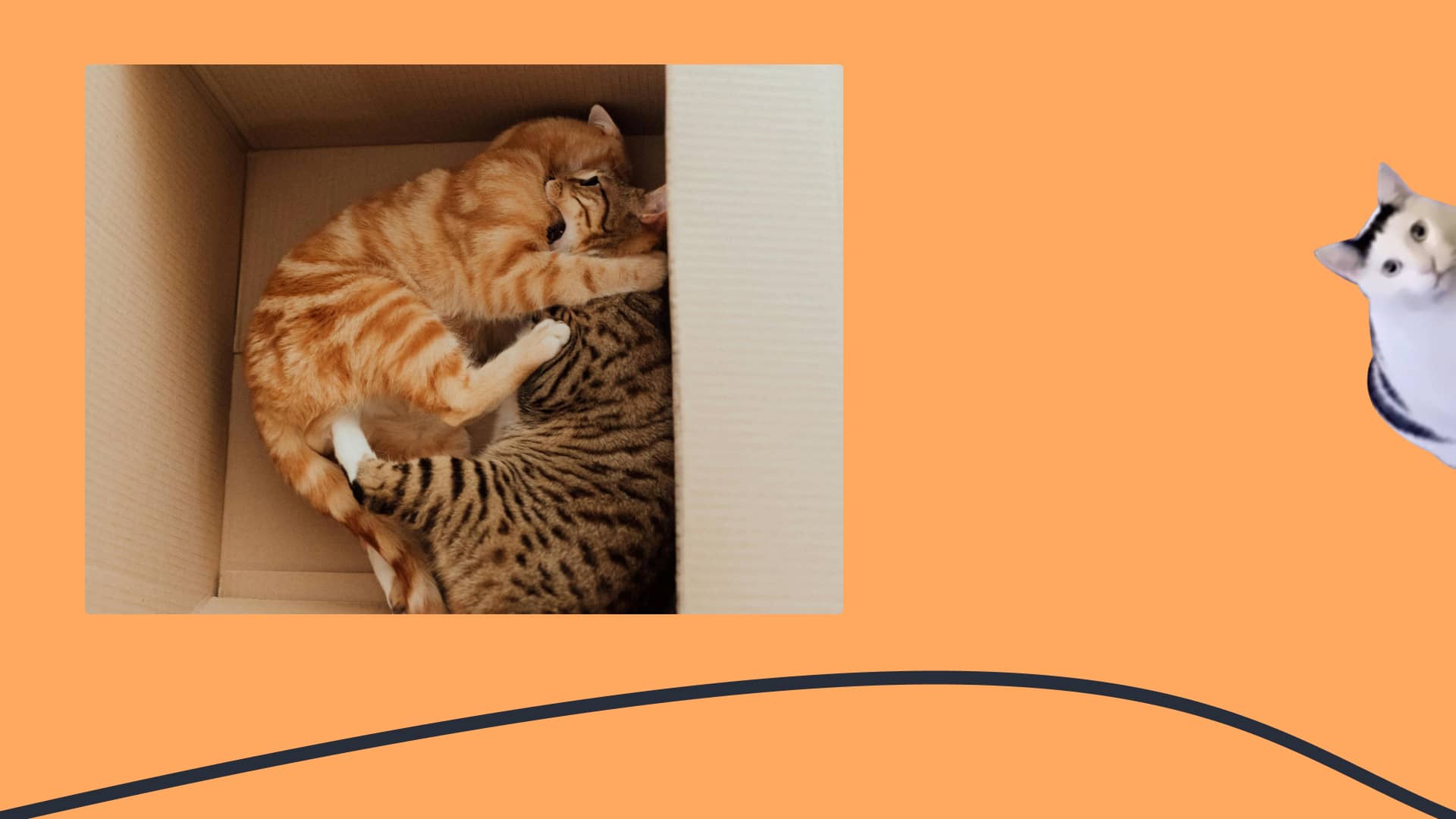

A lot of people say that moving is one of the most upsetting things that can happen in their lives. Our pets feel that stress too. It's especially hard for cats to deal with changes in their routine and surroundings. But it’s actually quite easy to reduce your beloved pet’s stress—all it takes is a little attention. This guide will walk you through everything you need to know, from getting ready and packing to transporting and helping your cat get used to its new home.
Preparing Your Cat Before the Move
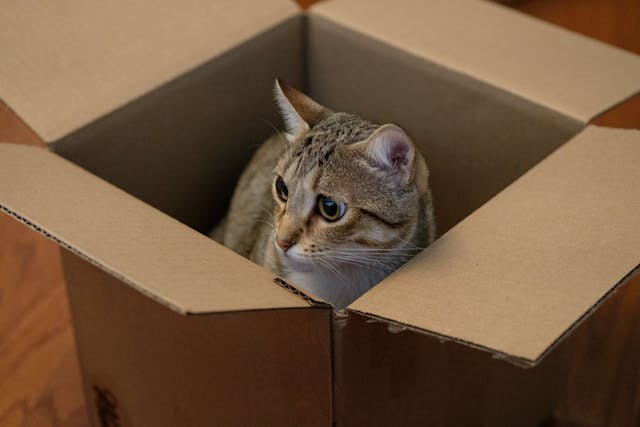
“Adorable Cat Inside a Cardboard Box Indoors” by Jared Brotman, via Pexels, licensed under the Pexels License. Changes: cropped and color-adjusted.
Start making plans for your cat's move early on.
As certified feline behavior expert Dr. Marci Koski puts it, "the secret to moving with cats is planning ahead." In the weeks before moving day, try to keep your cat's regular schedule as close to normal as possible. Cats like things to stay the same and may get stressed out when things change, so try to stick to regular feeding, playtime, and other habits. Any changes should be made slowly instead of all at once.
Help your cat get used to moving supplies and their carrier.
Bring moving boxes into your home early so your cat doesn't get scared when all of a sudden there are new things everywhere. Cats will even enjoy playing and sniffing in the boxes once they get there. A few weeks before you move, put your cat's travel carrier out in a cozy place. Put soft blankets, treats, or favorite toys inside with the door open. This will make the carrier a safe place for your cat instead of something to be afraid of, so it will explore and sleep in it. Feeding your cat near or inside the carrier could help it get used to it. The goal is for your cat to think of the carrier as a safe place to go, not as a scary box that it only goes to the vet in.
Make sure your cat has up-to-date identification well before moving day.
Update ID and health records. Fit your cat with a secure collar and ID tag that has your cell phone number and new address, or update the microchip register with your new contact information. This is very important in case your cat gets lost in all the chaos. A microchip with up-to-date information makes it much more likely that your cat will be found and returned to you. Also, make an appointment with your vet for a checkup if your cat needs any shots or if you think it might get anxious during the trip. If your cat gets car sick or is very stressed, ask the vet about remedies or mild sedatives that can help. For example, many vets recommend gabapentin or similar drugs to help cats deal with short-term travel anxiety. If you're moving to a different state or even a different country, make sure you have all the health certificates and travel paperwork you need ahead of time. Pets need a health certificate that is valid for 10 days from the date of travel for most airlines. Also, some states or countries have special rules about vaccinations or quarantine, so make sure you know what those are before you travel.
Make a moving-day game plan for your cat.
As moving day approaches, it's a good idea to make one room in your present home your cat's "safe zone." At least a few days or a week before the move, choose a quiet room that won't be touched much until the very end. This could be a bedroom or bathroom. In this room, put your cat's bed, food, water, litter box, and some toys to make it feel at ease while you're packing. Keeping your cat in this comfortable spot while you move the rest of the furniture will help them relax and stop them from pulling a Houdini while they're scared (no one wants a scared cat to hide inside a box spring or run outside while the furniture is being moved!). If your cat usually goes outside, keep them indoors at least 5 to 7 days before the move. This will keep them from getting lost in all the noise before the move and make it easy to find them on moving day.
Cat Moving Checklist
Use this step-by-step checklist before, during, and after your move. It covers the key parts of moving with cats and helps readers who need a quick answer for how to move with a cat without reading the full article first.
Before You Pack
Start early and make travel prep easier.
One Week Before Moving Day
Lower stress before the busiest part of the move.
Moving Day
Focus on safety, quiet, and simple handling.
First Days in the New Home
Help your cat adjust slowly and safely.
Important: Every cat reacts differently to a move. If your cat has a history of stress, hiding, or travel anxiety, ask your veterinarian about extra support before moving day.
There are a lot of things to keep track of when moving with a cat. Make sure you take care of all of these things for your cat by using this list:
-
Vet Visit: Make an appointment for a checkup before you move. Get copies of your medical papers and get new shots. If you need to, ask your vet about calming tools for cats, especially older or anxious cats, and get a health certificate if you need one for travel.
-
Identification: Microchip your cat (or update the microchip registry) and obtain a new ID tag bearing your new home and phone number. Make sure you have up-to-date pictures of your cat on hand in case you need to make "lost pet" posters.
-
Medications & Supplies: Fill any meds your cat requires. Make sure you have enough of your cat's regular food, litter, and any special diet items to last for a few weeks after the move. It's best not to give them new foods right before a stressful move, since changes in their diet can make them sick.
-
Carrier and Travel Gear: If you're flying, buy a carrier that is allowed by the airline. If you're driving, buy a sturdy carrier with good air flow. Label the carrier with your phone number and address. If you're going to be moving for a long time, you might also want to get a harness and leash for breaks. In case of an accident, line the carrier with an absorbent pad.
-
Acclimation: Let your cat sleep or eat in the box by leaving it out. Do some practice trips in the weeks leading up to the move. These should be short, calm drives followed by treats so your cat doesn't only associate the car with trips to the vet.
-
Travel Kit: Put all the things you'll need on the trip in a "cat travel bag." Food, water, bowls, litter and a small litter tray, trash bags, paper towels, any medicines, a favorite toy, a blanket that the cat is used to, and maybe a calming pheromone spray. Keep this kit with you (do not send it with the movers!) so you can take care of your cat on the trip and as soon as you get home!
-
Comfort Items: Don't wash your cat's blankets or toys right before you move. Giving them things that smell like home will help them feel at ease in their new home. You can even put an unwashed T-shirt or blanket with your smell in the carrier before you leave. This will help your cat feel better on the trip.
-
Pet-Friendly Logistics: If you're going to be driving a long way, plan your route so that there are hotels or rest stops along the way that allow pets. A lot of hotel chains let pets stay with them. The AKC or PetsWelcome directories can help you find hotels that are pet-friendly near big highways. You should make plans ahead of time because some rooms may not be pet-friendly. Airlines have limits on how many pets can be in the cabin at once, so make sure you book your cat's spot in the cabin well in advance. Also, make sure you know what size carrier is needed and if there are any fees.
Travel Day: How to Move with a Cat Safely
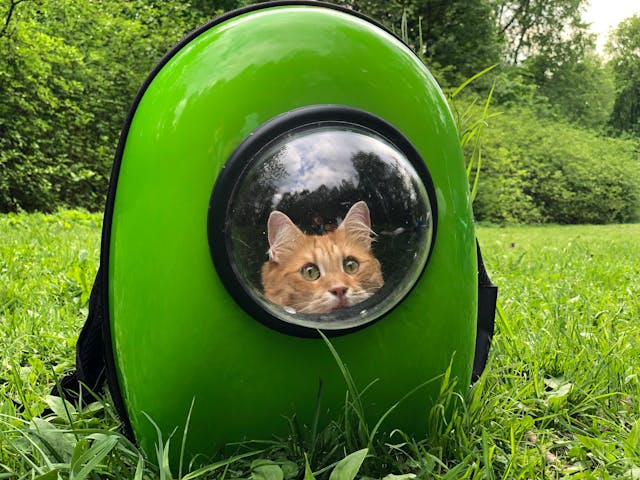
“Photo of an Orange Tabby Cat in a Green Cat Carrier” by Helen, via Pexels, licensed under the Pexels License. Changes: cropped and color-adjusted.
On moving day, the most important thing for your cat is to be safe and not feel too stressed.
Settle your cat into the designated safe room we discussed earlier before the movers come or you start packing up. Put their carrier, food, water, and litter box inside, then close the door. Putting up a big sign on the door that says “Cat Inside – Do Not Open” is a great idea to keep movers and other helpers from opening it by accident. Cats can be scared by moving things like people coming and going, loud noises, and moving furniture. Even a calm cat might get scared and run out of an open door. To prevent an accidental escape during the chaos, theAmerican Humane Society recommends keeping pets in a safe room or crate until you're ready to leave.
On moving day, try to maintain a calm routine.
Try to feed your cat at the same time every morning if you can. Make sure the travel carrier is comfortable by putting a familiar blanket or towel inside, and have a pheromone-sprayed towel ready if your cat is particularly anxious. Only when you are completely prepared to leave should you load your cat into the car. The cat should be the last thing you take outside. That way, they won't have to wait in the car for too long, and big furniture won't be moving around them.
If you can, move your cat to the carrier in a roomy area so it doesn't have to run under the bed at the last minute.
Once it's in the carrier, make sure the lid is tight. Seatbelt the carrier in the car or put it on the floor behind a seat to keep it from sliding. When you take your cat in the car, you should always use a carrier. Don't let your cat roam around freely while you're driving. Cats are usually very good, but they could get under the pedals or step on them, which is very dangerous. Never transport a pet in the open bed of a truck, the trunk of a car, or in the cargo hold of a moving van. Always keep your cat in your car with the air conditioning on. Plan to stop often if your drive is longer than a few hours. Keep the carrier closed during stops. It's usually best to keep the cat inside until you're inside. A lot of cats won't eat, drink, or go to the bathroom while the car is moving. That's fine for a few hours. When you stop, give them water, and at the end of a long trip, give them a small litter box. For a peaceful night's sleep, bring the cat (in a carrier) into the pet-friendly hotel room with you. Make sure there is a small litter box ready for the cat. (Before having your cat explore a hotel room, quickly cat-proof it by locking the toilet lids, making sure that any vents or windows are shut or covered, and looking under beds and behind furniture for places the cat could hide or be hurt.)
The preparation for flying with a cat is unique.
If you're moving across the country by plane, make sure you know the airline's pet rules well before you leave. Pick a soft carrier that fits under the seat and is allowed by the airline. Have a recent health certificate from a vet and proof that your pet has been vaccinated against rabies ready for most flights. If at all possible, it is preferable to have your cat fly in the cabin with you (as a carry-on). To save time and stress on your trip, book a direct flight. You might have to take your cat out of the carrier at the security checkpoint. To keep your cat from running away at the airport, use a harness or leash. Do not put your cat to sleep before flying without first talking to your vet. Sedation can be dangerous at high altitudes. Instead, use calming pheromones and being close to your cat to make it feel better. Put a soft pad inside the carrier and bring an extra one with you in case of mistakes. You should also bring wipes and a trash bag for quick cleanups. During the flight, don't open the carrier. Most cats will curl up in their comfortable "den" and handle the flight better if you don't bother them.
Helping Your Cat Settle In After the Move
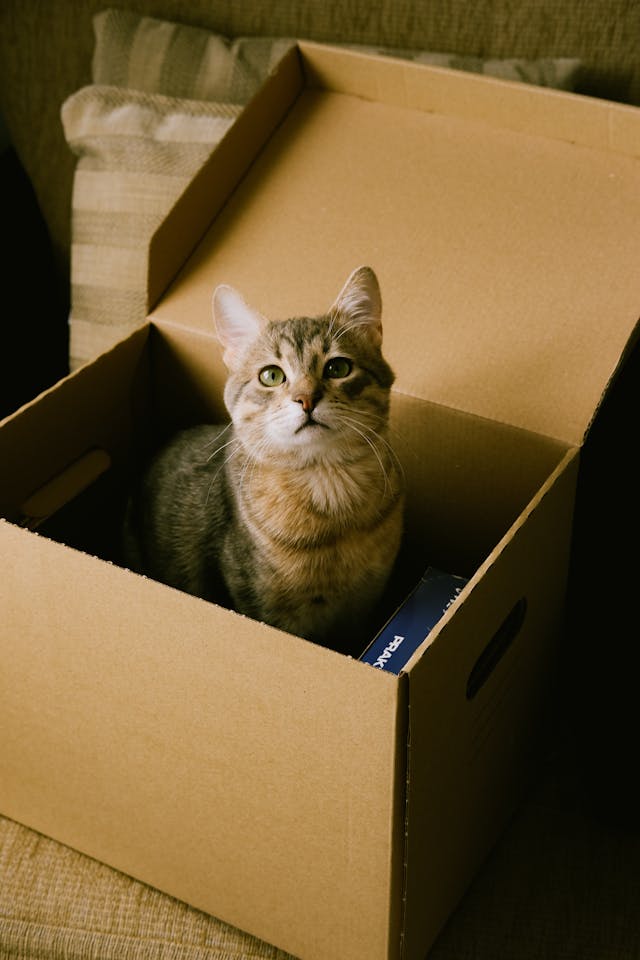
“A Cat Sitting in a Box” by Beyzaa Yurtkuran, via Pexels, licensed under the Pexels License. Changes: cropped and color-adjusted.
Set up a place for your cat when you get to your new home before you let them out of the carrier.
The best thing to do is to make one room your cat's first "base camp." Put your cat's litter box, food and water bowls, bed, scratching post, and a few favorite toys in this room. These are the basic things that will remind you of your old home. Make sure that room's windows are all shut and can't be opened (check screens for any holes or cracks). Also, make sure there aren't any holes or crawl areas where a scared cat could hide. You shouldn't open the carrier and let your cat look around that one room until the movers are done unloading and it's quiet. Don't show your cat the whole house at once; a big, empty new house can be scary and stressful for a cat. Cats get used to one room at a time, and they will feel safer in a warm, enclosed place than if they were free to roam a new house. They will know you're there and safe if you spend time with them in this room. Sit with them, give them treats, and play gently.
Slowly make more space for your cat over the next few days.
Once your cat is eating, using the litter box, and resting in the "home base" room, you can open the door and let them check out other rooms one at a time while you watch. Let your cat decide how fast they want to move. Brave cats might want to check out the whole house in one day, while shy cats might want to stay in their safe room for a few days. Keep the doors to the outside closed, and tell your family to be careful when they come and go. If your cat is really scared, you could keep them in one room for a whole week and then slowly let them go to other rooms for short visits. As much as possible, keep your cat's habit the same in the new place. Feed them at the same times every day, play with them every day, and do the same things before bed every night. Your attention and a rhythm that it is used to will comfort your cat that even though it is in a new place, some things stay the same.
Cats often hide for a while when they go to a new place. In the safe room, give your cat places to hide, like a chair covered in blankets or an open box turned on its side. This will help it feel safe. Cat behaviorists say that rubbing a soft cloth or sock around your cat's face gently will pick up their facial pheromones. You can then use that smell to rub onto furniture corners and doorways in the new home. This "sock trick" can help your cat feel more at home in their new space by making the whole area smell more like home. You could also plug in a pheromone diffuser, such as Feliway, in the main rooms. These odorless diffusers send out calming signals that can help cats feel less anxious during the change.
Just like you did with the old house, make sure your new one is cat-proof.
Put away the electrical cords, make sure all the window screens are in place, get rid of any dangerous plants, and check again to make sure the previous tenants didn't leave any pest traps or harmful chemicals behind. Check the whole house for any small openings or cracks that your cat could get stuck in before letting it explore beyond the first room. For example, look behind appliances or in open crawl areas. Also, don't do any noisy home improvements (like hammering or using power tools) for a couple of weeks until your cat is fully settled. Sudden loud noises or workers you don't know coming into the house could slow your cat's progress in getting used to the new environment.
Last but not least, do not let your cat outside right away if they will finally be allowed outdoors in your new home (and it is safe to do so). Let your cat stay inside for at least two weeks so it gets used to its new home as a safe place to sleep, eat, and feel comfortable. If you let your cat outside too soon after moving, it may try to go back to its old home, even if it means walking a long way. When you do let your cat out, do it slowly. At first, wear a harness and watch them or go outside with them for short amounts of time. Also, feed them right away when you bring them back inside so they learn to come back for food. If you make sure your cat is hungry before taking it outside, it will be more likely to stay put and come back when you call for dinner. Also, make sure that your ID tag and microchip have your new address on them at all times, just in case you get lost.
There may be extra steps and care needed when moving with cats, but if you're ready, it can be a fun and stress-free experience. You can help your cat feel safe before, during, and after the move by planning ahead, taking care of its physical and mental needs, and using the tips above. Remember that cats like being around people they know and will look to you for comfort. So try to stay calm and give your cat lots of love and care during this big change in your life. Soon, your cat will be happily napping in a sunny window of your new home, having made the move safely with your help.




