






Delivering to a Seattle address
Seattle's Downtown Traffic Control Zone sets hours for vehicles 30 feet or longer. On weekdays they may not drive there from 6 to 9 a.m. or from 3 to 7 p.m., they need a permit between 9 a.m. and 3 p.m., and from 7 p.m. to 6 a.m. no permit is needed (Seattle DOT). If your new place is downtown, put that in your item list, so we can plan the delivery time around those hours. The city asks for no permit just to park a moving truck, but a portable storage container left on the street needs a Street Use permit before it arrives (Seattle DOT).
Curb space, elevators and loading docks are yours to reserve, at the Boston end for loading day and in Seattle for the days the truck may arrive. We can tell you what to ask the building for, but we do not apply for permits. Managed buildings often want a Certificate of Insurance with their own holder name and limits; forward that request and our certificate uses the same words. Mention stairs and a long walk to the door in your list, since both change the work.
The road west of Pennsylvania
The route we price picks up I-80 in Pennsylvania and keeps to it through Ohio and Indiana as far as Chicago. From there I-90 and I-94 run through Wisconsin together; I-94 then carries the truck about 820 miles across Minnesota and North Dakota into eastern Montana. I-90 takes over for the last 810 miles or so, through Montana, the Idaho panhandle and eastern Washington, and crosses the Cascades into Seattle.
Four days of driving
The whole trip is about 44 hours at the wheel. A truck driver may drive no more than 11 hours after 10 hours off duty under FMCSA hours-of-service rules, so the road alone fills four days. Your delivery date falls 5 to 8 days after loading.
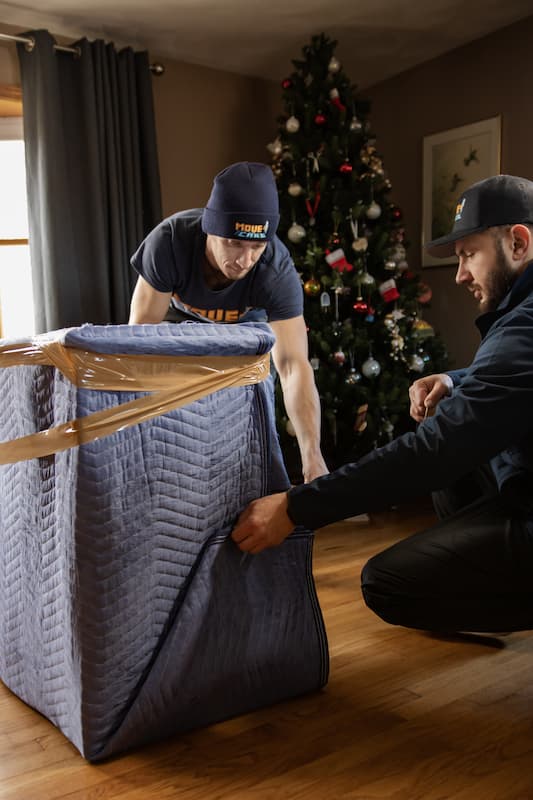
- Pickup day: a crew from our Boston office wraps, takes apart what needs it and loads in the order of your list.
- Four driving days west on I-80, I-94 and I-90.
- Seattle: every piece placed in its room, furniture rebuilt, and a Damage Report filled in for anything you find.
November 1 to April 1: chains over Snoqualmie Pass
Washington's rule covers I-90 between North Bend and Ellensburg, the stretch over Snoqualmie Pass. For those five months every vehicle heavier than 10,000 pounds must carry tire chains there, whatever the weather (WAC 204-24-050). Weather on the pass in those months is one reason we plan delivery as a window. If you move in those months, ask your building and your landlord whether a booked elevator slot or key handover can move a day, and tell us early if storage would help.





